2、 介词和动词、形容词、名词等常常构成固定搭配,也就是说,在这些词的后面常常要求用一定的介词。这一点在学习时要特别注意。如: a.动词+介词:laugh at, wait for b.形容词、过去分词+介词:be good at, be proud of
c名词+介词:pay a visit to , the key to
1、介词一般放在名词之前,但它后面的介词宾语是疑问代词、疑问副词或者关系代词时,这些词提到了前面而只剩下介词在后了。
第二节 实战演练
4.though (although)引导让步状语从句,because 引导原因状语从句, 所以though(although)不能和并列连词but ,because 不能和并列连词 so一起使用。只能单独使用。
3.从属连词引导的从句不可以与主句断开。
例如:When the alarm clock rang. (不完整)
2.从属连词,如that, whether, when, because, though等,用以引导名词性从句、定语从句和状语从句。
(一)并列连词和从属连词的用法
连词按其性质可分为:
1.并列连词,如:and, or, but, so for, 等, 连接并列的词与词,短语与短语,句子与句子。
例如:Rice and potatoes are common foods. (词与词)
Today we can travel by plane or by train. (短语与短语)
Many trees lose their leaves in winter, but evergreen trees do not. ( 句子与句子)
关联连词是一类成对使用的连词
例如:both……and……, not……but…….
not only……but also…… not only…but… as well
either……or…… neither……nor……
关联连词必须后接同样的语法结构。
如:Either the windows or the door was open .
(四)常用介词用法比较
(1)as , like
as 表示“作为”强调身份,like (介词)表示“像”
As a teacher, he cares for these children.
Like a teacher, he cares for these children.
(2)with , in
with 表示“外貌特征或附带的东西” ,“ 用……作工具”
in 表示”衣着” ,用某语言,也用in
A man with dark glasses wanted to buy drinks.
A man in black wanted to buy drinks.
The boy is learning to write in pencil / with a pencil.
He retold the text in English.
(3)for , to
for表示“为了.”
to 表示动作对象, “对, 向”, 如:
He would do anything for his motherland.
Did you mention this to my father?
你对我父亲提起过这件事吗?
for 表示“就某情况而说 ”, to 表示“对某对象而言”如:
It’s quite warm today for February.就二月的天气,今天够暖和的。
What he told you just now was not new to me。
他刚才对你所说的话对我并不新鲜。
for 表示“目的,用途”。与go, come 动词连用。
(4)except , besides
except 表示“从总体中排除一部分”, 与but 同义, besides 表示“除了一部分还有另一部分”
We all failed except him. 我们都失败了,但他没有。
He speaks German besides French.. 除法语外, 他还会讲英语。
(5)注意成对介词的用法:
get into (out of ) the car, jump onto (off) the platform, out of
(6)介词和名词动词等有不少固定搭配和习惯用法:
to one’s surprise / joy, in charge of , instead of, in bed (hospital), in trouble, in a hurry, in surprise, with a smile, with one voice, according to, at once, on time, in time, in all, at last, at least, in the end, by the way, for example, at the same time, at the same speed, on one’s way (to), in the sun, on the football team, in line, with the help of, in red / green ,put on, look for, look after, run after, send for, enter for, pay for, show…around, listen to, arrive in / at, get to, agree with, succeed in, think of (about), wait for,…
(三)表示运动方向的介词
(1)into, inside , in 从外到内 , 如:
He went quickly into / inside the room.
He went quickly out of / outside the room.
(2)out of 从里到外,相当于outside, 或从里向外,相当于from
She went out of the office in a hurry 她匆匆走出办公室。
The boy watched the buses, cars and bikes out from the window .
这男孩透过窗观看外面的公交车、小汽车和自行车。
(3)on 在……表面,onto 到……上
A boat is on the river. 一条小船在河上。
He jumped onto a tree. 他跳上一棵树。
(4)across 穿过一平面,through 穿过一空间
The boy kicked the ball hard and it moved across the grass.
这男孩用力踢球,球飞过草地。
The train moved fast through the tunnel. 火车飞驶穿过隧道。
(5)to ,towards 朝……去
She walked to the bank. 她步行到银行去。
She swam towards the shore. 她朝岸边游去。
(二)表示事物位置的介词
(1)at, in
当事物被视作一点,不强调其空间常用介词at。而表示空间内部用介词in, 如:
We’ll meet at the supermarket .我们在超市见面
I had to stay in the supermarket as it was raining hard.
因为下大雨,我只好呆在超市里
*动词arrive 后接at ,表示较小的地方, 如: 车站、村庄等;后接in 表示较大地方,如: 城市,地区等。
(2)in, to
in 表示事物在区域范围内的位置,to 表示事物相对区域范围之外另一事物的位置,如:
Shanghai is in the east of China. 上海在中国东部
Japan lies to the east of China. 日本位于中国东面。
in front of 表示在前面,一般不在范围内,in the front of 表示在前部,在同一范围内。
(3)after, behind
after 指顺序先后 ,behind 指位置在某事物之后,相对于in front of 而言, 如:
He entered the classroom after the teacher
He hid himself behind the door。 他躲在门后。
(4)on , in
on 表示“在某物表面上”。如将物看作空间,表示在其内部,用介词in。
There is a modern painting on the wall .
墙上有一副现代油画。(指挂在墙上)
There is a modern painting in the wall .
墙上有一副现代油画。(指画在墙上)
(5)from , off 都表示“离开”
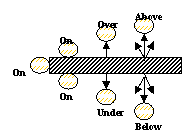
(6)above , over, below , under
over , under 表示垂直的上下关系,而above, below 仅表示位置上“高于”或“低于”, 不表示垂直关系。
(7)between, among
between 表示“两个事物之间”, among 表示“三者以上的事物之间”。
 There is a modern painting on the wall .