【题目】Here are two pieces of news from a newspaper.

Hong Kong’s first sightseeing restaurant bus went into service, offering tourists and locals a fresh experience of sightseeing and dinning. People now don’t need to plan where to go or worry about where to eat. The sightseeing restaurant bus has two floors with 47 seats. It tours around the city while serving food prepared by the famous Michelin restaurant there. Its service includes day and night tours, with day tour covering over 20 sights from Kowloon to Hong Kong Island or to the New Territories. The two-and-a-half-hour day tour costs each passenger 380 HK dollars($48.9)。

Night tours are only for booking out the whole bus and guests can choose the route(路线)for themselves.

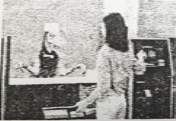
With no smile and only terrible teeth, two robot-like dinosaurs(恐龙)standing at the desk are always ready to

help customers check in. They are professional workers for Henn-na Hotel in China, Japan, the second robot-staffed hotel. Robots in this hotel can greet guests in English, Chinese and Japanese languages and every room has a doorkeeper robot called “Tapia”, who can talk to customers or can offer such services as turning on or off TV or providing weather news. The hotel opens on Wednesday and the price of the room starts from 170 dollars a night.

1The robots in Henn-na Hotel can speak _________kinds of languages.

A. two B. three C. four D. five

2From the passage, we learn the robots in Henn-na Hotel________.

A. have no teeth B. never talk to customers

C. don’t greet people with a smile D. refuse to turn off or on TV for guests

3Which is NOT true about the sightseeing restaurant bus?

A. The price of the day tour is 380HK dollars.

B. Passengers can enjoy the food and sights at the same time.

C. Michelin restaurants provide food for the tourists on the bus.

D. Passengers can choose the route for day tour by themselves.

【题目】

Once in a small village, there was a place known as the House of 1,000 Mirrors.

A small, happy little dog learned about this place and decided to visit. When he arrived, he jumped happily up the stairs and to the doorway of the house. He looked through the doorway. His ears lifted up, and his tail wagged as fast as it could. To his great surprise, he found himself looking at 1,000 other happy little dogs with their tails wagging just as fast as his. He smiled a great smile and was answered with 1,000 great smiles that were just warm and friendly. As he left the house, he thought to himself, “This is a wonderful place. I will come back to visit often.”

In this same village, another little dog, who was not quite as happy as the other one, decided to visit the house. He slowly climbed the stairs and hung his head low as he looked into the doorway. When he saw the 1,000 unfriendly-looking dogs looking back at him, he growled at them. He was scared when he saw 1,000 little dogs growling back. As he left, he thought to himself, “ ”.

All the faces in the world are mirrors of you. What kind of reflections (反映) do you see in the faces of people you meet?

1The first dog wanted to visit the house often because _____.

A. he liked the mirrors there B. he made many friends there

C. he felt he was welcomed there D. he got lots of knowledge there

2Why was the second dog scared when he entered the house?

A. Because he didn’t know there were 1,000 mirrors.

B. Because he found that the dogs looked sad.

C. Because everything was strange to him.

D. Because he saw so many dogs growling at him.

3What can be filled in the blank “ ” in paragraph 3?

A. It is a boring place. I will never go back again.

B. It is a challenging place. I can go back next time.

C. That is a terrible place. I will never go back there again.

D. This is a wonderful place. I will come back to visit often.

4What can we learn from the story?

A. Mirrors can tell what kind of person you are.

B. If you show life a smile, life will smile back.

C. Everyone in the world should believe in each other.

D. Happy people are more popular than unhappy ones.

【题目】

From Asia to America and everywhere in between, Swing-an energetic form of dance that includes six-step and eight-step rhythms(节奏) - has taken the world by storm. Making a recent comeback, swing dance floors have popped up all over the world. Many clubs make fans of Swing happy by holding nights when swing music is played, and sometimes even offering classes to attract customers.

Though Swing is now popular worldwide, it first appeared alongside the jazz movements of the 1920s and 1930s in New York City. While listening to jazz, the young black people of that time developed the movements of the Lindy Hop - a style of dance that is best known for a break away or ‘swing out’ move and sudden improvisation(即兴表演).

It was reportedly given this name when a reporter was interviewing a person at the dance hall who was watching other couples dance. When asked what that dance was called, the watcher looked at a newspaper next to him that had an article about Lindbergh- the first person to fly alone across the Atlantic(大西洋)-which was titled, ‘Lindy Hops the Atlantic’. Then the watcher announced that the ‘Lindy Hop’ was the name of the dance, and it has stuck since then.

In 1926, the Savoy Ballroom was the first large business to offer a place for people to listen to swing music and dance. With its huge dance floor, the Savoy became a big success overnight, attracting some of the best dancers and musicians in the New York area.

Within ten years, the Lindy Hops was sweeping through the United States and became a symbol of unity, as young people of all racial(种族的)backgrounds crowded into dance halls to swing the night away. Traditional dance teachers did not welcome it because they thought it was not even a real dance and were quite sure about its demise but Swing has proved them wrong; it continues to be one of the world’s most fun dances.

1The writing purpose of this passage is __________.

A. to introduce a popular form of dance

B. to discover the fun secrets of a dance

C. to tell stories about an energetic dance

D. to describe the special moves of a dance

2Which of the following words has the closest meaning to ‘demise’?

A. Challenge. B. Change. C. Development. D. Death.

3What can we learn about Swing?

A. It’s a lively dance with strict rules.

B. It has a close connection to a pilot.

C. It has a history of around 90 years.

D. It attracts mostly young black people.

4What can we infer(推断)from the passage?

A. The dance style will soon be accepted by traditional dance teachers.

B. The name was changed from ‘Lindy Hop’ to ‘Swing’ in the 1940s.

C. The movements of different Swing dancers always look the same.

D. The dance might have become unpopular sometime in its history.

【题目】阅读理解。

Canada Day

Since 1982, July 1st has been officially known as Canada Day. Canadians of all ages take part in this festival across the country.

Canada Day is the year’s biggest national party. In many towns and cities, the government organizes a lot of events, often outdoors. These include parades(游行), concerts, festivals,

firework displays and ceremonies for new Canadian citizens(公民).The celebrations often have a patriotic mood. Canada’s national flag, a symbol for Canada Day, can be seen everywhere and a lot of people paint their faces red and white, which are Canada’s national colors. The celebrations in Ottawa, Canada’s capital city, are especially grand and exciting.

In the province of Quebec, many home rentals(租赁)start on July 1st and last for exactly one year, and many people in Quebec spend Canada Day moving from one house to another. So in Quebec, Canada Day is also known as Moving Day.

Many organizations, businesses and stores are closed this day. Only some bookstores, hospitals and gas stations may be open. Post offices are closed, too. As Canada Day falls in the Canadian summer holiday period, all schools are closed as well. In some areas, special services are provided for large events. The concerts, parades and festivals may cause some traffic jams.

【1】 According to the passage, which of the following is TRUE?

A. Canada Day falls on the first day of June.

B. Canada Day was celebrated before 1982.

C. Canada Day is celebrated throughout Canada.

D. Canadians except new citizens celebrate Canada Day.

【2】 The underlined word “patriotic” means _____ in Chinese.

A. 温馨的 B. 爱国的

C. 肃穆的 D. 紧张的

【3】 Canada Day is known as Moving Day in Quebec because on this day _____.

A. people think it lucky to move to new houses

B. people look for houses from one place to another

C. people like moving from house to house to visit friends

D. people move home when new home rentals go into effect

【4】 From Paragraph 4, we know that on Canada Day _____.

A. no student goes to school

B. traffic jams happen everywhere

C. all Canadians stop working

D. few businesses and stores are closed

【5】Which of the following is NOT mentioned about Canada Day?

A. Background B. Symbol.

C. Public life. D. Events and activities.

 0  144076  144084  144090  144094  144100  144102  144106  144112  144114  144120  144126  144130  144132  144136  144142  144144  144150  144154  144156  144160  144162  144166  144168  144170  144171  144172  144174  144175  144176  144178  144180  144184  144186  144190  144192  144196  144202  144204  144210  144214  144216  144220  144226  144232  144234  144240  144244  144246  144252  144256  144262  144270  159627 

违法和不良信息举报电话:027-86699610 举报邮箱:58377363@163.com

精英家教网