17.短文填空 从下面方框中选出10个单词,并将其正确形式填写在答题卡相应题号后,使短文意思正确通顺(每词限用一次).(计10分)
An old saying goes,"When in Rome(罗马),do as the Romans do."I learned the (1)meaningof this when I studied in Russia.
One day I invited some of my Chinese friends to a famous local restaurant in Moscow.My guests and I were(2)excited from visiting Red Square and happy about our meeting.We had a warm chat until the waiter told me that we were being too loud.We turned our voices (3)lower.But this didn't last long.The waiter came over to us two more (4)times with the same message.
How bad an impression(印象)we must have left on the local people!In China,it's (5)natural and important for a host to make a (6)lively atmosphere(气氛).However,in Russia and(7)westerncountries,having a meal in a public place means you must keep your voice low.You need to be polite to others.
I felt bad about this.Even though we tried our (8)best,it's very difficult to develop a new habit.
Russians have their own special habits.My Russian friend,Andrey always looks around and thinks for a while before leaving home.I asked him why he did this."Aha,"Andrey said,"in Russia,people always take about a minute(9)to goover things and plans in their minds before leaving.So they won't leave anything necessary behind."
Finding the (10)differencesbetween cultures is much fun.I'd like to keep my eyes and mind open.
| come different excite go good live loud low mean nature time west |
One day I invited some of my Chinese friends to a famous local restaurant in Moscow.My guests and I were(2)excited from visiting Red Square and happy about our meeting.We had a warm chat until the waiter told me that we were being too loud.We turned our voices (3)lower.But this didn't last long.The waiter came over to us two more (4)times with the same message.
How bad an impression(印象)we must have left on the local people!In China,it's (5)natural and important for a host to make a (6)lively atmosphere(气氛).However,in Russia and(7)westerncountries,having a meal in a public place means you must keep your voice low.You need to be polite to others.
I felt bad about this.Even though we tried our (8)best,it's very difficult to develop a new habit.
Russians have their own special habits.My Russian friend,Andrey always looks around and thinks for a while before leaving home.I asked him why he did this."Aha,"Andrey said,"in Russia,people always take about a minute(9)to goover things and plans in their minds before leaving.So they won't leave anything necessary behind."
Finding the (10)differencesbetween cultures is much fun.I'd like to keep my eyes and mind open.
16. A famous symbol in American culture is a cartoon animal--Mickey Mouse.Mickey first (46)C in a cartoon in New York in 1982.Walt Disney was the father of Mickey.He made lots of cartoons with Mickey.Many people around the world love the mouse with two (47)A ears.He was so popular because he was like a common man,but he always tried to face any danger and solve the problems all by himself.In Disney's early films,Mickey was (48)C,he lost his house and girlfriend,Minnie.(49)B,he never gave up his efforts and always won at last.Most people want to be like him.Now Mickey Mouse is still one of the most popular(50)A characters in the world.
 A famous symbol in American culture is a cartoon animal--Mickey Mouse.Mickey first (46)C in a cartoon in New York in 1982.Walt Disney was the father of Mickey.He made lots of cartoons with Mickey.Many people around the world love the mouse with two (47)A ears.He was so popular because he was like a common man,but he always tried to face any danger and solve the problems all by himself.In Disney's early films,Mickey was (48)C,he lost his house and girlfriend,Minnie.(49)B,he never gave up his efforts and always won at last.Most people want to be like him.Now Mickey Mouse is still one of the most popular(50)A characters in the world.
| 46.A.ran out | B.hung out | C.came out |
| 47.A.large and round | B.small and short | C.long and white |
| 48.A.rich | B.happy | C.unlucky |
| 49.A.Also | B.However | C.So |
| 50.A.cartoon | B.play | C.novel |


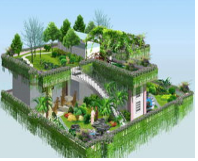 Last summer,Maria and her mother moved from their house in the countryside to a flat building in Chicago.Maria really liked some things about the city,but she missed her house and yard in the countryside.
11. Humans are mammals(哺乳动物).Most mammals are born able to do many things.
Some can walk within a few minutes of being born.They have to be able to run away if(16)Bis near.But human babies are born(17)D.They need the care of adults to live.
In the first month of life,babies cannot smile or sit up.They cannot even hold up their own heads(18)Csome help from grown-ups.
In the next few months,babies grow a lot.They learn to roll over,support their heads,and(19)Asit up while being held.
Babies also have to learn to use their(20)D.It takes months for them to learn to reach for objects.At around six months old many babies can(21)Ban object from one hand to another.
Babbling is(22)B a human baby learns to speak.Babies all seem to make similar sounds by babbling.They try to imitate (模仿) the sounds they hear from adults.It will take about nine months(23)Aa baby can say real words.
Somewhere around a baby's first birthday he or she may stand or walk with help.Soon the baby will(24)Caround on his or her own!
The first year of a baby's life is a time of growing and(25)D.Growing sure takes a lot of work!
0 121349 121357 121363 121367 121373 121375 121379 121385 121387 121393 121399 121403 121405 121409 121415 121417 121423 121427 121429 121433 121435 121439 121441 121443 121444 121445 121447 121448 121449 121451 121453 121457 121459 121463 121465 121469 121475 121477 121483 121487 121489 121493 121499 121505 121507 121513 121517 121519 121525 121529 121535 121543 159627
 Humans are mammals(哺乳动物).Most mammals are born able to do many things.
Some can walk within a few minutes of being born.They have to be able to run away if(16)Bis near.But human babies are born(17)D.They need the care of adults to live.
In the first month of life,babies cannot smile or sit up.They cannot even hold up their own heads(18)Csome help from grown-ups.
In the next few months,babies grow a lot.They learn to roll over,support their heads,and(19)Asit up while being held.
Babies also have to learn to use their(20)D.It takes months for them to learn to reach for objects.At around six months old many babies can(21)Ban object from one hand to another.
Babbling is(22)B a human baby learns to speak.Babies all seem to make similar sounds by babbling.They try to imitate (模仿) the sounds they hear from adults.It will take about nine months(23)Aa baby can say real words.
Somewhere around a baby's first birthday he or she may stand or walk with help.Soon the baby will(24)Caround on his or her own!
The first year of a baby's life is a time of growing and(25)D.Growing sure takes a lot of work!
| 16.A.food | B.danger | C.waste | D.peace |
| 17.A.careless | B.harmless | C.hopeless | D.helpless |
| 18.A.of | B.for | C.without | D.by |
| 19.A.even | B.never | C.ever | D.still |
| 20.A.legs | B.heads | C.eyes | D.hands |
| 21.A.keep | B.move | C.hold | D.make |
| 22.A.why | B.how | C.which | D.where |
| 23.A.before | B.since | C.after | D.while |
| 24.A.look | B.show | C.run | D.sit |
| 25.A.speaking | B.smiling | C.crying | D.learning |