题目内容

6.-Look out!Where are you going?
-Sorry.Ididn't notice (not notice) the sign.

分析 --当心,你要去哪里?--对不起,我没有注意这个牌子.

解答 答案:didn't notice.考查单词填空.句意:--当心,你走到哪里去了.--对不起,我没有注意这个牌子.根据题干-Look out!Where are you going?-Sorry.I _____(not notice) the sign.可知指在对方说这句话时之前他没有注意,指在过去没有注意,所以一般过去时.句子为否定句,所以用didn't+动词原形.故答案为didn't notice.

点评 根据所给单词,仔细分析句子的结构,根据具体内容,填入适当的正确形式.

练习册系列答案
相关题目
5.Did you know it?The word"emoji"comes from Japanese.It means"pictureCharacter".And it was just added to Oxford Dictionaries in 2013.
When you feel happy,you use a smiling face.When you agree,you send athumbs-up.We have never used emijis while messaging our friends as much as wedo today.That might be why Oxford Dictionaries chose the"face with tears ofjoy"emoji as their"World of the year 2015."
"Emojis are no longer just for texting teenagers.Instead,they have been madeinto a form of expression which can cross language barriers(障碍),"OxfordDictionaries said."Emoji culture has become so popular that characters have theirown trends and stories."
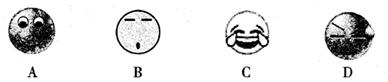
The"face with tears of joy"was the world's most used emoji in 2015,according to a research from the Oxford University Press.
Japan made emojiin the 1900s.They have become increasing popular throughthe years.Every day,about 6billion emoji pictures are flying around the worldthrough mobile messaging apps.Young people especially love it 72percent of18-to-25-year-old persons find it easier to express their feelings with an emojirather than through the written words,according to a survey by TalkTalk,a Londonbased mobile phone company.
Not everyone thinks emojis are a good thing.Writer Jonathan,for example,says emojis will make people's language skills weaker and weaker.He thinks people will get lazier by using more emojis.But Professor Evans disagrees.He thinks that emojis are great for communication."It is not lazy to naturally look for more efficient (有效 的)ways to communicate with others,"he said.
What do you think?

41.Where does the word"emoji"come from?C
A.Mobile messaging apps.
B.Oxford Dictionaries.
C.Japanese.
D.TalkTalk company.
42.Which of the following emijis is the world's most used in 2015?C

43.What can we learn from Paragraph 5?D
A.Emoji was first created in Japan in the 19th century.
B.Many old people would use written words rather than emojis.
C.Over 6billion people use emojis every day around the world.
D.Most young people prefer using emojis to express their feelings.
44.Why does the writer Jonathan disagree to use emojis?A
A.He worries that people's language skills will be reduced.
B.He thinks emojis make people too lazy to talk to others.
C.He believes that emojis are bad for communication.
D.He thinks people will not be able to write by using emojis.
45.What's the best title of this passage?B
A.Stop Using Emoji!
B.Emoji:the word of the Year!
C.Why Not Choose Emoji?
D.Where does Emoji Come From?
1.20世纪以来,随着科学技术的迅速发展,人类创造了空前的物质财富.与此同时,能源的过度开发和消耗导致全球性的能源短缺和环境污染.如何保护和合理利用资源已受到全世界的关注.作为一名中学生,我们也应该从日常生活中的小事做起,增强节能意识,从小事做起.假如你是九年级(3)班的班长李同,请你向全校学生发出倡议,并说明我们可以做到哪些事来节能减耗.
提示:1.水电节约; 2.节约用纸; 3.减少环境污染.
提示词:1.save water,save electricity,turn off the tap (关水龙头),recycle water…
2.use both sides of paper,recycle old newspapers and waste paper …
3.plant more trees,use cloth bags instead of using plastic bags,ride a bike or walk to work …
要求:1.80词左右.开头和结尾已给出,不计入总词数.
2.文中不能出现自己的姓名和所在学校名称.
Hello,everyone!
Our earth is short of energy.Saving energy is very important.As students,we can do a lot in our daily life.For example,we should keep the light off when we don't use it.We should take a shower instead of bath to save water.Don't keep the tap running when you wash your face or brush your teeth.When we go shopping,we can take cloth bags instead of using plastic bags.Many people write on only one side of their paper.Why not try using both?To save the energy,we should also reduce pollution.Recycling old newspapers,glasses,cans and waste paper is also a good idea.
Let's work hard together to save our the energy!
Yours,
Li Tong.
11.Did you once sense that someone was watching you?You turned around and,sure enough,someone was looking right at you!
Many people believe that humans have a natural ability to sense when someone is looking at them.To research whether humans really have such a"sixth sense",Robert Baker,a psychologist(心理学家) at the University of Kentucky,did two experiments.
In the first one,Baker sat behind unknowing people in public places and looked at their backs for 5to 15minutes.The subjects (受试者) were eating,drinking,reading,studying,watching TV,or working at a computer.Baker made sure that the people could not tell that he was sitting behind them during the time.Later when he questioned the subjects,almost all of them said they had no sense that someone was watching them.
For the second experiment,Baker told the subjects that they would be watched from time to time from behind.The people had to write down when they felt them being watched and when they weren't.Baker found the subjects couldn't tell when they were looked at.They didn't know when they weren't watched either.
Baker concludes that people do not have the ability to sense when they are being watched.If people doubt the outcomeof his two experiments,said Baker,"I suggest they repeat the experiments and see for themselves."
42.Why did the psychologist do the two experiments?A
A.To study whether humans can sense when they are watched.
B.To explain when people can have a sixth sense.
C.To show how people act while being watched in the lab.
D.To prove why humans have a sixth sense.
43.The underlined word"outcome"in the last paragraph most probably meansD?
A.value         B.reason            C.performance         D.result
44.In the second experiment,the subjectsB.
A.could tell when they were watched and when they weren't
B.couldn't tell when they were watched or when they weren't
C.couldn't tell when they were watched but could tell when they weren't
D.could tell when they were watched but couldn't tell when they weren't
45.What can we learn from the passage?D
A.People are born with a sixth sense.
B.The experiments support the idea that we can sense if we are watched.
C.People have a sixth sense in all places.
D.The subjects do not have a sixth sense in the experiments.

违法和不良信息举报电话:027-86699610 举报邮箱:58377363@163.com

精英家教网