题目内容
5.Did you know it?The word"emoji"comes from Japanese.It means"pictureCharacter".And it was just added to Oxford Dictionaries in 2013.When you feel happy,you use a smiling face.When you agree,you send athumbs-up.We have never used emijis while messaging our friends as much as wedo today.That might be why Oxford Dictionaries chose the"face with tears ofjoy"emoji as their"World of the year 2015."
"Emojis are no longer just for texting teenagers.Instead,they have been madeinto a form of expression which can cross language barriers(障碍),"OxfordDictionaries said."Emoji culture has become so popular that characters have theirown trends and stories."
The"face with tears of joy"was the world's most used emoji in 2015,according to a research from the Oxford University Press.
Japan made emojiin the 1900s.They have become increasing popular throughthe years.Every day,about 6billion emoji pictures are flying around the worldthrough mobile messaging apps.Young people especially love it 72percent of18-to-25-year-old persons find it easier to express their feelings with an emojirather than through the written words,according to a survey by TalkTalk,a Londonbased mobile phone company.
Not everyone thinks emojis are a good thing.Writer Jonathan,for example,says emojis will make people's language skills weaker and weaker.He thinks people will get lazier by using more emojis.But Professor Evans disagrees.He thinks that emojis are great for communication."It is not lazy to naturally look for more efficient (有效 的)ways to communicate with others,"he said.
What do you think?
41.Where does the word"emoji"come from?C
A.Mobile messaging apps.
B.Oxford Dictionaries.
C.Japanese.
D.TalkTalk company.
42.Which of the following emijis is the world's most used in 2015?C
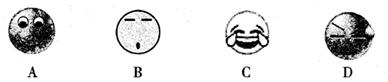
43.What can we learn from Paragraph 5?D
A.Emoji was first created in Japan in the 19th century.
B.Many old people would use written words rather than emojis.
C.Over 6billion people use emojis every day around the world.
D.Most young people prefer using emojis to express their feelings.
44.Why does the writer Jonathan disagree to use emojis?A
A.He worries that people's language skills will be reduced.
B.He thinks emojis make people too lazy to talk to others.
C.He believes that emojis are bad for communication.
D.He thinks people will not be able to write by using emojis.
45.What's the best title of this passage?B
A.Stop Using Emoji!
B.Emoji:the word of the Year!
C.Why Not Choose Emoji?
D.Where does Emoji Come From?
分析 文章大意:本文主要介绍了单词"emoji"的来源,它的含义以及它使用的范围.
解答 41-45 CCDAB
41题答案:C 考查细节理解题,根据文中的第一段The word"emoji"comes from Japanese可知来自日语,故答案C
42题答案:C 考查细节理解题,根据文中的第二段That might be why Oxford Dictionaries chose the"face with tears ofjoy"emoji as their"World of the year 2015."可知 在2015年,脸上有喜悦的泪水的表情符号是世界上使用最多的,故答案C
43题答案:D 考查细节理解题,根据文中的第五段Young people especially love it可知 大多数年轻人喜欢用表情符号表达自己的感情,故答案D
44题答案:A 考查细节理解题,根据文中的最后一段Writer Jonathan,for example,says emojis will make people's language skills weaker and weaker可知 因为他认为表情符号会降低人们的语言能力,故答案A
45题答案:B 考查主旨题,根据文中的第一段Did you know it?The word"emoji"comes from Japanese.It means"picture Character".And it was just added to Oxford Dictionaries in 2013.大意可知本文主要介绍了单词"emoji"的来源,它的含义以及它使用的范围,即emoji-年度词.故答案B
点评 本文是一篇日常生活类阅读,题目涉及多道细节理解题,做题时结合原文和题目有针对 性找出相关语句进行仔细分析,结合选项选出正确答案.推理判断也是要在抓住关键句子的基础上合理的分析才能得出正确的答案.

| A. | cut it up | B. | cut up it | C. | cut them up. |
| A. | health | B. | healthy′ | C. | healthier | D. | more healthily |
| enjoy become study learn win |