题目内容
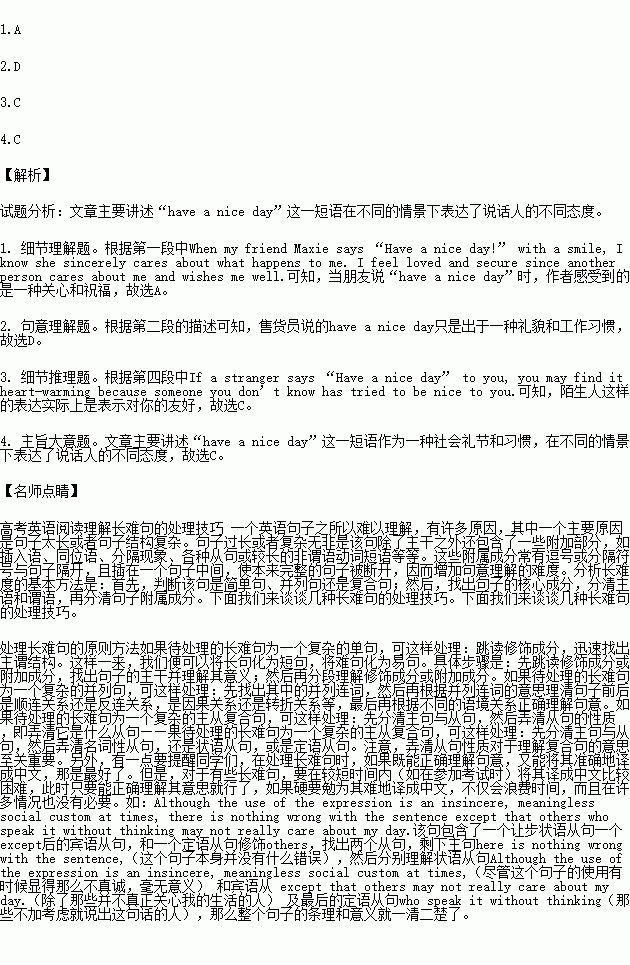
“Have a nice day!” may be a pleasant gesture or a meaningless expression. When my friend Maxie says “Have a nice day!” with a smile, I know she sincerely cares about what happens to me. I feel loved and secure since another person cares about me and wishes me well.
“Have a nice day. Next!” This version(版本) of the expression is spoken by a salesgirl at the supermarket who is rushing me and my groceries out the door. The words come out in the same tone with a fixed procedure. They are spoken at me, not to me. Obviously, the concern for my day and everyone else’s is the management’s attempt to increase business.
The expression is one of those behaviors that help people get along with each other. Sometimes it indicates the end of a meeting. As soon as you hear it, you know the meeting is at an end. Sometimes the expression saves us when we don’t know what to say. “Oh, you just had a tooth out? I’m terribly sorry, but have a nice day.”
The expression can be pleasant. If a stranger says “Have a nice day” to you, you may find it heart-warming because someone you don’t know has tried to be nice to you.
Although the use of the expression is an insincere, meaningless social custom at times, there is nothing wrong with the sentence except that others who speak it without thinking may not really care about my day. But in a strange and comfortable way, it’s nice to know they care enough to pretend they care when they really don’t care all that much. While the expression may not often be sincere, it is always spoken. The point is that people say it all the time when they like.
1.How does the author understand Maxie’s word?
A. Maxie really wishes the author a good day.
B. Maxie shows her anxiety to the author.
C. Maxie encourages the author to stay happy.
D. Maxie really worries about the author’s security (安全).
2.What does the underlined sentence in Paragraph 2 mean?
A. The salesgirl is rude.
B. The salesgirl is bored.
C. The salesgirl cares about me.
D. The salesgirl says the words as a routine(惯例).
3.By saying “Have a nice day.” a stranger may ________.
A. express respect to you
B. give his blessing to you
C. try to be friendly to you
D. share his pleasure with you
4.What is the best title of the passage?
A. Have a nice day—a meaningless expression
B. Have a nice day—a Heart-warming Greeting
C. Have a nice day—a Social Custom
D. Have a nice day—a Polite Ending of a Conversation

假如你叫李平,你的美国笔友Tom来信询问你暑假过的怎样。请根据以下信息给他回信,说明你在假期中的活动和理由。
活动 | |
休息 | 学习紧张,缺少锻炼和休息 |
看望乡下的祖父母 | 帮助他们做点家务,并给他们谈了身边的新鲜事 |
和朋友进行短途旅游 | 欣赏大自然,呼吸新鲜空气 |
注意:词数100左右。
Dear Tom,
_______________________________________________________________________________
_______________________________________________________________________________
_______________________________________________________________________________
_______________________________________________________________________________
_______________________________________________________________________________
_______________________________________________________________________________
_______________________________________________________________________________
_______________________________________________________________________________
_______________________________________________________________________________
Yours,
Li Ping