【题目】先通读下面的短文,然后根据短文内容和所给首字母,在空格内填入一个适当的单词,使短文意思完整。所填单词必须在答题卡标有题号的横线上完整写出。
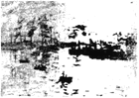
Claude Monet’s paintings were quite different from the art styles that were popular in the 1870s France. Traditional artists always did their artwork in a studio and their paintings were realistic- they looked exactly like the real world. Claude Monet was part of a group of painters who were called Impressionists(印象派画家). Their paintings were light and a bit fuzzy - they gave an impression of what the real world looked like. Sometimes Impressionists worked outside, which was a very unusual thought in their time. Impressionists received its name from an early painting by Claude Monet titled Impression, Sunrise.
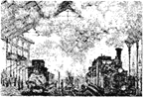
Knowing that trains were interesting subjects and represented modern progress, Claude Monet created a series of Impressionist paintings of trains from January to March of 1877. He worked on his paintings right on the train platform (站台)at the Gare Saint-Lazare, the train station on Saint Lazare Street. Although there were many train stations in Paris, this was the first train station built in Paris so it had historical significance(意义).
Monet’s friend, Impressionist painter Pierre Auguste Renoir, told the following story to his sons about Claude Monet and painting the trains. Monet needed permission (允许)to spend time on the train platform and paint what he saw in his impressionistic style. One day, Monet put on his very best suit along with a fine hat, a good shirt and a silk tie. He appeared to be a wealthy gentleman while he really was a poor painter.
The station master was impressed and gave Monet permission to paint on the train platform. The station master even kept trains from leaving on time so Monet could finish a scene even though passengers complained.
Was it worthy? Monet's train scenes turned his career into a success and for the station master, made his train station famous until even now.
Introduction | Claude Monet was one of the Impressionist painters whose paintings were not the same as the popular art styles in the 1870s France. Impressionist paintings gave an impression of 【1】 the real world looked. Impressionism was 【2】 after his painting Impression, Sunrise. |
A story of painting trains | At that time trains could keep people's interest and represented modem progress. He created paintings of trains at the train station with the longest history in Paris. He 【3】himself as a wealthy gentleman to win the station master's trust. In order to help Monet finish a scene, the station master even made the trains leave 【4】 than they should do. |
Result | His train scenes made not only his career 【5】 but also the train station famous. |


【题目】 An INTERESTING experiment
It takes a little skill to do this experiment, but the result is truly SURPRISING.
What do you need? Several rubber balloons Wooden skewer(木签) Vegetable oil Paper towel |
| Step l Blow up a balloon, let some of the air out of it, and tie it closed. |
| Step 2 Rub some oil on skewer with paper towel. | |
| Step 3 Gentle twist(搓捻)and push skewer into end of balloon opposite the knot. If balloon pops(爆 炸),go back to Step 1. | |
| Step 4 When skewer is in balloon, slowly twist and push it out of balloon near knot. | |
What will happen? |
| 28 The balloon does not pop, even though it has a skewer in it. |
Why won't it pop? | Rubber is made out of long chains of molecules (分子). The skewer pushes these molecules aside. The molecules mix with the oil and they stick together tightly. The oil on the skewer seals the hole and air cannot get out. | |


【1】Which is the most suitable word for 28 ?
A.TopicB.ResultC.ProblemD.Reason
【2】What’s the proper meaning of the underlined word "seals"?
A.密封B.润滑C.点燃D.腐蚀
【3】What can we infer(推断)from the passage?
A.It's easy to push a skewer into and out of a balloon.
B.You'd better blow as much air as possible into a balloon.
C.There's no need for you to use the oil while doing the experiment.
D.It's hard for the air to get out of the hole as molecules and oil stick together.