Everyone knows what to do on Mother’s Day. You should cook breakfast for your mom, wash the dishes, clean the house---everything a mother ________ does. But what do you do on Father’s Day? Father’s Day, which falls on the third Sunday of June in the US, is a more difficult holiday to ________ because a father’s role (作用;角色) is more difficult to explain. What does a father “usually do”? If you ask 10 different families, you may get 10 different ________. In more traditional (传统的) times, a father’s role was ________. He was the one who went to work every day and ________ home the money. But in modern families, many mothers work too, and there are even a number of ________ in which the mother works, but the father doesn’t. Perhaps the best way to celebrate Father’s Day is to ________ the role fathers used to play and just thank your father for whatever he does for you. These ________ be simple things, including walking you to school, helping you ________ homework, or cooking breakfast and cleaning the house. Whatever it is, just do something to say thanks. You could draw him a card, give him a gift---or just ________ “Happy Father’s Day!”

1.A.seldom B.never C.ever D.usually

2.A.celebrate B.remember C.remind D.like

3.A.questions B.gifts C.answers D.activities

4.A.strong B.interesting C.weak D.clear

5.A.got B.brought C.went D.walked

6.A.families B.houses C.jobs D.companies

7.A.remember B.forget C.take D.play

8.A.maybe B.must C.can D.will

9.A.with B.to C.on D.about

10.A.speak B.say C.cry D.tell

Tom and Mike work in a computer company. One day, a customer entered the office. She looked at Mike and Tom, and then she walked to Mike. Mike gave her a warm greeting.

Tom was sad and walked away.

“People always choose Mike. I don’t understand,” Tom said.

“It’s the way you communicate (交流),” Mrs Smith said.

“How can that be?” Tom asked. “I don’t have a chance to speak.”

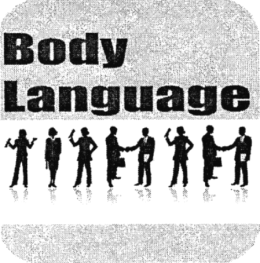
“Communicating is more than just speaking. Your body language is important too,” Mrs Smith said.

“Body language?” Tom asked

“It’s the way you stand and sit. It’s the expression on your face. You never smile and you don’t turn your head towards them,” Mrs Smith said. “Look at Mike. He’s holding his head up. He always smiles and looks friendly. His body language is making people feel comfortable, so they go to ask him for help.”

Tom decided to improve (改善) his body language. He started to sit up straight and try smiling at people.

1.Where does Mike work?

A.In a hotel. B.In a bank. C.In a school. D.In a computer company.

2.Why did Tom feel sad?

A.Because his boss was strict. B.Because he didn’t like his job.

C.Because he was very hungry. D.Because the customer didn’t choose him.

3.The underlined word “expression” means “________ ” in Chinese.

A.表现 B.感情 C.表情 D.态度

4.We can know that Mike ________.

A.never smiles B.looks friendly

C.gets on well with his boss D.came to the company many years ago

5.What can you learn from the passage?

A.Tom doesn’t like his customers.

B.Tom and Mike never talk with their boss.

C.Customers like Mike because he’s very handsome (英俊的).

D.Body language is very important when we communicate with others.

Soap operas (肥皂剧) are a kind of popular culture in America. It is also very popular in the UK. It usually shows at least four times every week. They are operas usually made from people’s lives, so it is the most popular TV programme in the UK. Every weekday, lots of fans from all over the world are waiting to see their favorite soaps.

Soap operas were first on TV in 1952. The soap opera is not about soap, and it is not an opera. It gets this name because in the 1930s, soap companies paid for the shows and they tell stories just like operas do. The soap operas are special because the story never ends.

There are daytime and nighttime soaps. Daytime soaps usually have more information. Nightime soaps are usually once a week, and each lasts (持续) for about an hour.

Soap operas are having a difficult time in today’s TV market, but they are here to stay.

Big fans will never give them up easily!

1.TV soap operas have a history of ________ years.

A.95 B.67 C.55 D.47

2.Soap operas have the word soap in the name because in the 1930s ________.

A.they were popular like soaps B.they only told stories about soaps

C.soap companies paid for the shows D.the TV station was near soap companies

3.Soap operas are special because ________.

A.they are having a difficult time in the market B.the fans can only watch them on weekdays

C.their fans come from around the world D.the story in them never ends

4.A nighttime soap usually lasts for about ________ hour(s).

A.one B.two C.five D.seven

5.From the passage, we know ________.

A.soap operas come from America B.a soap opera is an opera

C.soap operas aren’t on in the daytime D.soap operas have no fans

 0  133878  133886  133892  133896  133902  133904  133908  133914  133916  133922  133928  133932  133934  133938  133944  133946  133952  133956  133958  133962  133964  133968  133970  133972  133973  133974  133976  133977  133978  133980  133982  133986  133988  133992  133994  133998  134004  134006  134012  134016  134018  134022  134028  134034  134036  134042  134046  134048  134054  134058  134064  134072  159627 

违法和不良信息举报电话:027-86699610 举报邮箱:58377363@163.com

精英家教网