任务型阅读,阅读下文并回答问题。

Which is the most popular ball game in China? You may say ping pong. But do you know China has a long history with the football? Though England is home to modern football, China is the birth place of the game. In history, Chinese football was called Cu Ju, which was created in the Han Dynasty. In Tang Dynasty, football became the most popular ball game in China. There was even Women’s Football Team at that time. However, in Qing Dynasty, football was like a star flying across the sky and lost its light.

China has taken part in the World Cup Qualifier 10 times but has been in FIFA World Cup for only once. Some people think Chinese football is hopeless, but more people believe it is going through a transitional period(过渡期). There is much room for improvement and we will finally win. So young or old, men or women, crazy football fans can be seen everywhere. Some people never miss a match on TV, some people travel to another city to cheer for their favorite teams. Children play football on their school playground every day. Some schools even have special football class for students. In March this year, students in Qingdao began to take football tests in their high school entrance exam. This is the first time that football was brought into high school entrance exam in China.

No matter how many times Chinese football team has let us down, Chinese people’s love for football has never changed.

1.Did football reach a peak(鼎峰)in Tang Dynasty or Han Dynasty?

________________________________________________________________.

2.When did football become less popular in Chinese history?

________________________________________________________________.

3.How many times has China taken part in the World Cup Qualifier?

___________________________________________________________ _.

4.What did students in Qingdao begin to do in March this year?

_________________________________________________________________.

书面表达

常怀感恩之心,并懂得一些表达感恩的方式,会使你和周围的人更有爱、更快乐、更幸福。初中生活还剩最后一学期时光,你想用哪些方式来感谢你的父母、老师或同学呢?现我市某微信公众平台正在举办“Learn to Be Thankful”的主题演讲比赛。假设你叫Li Lei,请根据要点提示写一篇演讲稿,谈谈你的想法,希望大家学会感恩,懂得感恩。

要点提示:

1. 感恩父母给予生命;感恩老师传授知识;感恩同学困境相助

2. 感恩在行动(写感谢信,赠送小礼物,为他们做一件有意义的事……)

3. 感恩的意义(拉近人与人之间的关系,内心温暖,增强幸福感……)

要求:

1. 内容必须包含以上要点,可适当发挥。

2. 词数80左右,开头已给出,不计入总词数;

3. 不能出现自己的真实姓名和学校等相关信息。

Learn to Be Thankful

Good morning, everyone. Today the topic of my speech is “Learn to be thankful”. ____________________________________________________________________________________________

____________________________________________________________________________________________

____________________________________________________________________________________________

____________________________________________________________________________________________

____________________________________________________________________________________________

____________________________________________________________________________________________

Thanks for your listening.

完形填空。

Many things can affect our feelings, such the environment, the people around us and the way we think of the things.

The environment affects your feelings. On the one hand, if the environment around you is pleasant, you are most likely to be a happy person. On the hand, if your environment full of fighting and argument, you are probably going to be a pessimist(悲观的人).

The people around us affect us than the environment. The way they talk, the way they act and react(反应), and the way they live can influence our feelings easily. Maybe you like their writing, you would try and see if you could imitate(模仿) it. Many people like to other people in some way. If you are under a condition with optimists(乐观者), you are going to be a pleasant person; , if you are with pessimists, you are not going to feel about yourself.

The last one is the way we think of the things. Different people take different actions when they face thing. This shows people their feelings. You could say “ Why do I have black hair while everyone else has yellow hair?” or you could say “ Oh! I have black hair, so I must be very special!” Can you see the between these?

1.A. as B. for C. in D. to

2.A. others B. other C. two D. another

3.A. will be B. are C. is D. be

4.A. easy B. easier C. easily D. more easily

5.A. because B. but C. so D. or

6.A. write B. copy C. learn D. see

7.A. instead B. also C. always D. although

8.A. good B. worried C. well D. nervous

9.A. interesting B. same C. the good D. the same

10.A. difference B. differences C. influence D. influences

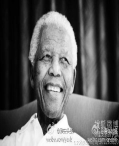
South Africa’s former president Mandela died of illness on December 5th,2013, and his funeral(葬礼) was held in his hometown on Dec. 15,2013.

Born on July 18,1918 in a small village in South Africa, Mandela was one of the 13 children of a chief(酋长). Having finished his education, he joined the African National Congress(ANC) in 1943 and later formed the Youth League of the ANC. In 1948, when the National Party won the national election(选举), Mandela started to fight against the party’s apartheid policy(种族隔离政策). He was put into prison in August,1962 when he was 43 years old. While he was in prison, many people at home and abroad supported him, and the government had to give back his freedom(自由) on Feb. 11, 1990. It was in the next year that Mandela was chosen as the president of the ANC. He was awarded the Nobel Peace Prize in 1993. The next year, he was elected(选举) South Africa’s president. As a president, he worked hard to improve the people’s lives and won the people’s love. In 1999, he left office.

As South Africa’s first black president after more than three centuries of the white rule, Mandela was thought as “father” of his country. His birthday, July 18,was made an annual(每年的) international Mandela Day by the UN in 2009 to honor his 67 years’ struggle(奋斗) for social justice and world freedom.

1.Mandela had spent_______ years in prison.

A. 29 B. 27 C. 43 D. 67

2.When did Mandela become South Africa’s president?

A. In 1990. B. In 1993. C. In 1994. D. In 1999.

3.The best title for the passage is_______.

A. Mandela’s life in prison

B. The great life of Mandela

C. Mandela’s life in his hometown

D. Mandela and his family

 0  107784  107792  107798  107802  107808  107810  107814  107820  107822  107828  107834  107838  107840  107844  107850  107852  107858  107862  107864  107868  107870  107874  107876  107878  107879  107880  107882  107883  107884  107886  107888  107892  107894  107898  107900  107904  107910  107912  107918  107922  107924  107928  107934  107940  107942  107948  107952  107954  107960  107964  107970  107978  159627 
违法和不良信息举报电话:027-86699610 举报邮箱:58377363@163.com

精英家教网