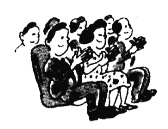
题目内容

【题目】The husband was looking after the baby__________.

A. after his wife cooked in the kitchen

B. as his wife was cooking in the kitchen

C. when his wife was cooking in the kitchen

D. while his wife was cooking in the kitchen

【答案】D

【解析】

试题分析:句意:丈夫在照看这个婴儿,而妻子在厨房做饭。A选项和原句意思不搭配;表示两个正在同时进行的动作,一般用while来引导,故选D。

练习册系列答案
相关题目

【题目】

I looked out at the smiling faces packed into the school gym. The applause filled my ears. I had done it. I had really done it! I found a new person inside me, a much more daring, outgoing person who had been hidden all along, just waiting for the ______ to emerge(出现).

Just a few months earlier, it was impossible to ______ myself acting in a play in front of two hundred people. But without my teacher, Mrs. Sather, I couldn't get that opportunity.

In the first and second grade, I was extremely shy. But Mrs. Sather always ______ me.

One day, she announced, "Our class was going to ______ a play. Anybody, want to try?"

A few excited hands shot up-mine, of course, was not one of them.

After school she stopped me and invited me for a talk. Puzzled, I followed her to her desk. She said, "I think you are ______ for the lead character. But I was surprised you didn't raise your hand."

Me, the lead? Was she crazy?

Mrs. Sather gazed into my eyes as if seeing my inner _______ locked away inside. "But I'd like you to give this a try for me, " she continued. "If you reach for the stars, you might at least grab a piece of the moon.

I realized it was time to throw off ______ and show the world who I really was. I looked Mrs. Sather right in her sparkling(闪亮的)blue eyes and said, "OK. I'll try."

In the following months, in spite of fears, I did everything I could to ______ I could do it in practice.

At the end of the play, when the audience applauded, I knew they were not just cheering for my performance that night, but for the performances they knew would come in later years because of my newfound confidence.

1A.heroB.reasonC.directorD.opportunity

2A.watchB.mindC.imagineD.remember

3A.praisedB.remindedC.comfortedD.encouraged

4A.performB.writeC.followD.review

5A.famousB.perfectC.responsibleD.thankful

6A.abilityB.selfC.beautyD.peace

7A.prideB.patienceC.shynessD.guard

8A.proveB.discoverC.expectD.test

【题目】

A Johns Hopkins University researcher, Melville J. Wohlgemuth, noticed that the hats he worked with turned their heads to the side when hunting. "It's a lovely behavior, and I was curious about the purpose, " he said. "I wanted to know when bats were doing this and why. It seemed to happen as hats were targeting prey(瞄准猎物), and that turned out to he the case."

Wohigemuth's team found that a bat's head and ear movements went with the animal's sonar vocalizations(声纳发声)to help it hunt. The findings show how movements can strengthen signals used by senses like sight and hearing-not just in bats, but in dogs and cats, and even in humans.

Bats' use of echo-location(回声定位)to find, locate and catch prey is well documented. But the lead author Wohlgemuth and his team are the first to show how the mysterious head and ear movements influence the hunt.

The researchers used a novel method to study the head and ear movements of the big brown bat, a common bat species. First, researchers trained the bat to sit on a platform while tracking moving prey. After that, the researchers fixed markers to the top of the bat's head and both ears. The markers allowed the team to measure the head and ear positions as the bat tracked the prey moving in various directions.

They found the head movements took place when the prey changed direction or moved unpredictably. The ear movements happened as the prey grew closer, which helped the bat hear the echoes it used to track and catch the prey. Most notably, these head and ear movements went with the bat's vocalizations, allowing the animal to locate where the prey exactly was.

Co-author Cynthia F. Moss said other similar studies missed the importance of head and ear movements, because laboratories usually observed the subject with a fixed head position. That's not how animals operate in the real world, when their heads are free to move.

Moss compared the bat's head and ear movements to those of other species that use active sensing to process important information. "By studying these movements, " she said, "we as humans can get insight into how movements help animals sense their environment."

1The research of Wohlgemuth and his team is the first to prove that ___________ ·

A.head and ear movements help bats locate the prey

B.animals send signals to help them hunt more quickly

C.humans learn to hunt by copying animals' movements

D.sonar vocalizations can work for both animals and humans

2The fourth paragraph is mainly about ___________ .

A.how the bat uses head and ear movements to track moving prey

B.how the researchers studied the head and ear movements of the bat

C.how the bat is trained to track the prey by moving its head and ears

D.how the researchers measured the moving hat's head and ear positions

3Which is the best title for the passage?

A.Bats: A Master of Night HuntingB.Bats: A Model of Fast Movements

C.Bats: An Expert of Exact LocationD.Bats: An Example of Mysterious Animals

违法和不良信息举报电话:027-86699610 举报邮箱:58377363@163.com

精英家教网