题目内容
【题目】Almost every Chinese person can recite the two lines of the famous poem, “Every grain on the plate comes from hard work(谁知盘中餐,粒粒皆辛苦).” But sadly, many of us don’t actually get the real meaning of these lines: Don’t waste food.
A CCTV program, News One Plus One, reported that the food Chinese people throw away every year is enough to feed 200 million people for a year.
Do we have too much food? Of course not. According to the UN World Food Program, there were 925 million hungry people around the world in 2010, especially in developing countries. Six million children die of hunger every year.
Chinese people are well known for being hospitable(好客的) and generous. Many even feel that they lose face if their guests have eaten all the food on the table.
Luckily, a number of people have realized the importance of saving food. Last November, Li Hong, a waitress in a restaurant in Nanjing, got fired because she took some leftover food home for her son. Many people stood by her side and criticized(批评) the waste of food.
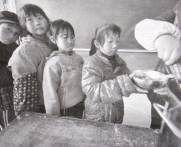
What should we do in our daily lives to waste less food? Here are some tips:
◆Do not order too much in a restaurant. Only order as much as you want to eat. If you cannot eat all the food you ordered, take the rest of it home.
◆Don’t be too picky(挑剔的) about food. Some food may not taste great, but your body needs it.
◆Keep an eye on what food you have at home. Don’t buy too much, especially for vegetables and fruit.
【1】 How many people were hungry in the world in 2010 according to the UN World Food Program?
A. 200 million. B. Six million.
C. 925 million. D. 625 million.
【2】 The underlined word “leftover” means in Chinese.
A. 过期的 B. 剩余的 C. 腐烂的 D. 难吃的
【3】According to the passage, we shouldn’t waste food because .
A. food comes from very hard work
B. six million children die of hunger every day
C. there is enough food to feed all the people
D. Chinese are hospitable and generous
【4】Which of the following is a good way to save food?
A. Ordering more than you need at a restaurant.
B. Taking home restaurant leftovers.
C. Not knowing what you already have at home when shopping.
D. Not eating the food you don’t like even if it’s healthy.
【答案】
【1】C
【2】B
【3】A
【4】B
【解析】
试题分析:这篇短文主要讲述了世界上的粮食短缺问题,并对如何节约粮食提出了三点建议。从而告诉我们不要浪费粮食。
【1】细节理解题。根据According to the UN World Food Program, there were 925 million hungry people around the world in 2010,描述,可知选C。
【2】细节理解题。联系下文food home for her son 描述,可知此处指的是把剩饭带回家给儿子。故选B。
【3】细节理解题。根据“Every grain on the plate comes from hard work(谁知盘中餐,粒粒皆辛苦).”描述,可知食物是通过艰苦的劳动得来的。故选A。
【4】细节理解题。根据短文最后提供的三条小窍门可知选项ACD都属于浪费食物的行为,故选B,把剩饭带回家。



【题目】Personal data(个人资料)
| Name | Jim Allen Green | Sex(性别) | Male | ||
Chinese Name | Feili | Nationality (国籍) | English | |||
Student No. | 201807051 | Class | Two | Grade | Seven | |
Phone # | 826-07213 | Type of blood(血型) | O | |||
Address(地址) | No.281 Guanghua Avenue | |||||
Name of school | No.7 Middle School | |||||
Post Code(邮编) | CD610031 | |||||
E-mail Address | feili@163.com | |||||

【1】Jim is a(an) __________
A.Chinese B.English C.American
【2】________ is Jim's Chinese name.
A. Allen B. Guanghua C. Feili
【3】His telephone number is________.
A.826-07213 B.20180751 C.CD 610031
【4】Jim is________
A.a boy B. Guanghua C. in Class 2, Grade 8
【5】Which one is wrong(错误的)?
A. We can e-mail Jim at feili@163.com.
B. Jim is a student of No.7 Middle School.
C. Jim’s family name is Allen Green.