题目内容
【题目】Here is some advice on listening. We hope it can help you.
●Relax yourself.
Before you start to listen to something, you need to relax. Don’t get nervous or excited. This will help you with your listening.
●Listen carefully to the first sentence.
The first sentence tells a lot about the whole passage. For example, if at the very beginning, you hear “Many shops in many parts of China have decided to talk away all kinds of Japanese goods off their shelves but some people say it's not a good idea. Our reporter says...”you know you will hear a piece of news, not a children’s story, or a science report.
●Think when you’re listening .
When you’re listening, try to do some thinking. For example, you can think of the following questions: What happened when, where and how? What was the result and what does the speaker want to tell us? This way, you may understand the passage better.
●Listen for important facts.
It’s important for you to remember some important facts. For example, if the passage is a science report, you should try to remember how the scientists got their results.
●Don’t think about one or two words for too long.
You may hear some words that you don’t know, but don’t spend too much time on them. Very often, you’ll find out what they mean later when you go on with the listening. But you can remember some words or sentences that you think are important, and you can use them when you’re answering the questions.

【1】How many ways does the writer tell us?
A. three B. four C. five D. six
【2】When you’re listening, it’s important for you to remember _____.
A. every word B. every sentence
C. some important facts D. the whole passage
【3】This whole passage is mainly about________.
A. advice on relaxing yourselves
B. advice on finding the facts
C. advice on thinking
D. advice on listening
【4】Who is the passage the most helpful to?
A. Journalists. B. Doctors.
C. Scientists. D. Foreign language learners.
【答案】
【1】C
【2】C
【3】D
【4】D
【解析】
【1】考查细节理解。由五个黑体小标题可以得出C正确。句意:作者告诉了我们5种方法。
【2】考查细节理解。从第四条建议可以得知C正确。句意:当你听的时候,对你来说记住一些重要的事实是重要的。
【3】考查主旨大意理解。有文章第一句Here is some advice on listening.可以得出此大意。句意:全篇文章是关于听的建议。
【4】考查细节理解。这四个选项中只有D需要这些建议。句意:这篇文章会对谁很有帮助?学习外语的人。A. Journalists.记者 B. Doctors. 医生C. Scientists科学家D. Foreign language learners外语学习者.





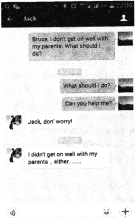
【题目】在微信上,Jack跟Bruce谈到他跟父母关系不好,并向Bruce寻求帮助。假设你是Bruce.
请根据下面的提示,给Jack回复信息。
要求:
1.表达清楚,语法正确,上下文连贯;
2.必须包括所有相关信息,可作适当发挥(至少两点);
3.词数:80词左右(开头已给出,不计入总词数);
4.不得使用真实姓名和班名等。
内容提示:
现象 | 我过去经常跟父母吵架,有时几天不说话 |
原因 | 那是父母过分担心我的成绩,给我太大的压力。 而且我不帮父母做家务,也没意识到帮助父母的重要性。相反地,我每天至少花两个小时打电脑 |
措施 | 现在我能和父母相处得好。我认为我们应该和父母沟通。 … … |
Jack, don't worry ! I didn't get on well with my parents, either.
【题目】【湖北省黄冈市2015年中考英语试题】综合阅读(共两节;计 32 分)
第一节 阅读理解(共 12 小题;每小题 2 分,满分 24 分)
阅读下面三篇短文,根据短文内容,从所给的 A、B、C、D 四个选项
中选出最佳选项。
(1)
CCTV News May 28, 2015, Thursday
The No-Smoking Law in China will be carried out next Monday in Beijing. All indoor public places and many outdoor public places, violators (违者) will face fines of up to 200 yuan. |
CCTV News May 31, 2015, Sunday
Su Bingtian broke record at Saturday’s IAFF Diamond League ( 国 际 田 联 钻 石 赛) in Eugene, United States. He finished third in 9″ 99, behind Americans Tyson Gay in 9″ 88 and Mike Rodgers in 9″ 90. Liu Xiang said,“You are great! ” |
CCTV News June 2, 2015, Tuesday
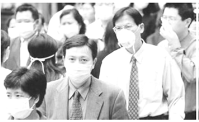
It’s reported that the first two deaths from an outbreak of MERS (中东呼吸综合症) on June 1st in South Koren. So far, the number of new confirmed(感染)cases is 25 in total. |
CCTV News June 4, 2015, Thursday
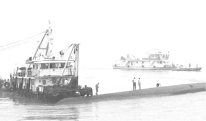
The big ship Dongfang Star( 东方之星) with 458 people sank in Yangtze River after being caught in a strong cyclone at 21:28, June 1. So far, only fourteen people were saved, however, the rescue(搜 救)are still continuing. |


【1】When will the No-Smoking Law be carried out in Beijing?
A. May 31, 2015 B. June 1, 2015
C. June 2, 2015 D. June 4, 2015
【2】Who became the first Asian\|born person in the men’s 100 meters?
A. Tyson Gay. B. Mike Rodgers.
C. Su Bingtian. D. Liu Xiang.
【3】How many people died from the outbreak of MERS in South Korea on June 1st?
A. 1 B. 2 C. 14 D. 25
【4】What caused the big ship to sink on Yangtze River?
A. Hitting another ship. B. Carrying too many people.
C. The wrong driving. D. A sudden strong cyclone.