题目内容
7.Are you shy?If you are,you are not alone.In fact,close to 50percent of people are shy.Almost 80percent of people feel shy at some point in their lives.These days,shyness is becoming more and more common.Now,scientists are trying to understand shyness.They have some interesting ideas about why people are shy.Is it possible to be born shy?Many scientists say yes.They say 15to 20percent of babies behave shyly.These babies are a little quieter and more watchful than other babies.Interestingly,these shy babies usually have shy parents.As a result,scientists think that some shyness is genetic.
Family size might cause people to be shy as well.Scientists at Harvard University studied shy children.They found that 66percent of them had older brothers and sisters.As a result,they became shy.At the same time,children with no brothers and sisters may be shy as well.Growing up alone,they often play by themselves.They are not able to learn the same social skills as children from big families.
You may also be shy because of where you were born.When scientists studied
shyness in different countries.They found surprising differences.In Japan,most people said they were shy.But in Israel,only one of three people said so.What explains the difference?One scientist says the Japanese and Israelis have different opinions of failure.In Japan,when people do not succeed,they feel bad about themselves.They blame(责备)themselves for their failure.In Israel,the opposite is true.Israelis often blame failure on outside reasons,such as family,teachers,friends,or bad luck.In Israel,freedom of opinion and risk taking are strongly supported.This may be why Israelis worry less about failure and are less shy.
For shy people,it can be difficult to make friends,speak in class,and even get a good job.But scientists say you can get over your shyness.They suggest trying new things and practicing conversation.And don't forget---if you are shy,you are not the only one.
42.What can be learned from the passage?C
A.Most little babies are born shy and quiet.
B.If you are shy now,you will be shy forever.
C.Many shy children have older brothers and sisters.
D.Most Israeli people are shy of expressing opinions.
43.We can learn from the passage thatBmay cause shyness.
A.genetics,grown--ups and birthplace
B.genetics,family size and birthplace
C.family size,grown--ups and failure
D.genetics,family size and freedom
44.Scientists suggest that shy people can get over their shyness byB.
A.blaming their failure on outside reasons
B.trying new things and practicing conversation
C.getting themselves away from their shy parents
D.trying to understand reasons for their shyness
45.Which of the following shows the structure of the passage?(P=Paragraph)A
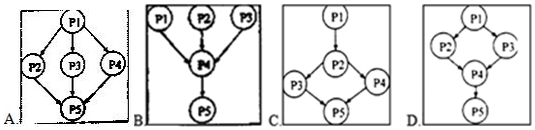
分析 你害羞吗?如果你是,你不是唯一的一个.事实上,接近50%的人都害羞.几乎80%的人在他们生活的某些时候会感到害羞.这些日子里,害羞变得越来越常见.科学家试图研究害羞.对于人们为什么会害羞科学家们有一些有趣的想法.
害羞有可能是天生的吗?许多科学家说是的.他们说15%-20%的婴儿表现为害羞.这些婴儿比其他婴儿更安静、更加留意周围.有趣的是,这些害羞的婴儿通常有害羞的父母.因此科学家认为一些害羞是遗传的.
家庭大小也可能导致孩子出现害羞.哈佛大学的科学家研究了害羞的孩子.他们发现有66%的害羞的人有哥哥和姐姐.结果他们变得害羞.同时没有兄弟姐妹的孩子也可能害羞.单独生长,他们经常自己玩.他们不能学会与大家庭的孩子相同的社交技能.
你可能因为你出生的地方而害羞.当科学家在不同的国家研究害羞时,他们发现国家之间存在很大的不同.在日本,大多数人说他们害羞.但在以色列,只有1/3的人这么说,怎么解释这样的区别呢?一个科学家说日本人和以色列人对失败有不同的理解.在日本,当人们失败的时后,他们对自己感到失望,责怪自己.而在以色列是完全相反的情况.以色列人常常将失败归结于外部原因,如家庭、教师、朋友或者是运气不好.在以色列,提倡畅所欲言和敢于冒险.这可能是为什么以色列人不太担心失败、不太害羞的原因.
对于害羞的人,可能很难交到朋友,在课堂上很少说话,甚至很难得到一个好的工作.但科学家说你可以克服你的羞怯.他们建议你尝试新的东西,试着练习交谈.不要忘记:如果你害羞,你不是唯一的一个.
解答 42.C.细节理解题.根据Scientists at Harvard University studied shy children.They found that 66percent of them had older brothers and sisters.可知,哈佛科学家对害羞的孩子进行了研究,结果发现66%的害羞孩子都有哥哥或姐姐,因此答案为C.Many shy children have older brothers and sisters.
43.B.细节理解题.根据As a result,scientists think that some shyness is genetic.可知,害羞可能是遗传过来的,即genetic;根据Family size might cause people to be shy as well.可知,家庭大小也会造成孩子的害羞,因此family size正确;根据You may also be shy because of where you were born.可知,你可能因为你出生的地方而害羞,因此birthplace也会导致害羞,因此应该是genetic、family size和birthplace;
44.B.细节理解题.根据But scientists say you can get over your shyness.They suggest trying new things and practicing conversation.可知,科学家说你可以克服你的羞怯.他们建议你尝试新的东西,试着练习交谈,因此答案为B.trying new things and practicing conversation
45.A.推理判断题.根据全文内容可知,该篇文章主要讲的就是关于害羞的问题,第一段引出害羞的话题,紧接着说道科学家试图研究害羞,随后三段分别描述了科学家得出的能够导致害羞的因素,即genetic、family size和birthplace,因此这三段应该是并列关系,第一段应该是统领提纲的作用,随后作者最后一段进行总结,总结了科学家得出了避免害羞的方法,因此文章的结构应该是A所示的结构.
点评 本文是一篇关于害羞的文章.阐述了害羞的原因以及如何避免害羞.做题时要在理解好文意的基础上,与题目有机的结合,从文章中找到相关细节性的句子与选项细细比对,进行选择或推理判断,选出符合文章内容的正确选项.做题注意灵活,有时可采用排除法或直选法确定出最终答案.

 口算心算速算应用题系列答案
 同步拓展阅读系列答案
--It's in your room.( )
| A. | grandparents' | B. | grandparents | C. | grandparent's |
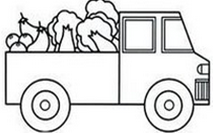 These days,the food that you buy comes from lots of different countries.When you go to the supermarket,you will see some kinds of fruits and vegetables you have never seen before.Have a look in your kitchen,fridge,cupboard and fruit bowl and check where the food comes from.Perhaps there are apples from California,lamb from New Zealand,or potatoes from Egypt.You will probably be surprised how far food travels to get to your plate.This journey,from field to plate,is called food miles.A food mile is the distance that food travels from the farmer's field to the person who buys the food.Nowadays,food often travels thousands of miles to get to the consumer(消费者).Why is this,and what are the influences of these long distances?

Many students thanked the teacher and left.The teacher looked at the remaining students and said,‘Does anyone else want to get a‘B'?This is your last (17)A.'Two more students decided to go.
Seven students remained.The teacher then handed out the papers.There were only three sentences on the paper:Congratulations!You have just (18)D an‘A'in this class.Keep believing in (19)B.
I never had a teacher like that,but I think it is a test that any teacher could give.Students who are not (20)A in what they have learned are‘B'students at best (充其量).
The same is (21)C in our daily life.The‘A'students are those who believe in what they are doing because they have (22)C both successes and failures.They have learned life's lessons,not only from normal education,(23)C from events in their lives,and have become (24)D people.You see,one should always believe in himself.
| 15.A.luckily | B.terribly | C.quietly | D.hard |
| 16.A.dislike | B.rather | C.prefer | D.start |
| 17.A.chance | B.trouble | C.test | D.idea |
| 18.A.given | B.sent | C.discovered | D.received |
| 19.A.himself | B.yourself | C.themselves | D.ourselves |
| 20.A.confident | B.lucky | C.mysterious | D.easy |
| 21.A.unusual | B.impossible | C.true | D.good |
| 22.A.broken off | B.dreamed of | C.learned from | D.cared about |
| 23.A.and | B.or | C.but | D.also |
| 24.A.ruder | B.braver | C.worse | D.better. |