题目内容

Ammie Reddick from East Kilbride, Lanarkshire, was only 18 months old when she had the accident that had scarred(留下创伤)her for life. The curious child reached up to catch the wire(电线) of a hot kettle(壶) in the family kitchen and poured boiling water over her little body.

Her mother Ruby turned round and, seeing Ammie terribly burnt, called an ambulance(救护车) which rushed her daughter to a nearby hospital. Twenty per(组织)taken from unburned areas of Ammie’s body, surgeons(外科医生)performed difficult skin grafts(移植) to close her wounds and control her illness, an operation that took about six hours. Over the next 16 years, Ammie experienced 12 more operations to repair her body.

When she started school at Maxwelton Primary at age 4, other pupils say cruel words about her or simply wouldn’t play with her. “ I was the only burned child in the street, the class and the school,” she recalled, “some children refused to become friends because of that.”

Today, age 17, Ammie can only ever remember being a burned person with scars(疤), suffering from ache is a lasting part of her body. She still has to have two further skin grafts. Yet she is a confident, outgoing teenager who offers encouragement and hope to other young burnt victims.

She is a member of the Scottish Burned Chindren’s Club, a charity set up last year. This month, Ammie will join the younger children at the Graffham Water Center in Cambridgeshire for the charity’s first summer camp. “I’ll show them how to pay no attention to unkind stares(注视) from others,” she says. Ammie loves wearing fashionable sleeveless dresses, and she plans to show the youngsters at the summer camp that they can too. “I do not go to great lengths to hide my burnt scars,” she says, “I gave up wondering how other people would react years ago.”

1.How many operations has Ammie already had?

A. One B. Twelve

C. Thirteen D. Fifteen

2.What did other children do when Ammie first went to school?

A. They laughed at her

B. They were cruel to her

C. They were friendly to her

D. They were afraid of her

3. Ammie will teach the younger children at the Graffham Water Center to ____.

A. live a normal life

B. recover quickly

C. face others’ unkindness bravely

D. hide their scars by proper dressing

4.What does the underlined word “sleeveless” mean in Chinese?

A. 无袖的B. 漂亮的

C. 昂贵的D. 合身的

5. Which of the following words is not proper to describe Ammie?

A. ConfidentB. Stubborn

C. Helpful D. Outgoing


1.C

2.A

3.C

4.A

5.B

【解析】

试题分析:这篇短文主要介绍了Ammie在十八个月的时候被烫伤,虽然生活中有人嘲笑她但是她是个自信,乐于助人,外向的人。她不仅自己克服了心理障碍,而且还帮助烧伤的俱乐部成员如何面对不友好的目光。

1.Over the next 16 years, Ammie experienced 12 more operations to repair her body.可知她在接下来的十六年里又经历了12次手术,加上第一次的手术,共十三次手术,故选C。

2.推理判断题。根据第描述可知当她上学时同学们对她说一些残忍的话,甚至不和她玩。故选A

3.细节理解题。根据最后一段“I’ll show them how to pay no attention to unkind stares(注视) from others,” she says.故选C

4.推理判断题。根据后文“I do not go to great lengths to hide my burnt scars,”可知她不隐藏自己的烧伤的伤疤,故选A。

5.短文描述Ammie是一个自信,乐于助人,外向的人,故选B

考点:故事类短文阅读。

练习册系列答案
相关题目

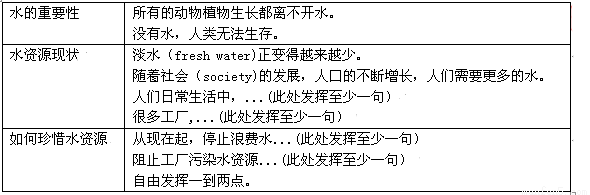
5月9日,靖江市人民政府新闻办公室发布消息:上午10时左右,市自来水公司发现长江水有异味,本着对市民负责的态度,第一时间关闭取水口,暂停供水。并尽快启动应急处置预案。该消息甚至引发了短暂的超市供水荒,也引发了大家珍惜水资源的大讨论。你们班上周召开了“珍惜水资源”的主题班会,同学们就这个话题展开了热烈的讨论。请你写一篇文章报道此次班会的情况并发表自己的见解。要点如下:

要求:

所写内容必须包括表格中的所有信息,省略号处需作适当的发挥;

开头和结尾已经给出,不计入总词数;总词数不少于100;

不得出现真实的人名、校名等相关信息。

Last week, our class had a class meeting on the topic of Cherish Water Resource. All the students took an active part in the discussion and shared their opinions with each other. We think

____________________________________________________________________________________________

____________________________________________________________________________________________

_____________________________________________________

However,__________________________________________________________________

____________________________________________________________________________________________

____________________________________________________________________________________________

_____________________________________________________

What should we do to cherish the water resource?__________________________________

__________________________________________________________________________________________

____________________________________________________________________________________________

____________________________________________________________________________________________

_________________________________________

In a word, water is very important to us. Each of us should do our best to cherish water resource so that people in the future will have plenty of water to use.


In a book called Magnificent Obsession, by Lloyd C. Douglas, a description is given of people helping others but doing it secretly. When difficult problems worried a person, friends nearby would meet to discuss possible solution without the person knowing their actions. When a solution was agreed upon, one or two of the friends would carry out the plan and solve the problem secretly, to the great delight of the worried person. The helpers would stand by privately, content with their success. No reward was given to the problem solvers, not even a sincere “thank you”, because they were never known.

This idea is popular today but in a different way. The phrase “pay it forward” is now used when one person helps another. However, the person helped may not be able to repay the person or group that helped them. So rather than return the favor to their helpers, they are supposed to help someone else in the future, which means they pay it forward. It is a sense of responsibility(责任) which makes us want to give back in equal measure to the one who has helped us. But, in this case, the responsibility turns to helping someone in the future.

Suppose your elderly grandmother pays part of your schooling. She may tell you there is no need to repay her because it is a gift from someone who loves you very much. Nothing would please her more than to have you use her money to get a good education.

You may never be able to repay her for such a gift. However, she not only gave you some money, but she provided you with an example that you should also help other people who need it.

People with serious needs are everywhere. Many are children who need better clothes, more books and even better schools. Some are elderly people who can’t afford their medicine or a doctor’s care. Consider how you can “pay it forward” rather than pay money back to your grandmother.

1.The helpers in the book “Magnificent Obsession” were not rewarded because ______________.

A. they hadn’t solved the problems thoroughly

B. they had solved the problems secretly

C. they were friends of the worried individual

D. they expected to be paid back in the future

2.The underlined word “pay it forward” means ____________________.

A. to repay someone who has helped you

B. to pay someone else who needs help

C. to help someone who has helped you

D. to help someone else who needs help

3.What does the writer suggest with the example of “your elderly grandmother”?

A. We should learn to respect our grandparents.

B. We should work hard to get a good education.

C. We should also lend a hand to other people in need of help.

D. We should never forget to repay people for their help.

4.From the passage we know_________________.

A. everybody needs help

B. more children need help than elderly people

C. it costs a lot of money to “pay it forward”

D. nowadays many people help others without being repaid


违法和不良信息举报电话:027-86699610 举报邮箱:58377363@163.com

精英家教网