题目内容

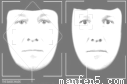
Soon computers and other machines will be able to remember you by looking at your eyes! The program works because everyone’s eyes are different. So in the future you won’t have to remember a number when you want to use a machine or take money out of a bank. You’ll just have to look at the machine and it will be able to tell who you are.

The eye-recognition(眼睛识别) program is already being tested in shops and banks in the USA, Britain and France. Soon, this technology(技术) will change all other ways of finding out who people are.

However, scientists are working on other systems. Machines will soon be able to know you from the shape of your face or hands or even your smell! We already have machines that can tell who you are from your voice or the mark made by your fingers.

Eye-recognition is better than other kinds because your eyes don’t change as you get older, or get dirty like hands or fingers. And even twins have different eyes, so the program can be up to 94% correct, depending on how good the technology is. Some programs may only be right 51% of the time. In Britain, it was found that 91% of people who had tried it said that they liked the idea of eye-recognition.

In the future your computer will be looking at you in the eye. So smile!
1. What is the advantage of using the eye-recognition program?

A. You needn’t use a machine.

B. You needn’t remember a number.

C. You needn’t look at the machine.

D. You needn’t take some money with you.

2.How does the eye-recognition program work?

A. You type in your number.

B. You show your ID card.

C. You look at the machine.

D. You say your name.

3.Why can the eye-recognition program be up to 94% correct?

A. Because eyes hardly change.

B. Because hands or fingers can get dirty.

C. Because people like the idea of the program.

D. Because the program is widely used around the world.

4.Which of the following is TRUE?

A. The program is being tested in Japan.

B. Computers can remember you by looking at your clothes.

C. 91% of people in Britain don’t like the idea of the eye-recognition program.

D. Machines with other systems will also tell who you are in the future.

1.B

2.C

3.A

4.D

【解析】

1.1】细节理解题。由So in the future you won’t have to remember a number when you want to use a machine or take money out of a bank.可知B. You needn’t remember a number.正确。

2.2】细节理解题。由You’ll just have to look at the machine and it will be able to tell who you are.可知C. You look at the machine.正确。

3.3】细节理解题。由....... because your eyes don’t change as you get older,(因为你的眼睛是不会随着你变老而发生改变的),所以A. Because eyes hardly change.符合题意。

4.4】细节理解题。用排除法做此题。

A. The program is being tested in Japan.由The eye-recognition(眼睛识别) program is already being tested in shops and banks in the USA, Britain and France.可知没有日本,所以A 错误。

B. Computers can remember you by looking at your clothes. 由Soon computers and other machines will be able to remember you by looking at your eyes!可知是by looking at your eyes!而不是by looking at your clothes.所有B 错误。

C. 91% of people in Britain don’t like the idea of the eye-recognition program.由In Britain, it was found that 91% of people who had tried it said that they liked the idea of eye-recognition.可知是they liked the idea ,所以C错误。

D. Machines with other systems will also tell who you are in the future.由第三段可知D 正确。

考点:科技类短文。

练习册系列答案
相关题目

Here is some advice on listening. We hope it can help you.

●Relax yourself.

Before you start to listen to something, you need to relax. Don’t get nervous or excited. This will help you with your listening.

●Listen carefully to the first sentence.

The first sentence tells a lot about the whole passage. For example, if at the very beginning, you hear “Many shops in many parts of China have decided to talk away all kinds of Japanese goods off their shelves but some people say it's not a good idea. Our reporter says...”you know you will hear a piece of news, not a children’s story, or a science report.

●Think when you’re listening .

When you’re listening, try to do some thinking. For example, you can think of the following questions: What happened when, where and how? What was the result and what does the speaker want to tell us? This way, you may understand the passage better.

●Listen for important facts.

It’s important for you to remember some important facts. For example, if the passage is a science report, you should try to remember how the scientists got their results.

●Don’t think about one or two words for too long.

You may hear some words that you don’t know, but don’t spend too much time on them. Very often, you’ll find out what they mean later when you go on with the listening. But you can remember some words or sentences that you think are important, and you can use them when you’re answering the questions.

1. How many ways does the writer tell us?

A. three B. four C. five D. six

2. When you’re listening, it’s important for you to remember _____.

A. every word B. every sentence

C. some important facts D. the whole passage

3.This whole passage is mainly about________.

A. advice on relaxing yourselves

B. advice on finding the facts

C. advice on thinking

D. advice on listening

4. Who is the passage the most helpful to?

A. Journalists. B. Doctors.

C. Scientists. D. Foreign language learners.

It can’t be truer that when in Rome do as the Romans do. So it’s important for you to know what you can talk with the local people in other countries.

In France

You’ll find that conversations often turn into heated discussions. You’d better give opinions only on subjects that you are knowledgeable about. There is seldom a moment of silence, except when the topic under discussion has been finished, and nothing new has been introduced.

Food, art, music and current events or history are welcome topics. The French believe in freedom, and you can criticize(批评) anyone, but not Napoleon, who is a symbol of French spirit and never use the conversation opener “What do you do?”.

In Australia

Australians are excited about discussions. Many topics may be open to discussion, such as religion and politics. The best way, however, is to wait for Australians to bring up these two subjects; be prepared to listen to what they are talking about.

Australians like to criticize themselves, but they can’t stand being criticized by others. Don’t talk big. Instead, Australians prefer to judge(判断) your abilities through your actions. People who show off their education in conversation may be laughed at.

In Switzerland

The Swiss may seem cold. Once you get close to them, however, you’ll find that they are honest, responsible people, who will respect your interests much.

They are good listeners and will remember almost everything you say to them. Sometimes they will even take notes while you speak. The Swiss are very private people, so you should avoid asking personal questions. They can be rather serious, so it is advisable to avoid making jokes on them.

1.According to the passage, it’s better NOT to criticize ___ ___.

A. the Romans B. the French

C. the Australians D. the Swiss

2.From the passage we know that __ ____.

A. the Swiss are not as cold as they seem to be

B. the French can’t stand the heated discussions

C. the Australians like to talk about their success

D. the French usually have a conversation about jobs

3.The writer wants to tell us ____ __.

A. what to introduce to foreigners

B. how to live in foreign countries

C. how to get along with foreigners

D. what to talk about in foreign countries

违法和不良信息举报电话:027-86699610 举报邮箱:58377363@163.com

精英家教网