题目内容

我国不少城市正在推广公共自行车,提倡人们“绿色出行,低碳生活”。现在某英文网站就此话题征文,请你参考下面的短文内容(不得照搬),再根据短文后面的内容要点,用英语写一篇短文投稿,谈谈推广公共自行车的好处。

Nowadays, it is very important for us to live a low-carbon life.

The first thing we can do is riding bikes instead of driving cars.

Bikes are much cheaper than cars and everyone can afford it.

It’s easier to find the parking places for bikes.

The petrol is not necessary for bikes,so bikes won’t produce the dirty air to make pollution (污染)to our environment.

We can ride bikes to keep fit.

Let’s ride bikes instead of driving cars to protect the environment!

内容要点:

(1)首先,骑自行车出行方便,可以随时租还(rent and return)。

(2)其次,众所周知(as we know),在上学、上班时段交通特别繁忙(a heavy traffic)。

(3)如果有更多的人选择自行车,街道上就会有更少的汽车,也不会那么拥挤。

(4)最重要的是,骑自行车几乎不会带来污染,有助于保护环境。

要求:(1)短文必须包括所有内容要点,可适当发挥,以便行文连贯;

(2)80词左右,开头和结尾已给出,不计入总词数。

Now, public bikes are provided for people in many cities in China. I think a it’s good thing. To live a low—carbon life, we should call on people to ride bikes instead of driving cars. First, bikes are much more convenient than cars and everyone can rent and return them. Second, as we know, there’s usually a heavy traffic when we are on the way to school or work. If fewer people ride bikes then there are fewer cars on the road, and there won’t be too crowded. Third, it’s the most important that riding bikes won’t produce the dirty air to make pollution to our environment. Let’s ride bikes instead of driving cars to protect the environment! And I hope more and more people can ride bikes and live a low—carbon life.

【解析】

试题解析:

此题是提示性作文,要求根据提示及所给材料写一篇英语作文,主要考查写作能力,也是对英语综合知识运用的考查,这就要求仔细分析所给提示,不要漏掉提示要点,可适当发挥,写出语言流畅,意思连贯的文章。

【亮点说明】

这篇文章语言连贯,简洁明了。在文章中使用恰当的衔接词,为文章增色不少,同时也体现出作者的写作功底。例如:first,second,third,这样使文章层次分明,一目了然;同时还是用正确的比较级句型使文章的重点突出,如:If fewer people ride bikes then there are fewer cars on the road, and there won’t be too crowded.(如果更少的人选择骑自行车,汽车就会更少,街道也不会像现在这么拥挤)

练习册系列答案
相关题目

阅读下面材料,从每题所给的A、B、C、D四个选项中选出最佳选项。

ENGLISH LESSONS

An experienced teacher is offering English lessons

Please e-mail Mrs. Daniel at daniel_m@mail.com and tell her:

● Your age

● Reasons for learning English

● Your level of English

● Areas that you are weak in

□grammar □listening □speaking

□reading □writing

1. If you are interested in the lessons you can ___________.

A. send an e-mail to Mrs. Daniel.

B. write a letter to Mrs. Daniel.

C. call Mrs. Daniel.

D.go to Daniel’s house.

2. You do Not have to tell Mrs. Daniel __________.

A. how old you are.

B. how you learn English.

C. why you want to learn English.

D. Your level of English.

3. How many areas does the poster offer?

A. Four. B. Five. C. Six. D. Seven.
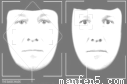
Soon computers and other machines will be able to remember you by looking at your eyes! The program works because everyone’s eyes are different. So in the future you won’t have to remember a number when you want to use a machine or take money out of a bank. You’ll just have to look at the machine and it will be able to tell who you are.

The eye-recognition(眼睛识别) program is already being tested in shops and banks in the USA, Britain and France. Soon, this technology(技术) will change all other ways of finding out who people are.

However, scientists are working on other systems. Machines will soon be able to know you from the shape of your face or hands or even your smell! We already have machines that can tell who you are from your voice or the mark made by your fingers.

Eye-recognition is better than other kinds because your eyes don’t change as you get older, or get dirty like hands or fingers. And even twins have different eyes, so the program can be up to 94% correct, depending on how good the technology is. Some programs may only be right 51% of the time. In Britain, it was found that 91% of people who had tried it said that they liked the idea of eye-recognition.

In the future your computer will be looking at you in the eye. So smile!

1. What is the advantage of using the eye-recognition program?

A. You needn’t use a machine.

B. You needn’t remember a number.

C. You needn’t look at the machine.

D. You needn’t take some money with you.

2.How does the eye-recognition program work?

A. You type in your number.

B. You show your ID card.

C. You look at the machine.

D. You say your name.

3.Why can the eye-recognition program be up to 94% correct?

A. Because eyes hardly change.

B. Because hands or fingers can get dirty.

C. Because people like the idea of the program.

D. Because the program is widely used around the world.

4.Which of the following is TRUE?

A. The program is being tested in Japan.

B. Computers can remember you by looking at your clothes.

C. 91% of people in Britain don’t like the idea of the eye-recognition program.

D. Machines with other systems will also tell who you are in the future.

When Mr. Brown entered the classroom that Friday morning, he stopped at the blackboard. For there, on the blackboard, were words in huge red letters: BROWN IS STUPID!

Mr. Brown thought for a moment. This could only have been the work of one of the four boys who had been kept in after school the day before.

Mr. Brown turned the blackboard around so that the words could not be seen. Half an hour later,Mr. Brown wrote four names on the board: Gerald, Alex, Michael and Laurie. Then he said, “I want these four to stay in the classroom. The rest of you may go to the playground.”

The four boys came to the blackboard. “One of you has written a most impolite remark on the blackboard,” he stared (盯着看)at them and thundered, “which one of you did it?”

The four boys gathered closer together, afraid of what was to come.

“Was it you, Gerald?”

Gerald shook his head. “No, it was not me, Sir,” he gave the teacher a most sincere look in his wide eyes.

“What do you have to say, Alex?”

“I don’t know anything about it, Sir,” said Alex, and his ears turned red.

Michael had a bright idea. “Perhaps someone broke in during the night,” he said. “And when he saw the lovely red chalk lying there, he wrote something on the blackboard.”

“Is that the best you can think so, Michael?” asked the teacher.

“I only thought ...”

“And what about you, Laurie?”

Laurie said in a rather low voice, “I didn’t do it, Sir. I don’t even know what it says on the blackboard.”

“You really don’t know what’s written there?” Mr. Brown asked. “And I don’t think dear Gerald knows either.”

“No, Sir. No idea.”

“Michael, Alex, can either of you tell me what it says on the blackboard?”

“No, Sir!” the two boys answered together. Brown walked forward and his fingers seized(揪住) a schoolboy. He said in his kindest and softest voice to the other three boys, “Very well. I only punish the one who has been telling lies, and you three may go to the playground!”

1. What did Mr. Brown write on the blackboard?

A. BROWN IS STUPID

B. WHICH ONE DID IT

C. The rules of the class

D. The names of the four boys

2. Which of the following can be put into “______” in Paragraph 3?

A. all the students arrived

B. all the children laughed

C. the four students ran away

D. the headmaster came in

3. The underlined word “thundered” in Paragraph 4 most probably means “______”.

A. asked softly B. said slowly

C. spoke happily D. shouted loudly

4.Who has been telling lies?

A. Gerald B. Alex C. Michael D. Laurie

5.The word that can best describe Mr. Brown is “______”.

A. honest B. smart

C. hard-working D. warm-hearted

完形填空(共15小题,每小题1分,计15分)

A teacher began his class by holding up a glass of water. He asked the students, “How much do you think this glass ?”

“Fifty grams!” “One hundred grams!” “One hundred and fifty grams!” the students answered.

“I don’t know either,” said the teacher. “What would if I held it up like this for a few minutes?”

“ ,” the students said.

“OK. What would happen if I held it up like this for an hour?”

“Your would ache,” said a student.

“You’re right. Now what would happen if I held it for a day?”

“Your arm would go numb (麻木的). You may have to go to a !” said another student, and all the students laughed.

“Very good. But during all this, did the weight of the glass ?” asked the teacher.

“No.”

“Then what the pain and numbness?”

The were puzzled (困惑的) .

“What should I do now to get rid of (消除) the ?” asked the teacher again.

“Put the glass !” said a student.

“ Exactly!” said the teacher. “Life’s problems are like this. Hold them for a few in your head and they seem OK. them for a long time and they begin to ache. Hold them even and they begin to make you numb. You will not be able to do anything.”

It’s important to think of the challenges or in your life. But what’s even more important is to “put them down” at the end of every day.

1.A. costs B. has C. weighs D. fills

2.A. complete B. happen C. reply D. disturb

3.A. Everything B. Something C. Anything D. Nothing

4.A. foot B. finger C. arm D. head

5.A. library B. hospital C. museum D. office

6.A. change B. go C. improve D. raise

7.A. caused B. carried C. controlled D. collected

8.A. teachers B. students C. glasses D. weights

9.A. pain B. water C. glass D. stress

10.A. away B. up C. down D. off

11.A. nothing B. anything C. everything D. something

12.A. minutes B. hours C. days D. weeks

13.A. Talk with B. Talk about C. Think about D. Think with

14.A. shorter B. longer C. lighter D. heavier

15.A. joy B. happiness C. excitement D. Problems

违法和不良信息举报电话:027-86699610 举报邮箱:58377363@163.com

精英家教网