题目内容

【题目】Tom: Good evening, Mum.

Mum: Good evening, Tom.

Tom: Do we eat chicken for dinner, Mum?

Mum: No, we eat fish and carrots, dear.

Tom: Mum, I don’t like carrots. I like chicken.

Mum: But we need more vegetables, not only meat. It’s not healthy to eat chicken every day.

Tom: OK. But dad likes chicken, too.

Mum: Well, let’s eat chicken and tomatoes tomorrow.

Tom: That sounds great!

1 What do they eat for dinner?

A. Chicken. B. Carrots.

C. Carrots and fish. D. Tomatoes.

2What does Tom want to eat for dinner?

A. Fish. B. Chicken.

C. Carrots. D. Tomatoes.

3What do they need to eat more?

A. Chicken. B. Meat. C. Vegetables. D. Rice.

【4】Does Tom’s father like chicken?

A. No, he doesn’t. B. Yes, he does.

C. No, he does. D. We don’t know.

【答案】

1C

2B

3C

4B

【解析】

试题分析:这篇短文展现了一个妈妈和儿子Tom之间的对话,主要探讨了一家人晚餐的饮食计划,汤姆想要吃鸡肉,而妈妈坚持一家人应该多吃蔬菜

1C细节理解题。此题根据问题定位到文章信息处:No, we eat fish and carrots,推知他们将要吃鱼和萝卜作为晚餐。故选B。

2B细节理解题。此题根据问题定位到文章信息处:Tom: Mum, I don’t like carrots. I like chicken.推知汤姆想要吃鸡肉。故选A。

3C细节理解题。此题根据问题定位到文章信息处:But we need more vegetables推知妈妈认为一家人应该多吃蔬菜。故选C。

4B细节理解题。此题根据问题定位到文章信息处:But dad likes chicken, too.推知汤姆的爸爸也喜欢吃鸡肉。故选C。

练习册系列答案
相关题目

【题目】Perhaps you’ve seen the English letters “WC” in your city. They show public toilets. But do you know it is far from elegant (优雅的) English? In fact, foreigners from English-speaking countries rarely use the letters.

Workers in our city are changing “WC” signs all over the city. The government is spending much money changing all the bad English on signs and restaurant menus. Many other places in China are following our steps.

“WC, or water closet, is old-fashioned English. It sounds dirty to me,” says Charlie Shifflet, a young man from the US. The old sign will become “Gents/Men” and “Ladies/Women”.

“I see lots of poor English in everyday life, and not only on signs,” he says. “I know what they mean. But they are Chinglish, not real English. For example, when someone says to me ‘My hometown is Henan Province, I know he should say: ‘My hometown is in Henan Province’. ‘Hometown’ is a smaller place in a province.”

The common mistakes he picked up include “Not Entry”, which should be “No Entry”, “Direction of Airport” should be changed to “To the Airport”. And it is “room rate”, not “room price”. And remember to “Keep off the grass”, rather than “Care of the green”.

【1】 What does the writer think of the use of “WC”?

A. He doesn’t think it means water closet.

B. He doesn’t think it old-fashioned English.

C. He doesn’t think it proper for a sign.

D. He thinks it elegant English.

2 The underlined word rarely means _________.

A. sometimes B. seldom

C. often D. always

3 Charlie Shifflet .

A. is a Chinese living in America

B. thinks Chinese people are sometimes using incorrect English

C. likes to hear or see Chinglish

D. sometimes uses Chinglish

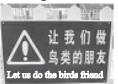
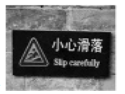
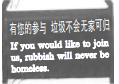
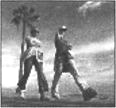
4 Which of the following signs does NOT use Chinglish?

A. B.

C. D.

5 The last paragraph is about .

A. why there are so many Chinglish signs

B. examples of Chinglish

C. where Chinglish signs are

D. who uses Chinglish signs

【题目】If you’re ready to add more physical activity(体育运动) to your life, here are some tips(建议).

Make physical activity part of your routine, like brushing your teeth or going to work. Try biking to work at least once a week, using the stairs more often, or walking to some places near home. But talk to your doctor before you start an exercise routine, especially if you haven’t been very active or have health problems.

Walking is one of the best fitness(健康) activities. To keep up a routine, you can walk with family members, friends or pets. Count your steps with a step counter(计数器). You can buy one at a sporting goods store. If you don’t have time for one 30-minute walk, break it into three 10-minute walks.

Find an activity that you enjoy, and stay with it. Change it with other activities so you don’t get bored. For example, walk three days a week, and swim or bike on the other days. Join a volleyball or basketball club for fun and exercise. By finding more activities you enjoy, you’ll have a greater chance for success.

【1】The underlined word “routine” probably means “______” in Chinese.

A. 建议 B. 惯例 C. 爱好

【2】What does the writer suggest doing before starting daily exercise?

A. Talking to the doctor.

B. Walking to work.

C. Buying a step counter.

【3】How many tips does the writer mention when talking about the walking activity?

A. Two. B. Three. C. Four.

【4】To avoid getting bord with the same activity, we can ______.

A. break one 30-minute walk into three

B. change the activity we are staying with

C. do the activity with our family members

【5】The passage mainly talks about ______.

A. the ways to count walking steps

B. some health problems we may face

C. some advice on physical activity

【题目】 Many people believe that life has smiled on Yang Mi: at the age of 4, she got her first TV drama role; at 16, she became a model for a fashion magazine; at 18, she went to her dream college Beijing Film Academy (北京电影学院). That year, the 24-year-old actress played the bad girl Luo Qingchuan in the time-travelling TV drama, Palace (《宫锁心玉》). The drama became a big success and made Yang very famous. The number of her micro blog followers rises from several thousand to more than 3 million overnight.

Could she be any luckier? Yang doesn’t think luck had anything to do with her success. She works hard all by herself. “Every chance is achieved from the efforts I’ve made,”said Yang. People now think she’s very hard-working.

She still remembers the time when people gave her the cold shoulder. People treated her with little love. They didn’t want to help her in her time of need.“I have to thank them because they gave me the strength to prove myself,”she said

That’s why she is eager to help others when they are in need.

In May, Yang became the ambassador (大使) for the Climate Group to fight the bad weather. She calls on people to join the Million-Miracle (百万奇迹) project and plant trees on China’s dry land.

【1】When did Yang Mi first play her role in TV dramas?

____________________________________________

【2】What kind of TV drama is Palace?

____________________________________________

【3】What made Yang Mi so successful?

___________________________________________

【4】Did luck have anything to do with her success?

____________________________________________

【5】What does Yang Mi call on people to do?

____________________________________________

【题目】阅读下面短文,掌握其大意,从各小题所给的A、B、C、D四个选项中选出最佳选项。

Life is full of unexpected. ____ a cold winter afternoon, a man saw an old lady standing by her expensive car and clearly she needed help. So he stopped and ____ his old truck. “Is he going to hurt me? He doesn’t look safe,” the old lady was ____.

The man could see that she was afraid, so he said in his friendliest voice, “I’m here to help you, madam. Why don’t you ____ in the car where it’s warm? By the way, my name is Ted Johnson.” Ted quickly fixed the car and the lady thanked him. The she asked ____ she could pay him.

But Ted wanted no money. He was just giving a hand to someone in trouble. ____ was normal for him to do such a thing like that. He said. If you really want to repay(报答)me , next time you see someone in need, think of me and help them.”

After saying goodbye, the lady continued down the road until she reached a small ____ where she decided to stop for something to eat. As the pretty waitress took her order, the lady noticed she was nearly eight months pregnant(怀孕). The waitress looked tired and week, ____ she was very kind. As the lady was going to pay the $10 bill, she remembered Ted’s words.

After the lady was gone, the waitress saw a small note on the table. It said, “Somebody once helped me the way I’m helping you. Continue being kind to other people.” Under the note were five ____ dollars.

The waitress was ____ excited that she called her husband to tell him the news, “Ted…Ted Johnson my dear… you’re not going to believe what just happened…”

【1】A. In B. On C. At D. Under

【2】A. went off B. turned off C. took off D. got off

【3】A. glad B. excited C. worried D. surprised

【4】A. wait B. to wait C. waited D. waits

【5】A. how many B. how much C. how far D. how often

【6】A. This B. That C. It D. They

【7】A. restaurant B. bookstore C. cinema D. library

【8】A. so B. but C. or D. though

【9】A. hundred B. hundreds C. hundred of D. hundreds of

【10】A. too B. very C. such D. so

违法和不良信息举报电话:027-86699610 举报邮箱:58377363@163.com

精英家教网