ÌâÄ¿ÄÚÈÝ

¶ÌÎÄд×÷¡££¨¹²15·Ö£©

½ñÌìÊÇ6ÔÂ21ÈÕ£¬¸¸Ç×½Ú¡£¼ÙÉèÄãÊÇÀîÃ÷, ÄãÔçÆðΪ°Ö°Ö×öÔç²Í£¬ÖóÁËÒ»Í뼦µ°ÃæÌõ¡£ÏÖÔÚÇëÄã°´ÕÕϱíÌáʾÄÚÈÝ£¬ÓÃÓ¢ÓïдһÔòÈռǡ£

ÖóÃæÌõµÄ¹ý³Ì

Ë®£¬ÃæÌõ£¬¼¦µ°£¬×ôÁÏ ¡­¡­(3¡ª4¸ö²½Öè)

°Ö°Ö³ÔÃæÌõºóµÄ¸ÐÊÜ

ÃÀ棬¸ßÐË£¬¿ä½± ¡­¡­

ÄãµÄÏë·¨ºÍ´òËã

×ÔºÀ£¬¸Ð¶÷£¬×£¸££¬¶à°ïÖú¸¸Ä¸·Öµ£¼ÒÎñ ¡­¡­

ÒªÇó£º

1£®ÇëʹÓÃÇ¡µ±µÄ¹ØÁª´ÊÐðÊö×öÃæÌõµÄ¹ý³Ì¡£

2£®¿ÉÒÔÊʵ±Ôö¼ÓÄÚÈÝ£¬µ«ÊÇÎÄÖв»µÃ³öÏÖÕæÊµµÄÐÕÃûºÍѧУÃû³Æ¡£

3. ÓïÑÔͨ˳£¬Òâ˼Á¬¹á£¬ÌõÀíÇå³þ£¬Êéд¹æ·¶¡£

4. ´ÊÊý80×óÓÒ¡£ÈռǿªÍ·ÒѸø³ö£¬²»¼ÆÈë×Ü´ÊÊý¡£

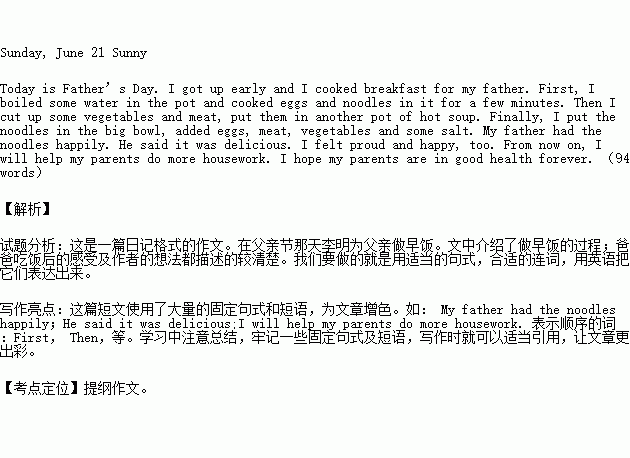
Sunday, June 21 Sunny

Today is Father¡¯s Day. I got up early and

Á·Ï°²áϵÁдð°¸
Ïà¹ØÌâÄ¿

The message was short. I read it three times: ¡°Hey, Mom, can I come to see you guys?¡± I wrote back: ¡°Yes!¡± He said he hoped to make it in time for dinner.

I made a quick run to the market, put sheets on the guest bed and set the TV to record the Warriors¡¯ game, so if traffic was awful, he wouldn¡¯t have to miss the first half. Then I began cooking, cleaning, watching the clock and listening for his footsteps coming up the walk.

It¡¯s called waiting. I¡¯m good at it. When he was a newborn, I¡¯d wait for him to go to sleep. Soon then I¡¯d stand by his bed waiting for him to wake up. I waited, as he learned to do things like walking , talking and feeding himself; throwing a ball, riding a bike and reading a book.

I waited for him to start preschool, primary school, middle school and college.

I waited with dread for him to start driving. And I waited up every time he came home late.

I wait for my son to grow up, but that doesn¡¯t mean the waiting game is over. It never really ends.

Mothers wait for all kinds of reasons¡ªgood news or bad, happiness or heartache. But the waiting is soon forgotten, usually, the minute a long awaited child walks through the door.

My boy will be here soon. But if he¡¯s late, I can wait. I¡¯m good at it. And he¡¯s worth it. I will always leave a light on for him.

1. After knowing her son would come home, which of the following activities did she do?

a. Shopping.

b. Cooking.

c. Cleaning.

d. Watching the Warriors¡¯ game.

A. bc B. ad C. abc D. bcd

2.What does the underlined word ¡°dread¡± mean?

A. ¼¤¶¯ B. ½¾°Á C. Ñá¶ñ D. º¦ÅÂ

3.Which of the following about the writer is TRUE according to the reading?

A. Luckily, her son never makes her wait long.

B. She has experienced all kinds of feelings while waiting for her son to do things.

C. When her son went to college, her waiting ended.

D. Waiting for her son is often boring, but once her son arrives she forgets about it.

4.Which do you think would be the best title for the reading?

A. Worth waiting for

B. Being patient is difficult

C. Learn to be a mother

D. Visit your mother often

Mr. Clarke works in a middle school. He likes reading and often some books from the library. He to the radio every morning and reads after supper. So he knows much and teaches well. His worship(³ç°Ý)him very much. Mike£¬ Mr. Clarke¡¯s little son£¬ is only nine. He likes reading books. And he often asks his father some questions. Mr. Clarke always thinks he¡¯s too to understand him and chooses ones to answer. Of course the boy is not satisfied with(¶Ô¡­¡­ÂúÒâ)it. One day Mike read about the lights and was it. When his father told him to do some housework£¬ he went on thinking of it. He asked him questions£¬ and his father answered all. Then his father said proudly£¬ ¡°Fathers always know than sons!¡± The boy thought for a while and said£¬ ¡° .¡± His father asked£¬ ¡°Oh? Why?¡± Mike didn¡¯t answer£¬ and asked£¬ £¬ ¡°Who invented the lights?¡± ¡° ¡±answered Mr. Clarke. ¡°Why didn¡¯t his father invent them£¬ then? ¡± Looking at his son£¬ Mr. Clarke didn¡¯t know 47 to answ!

1.A. finds B. sells C. borrows D. buys

2.A. hears B. listens C. says D. reads

3.A. CD B. music C. TV D. newspapers

4.A. teachers B. parents C. students D. classmates

5.A. also B. never C. even D. only

6.A. old B. young C. clever D. able

7.A. more difficult B. the most difficult C. easily D. the easiest

8.A. everything B. nothing C. something D. anything

9.A. worried about B. interested in C. afraid of D. angry with

10.A. few B. little C. a few D. a little

11.A. more B. most C. less D. least

12.A. I think so B. I don¡¯t think so C. I agree D. I don¡¯t know

13.A. instead B. carefully C. quickly D. brightly

14.A. Thomas Brown B. Allan Smith C. Thomas Edison D. Ron Jenkins

15.A. when B. where C. which D. what

Î¥·¨ºÍ²»Á¼ÐÅÏ¢¾Ù±¨µç»°£º027-86699610 ¾Ù±¨ÓÊÏ䣺58377363@163.com

¾«Ó¢¼Ò½ÌÍø