题目内容
【题目】Using buses in Japan can be difficult for foreign tourists because there are usually few English signs, and there are different systems of ticketing in different companies.Below is a description of the most common system:

Enter the bus through the back door (or front door if there is only one door). |
When entering, pick up a ticket from a small machine.A number is printed on the ticket, which you will later use to determine (确定) your fare (票价). |
A display (显示) above the driver shows the next stop and the fares for that stop.To determine your fare, match the number on your ticket with the number and fare on the display. |
When your stop is nearing, press one of the buttons (按钮) on the wall to tell the driver that you wish to get off at the next stop. |
If you do not have the exact fare, use the changing machine to get small coins. |
When getting off, put your ticket and the exact fare into the box next to the driver. |
【1】It’s ______ for foreigners to take the bus in Japan.
A.easy B.convenient (便利的)
C.difficult D.useful
【2】If there is a bus with two doors, you should get on through ______.
A.te front door B.either the back door or the front door
C.the back door D.neither the back door nor the front door
【3】When you get on a bus, you should ______.
A.buy a ticket B.show the ticket to the conductor (售票员)
C.give a ticket D.pick up a ticket without money
【4】If you want to get off, what should you do?
A.Call up the driver.
B.Press one of the buttons on the wall.
C.Shout to the conductor.
D.Just wait for the bus to stop.
【5】If you do not have the exact fare, what should you do?
A.Use the changing machine.
B.Change money with others.
C.Change money in a bank.
D.Pay for the ticket next time.
【答案】
【1】C
【2】C
【3】D
【4】B
【5】A
【解析】
试题分析:外国游客在日本坐公交有困难,因为几乎没有英文标志,而且不同的公交公司,有不同的票务系统。本文是外国游客在日本乘坐公交车的系列说明:从后门上,在一个机器上自主拿票;到站时提醒司机;下车交钱交票等等。
【1】C 细节理解题。题意:外国人在日本坐公交怎样?A.easy容易;B.convenient (便利的);C.difficult困难的;D.useful有用的。由短文第一句:Using buses in Japan can be difficult for foreign tourists because there are usually few English signs可知因为几乎没有英文标志,外国游客在日本坐公交可能困难。故选C。
【2】C 细节理解题。题意:如果公交有两扇门,你应该从哪儿上车?A.the front door前门;B.either the back door or the front door或者前门或者后门;C.the back door后门;D.neither the back door nor the front door既不从前门又不从后门。由表格的第一句:Enter the bus through the back door (or front door if there is only one door).可知从后门进入公交车。故选C。
【3】D 细节理解题。题意:当你上车时,你应该做什么?A.buy a ticket买票;B.show the ticket to the conductor给售票员验票;C.give a ticket买票;D.pick up a ticket without money拿一张不给钱的票。由表格第二框的:When entering, pick up a ticket from a small machine.可知上车时从一个小机器里拿一张票,从短文最后的句子可知下车时交钱交票。故选D。
【4】B 细节理解题。题意:如果你想要下车,你应该做什么?A.Call up the driver.给司机打电话;.Press one of the buttons on the wall.按墙上的一个按钮;C.Shout to the conductor.对售票员大声喊叫;D.Just wait for the bus to stop.等待公交车停下来。由表格中的: When your stop is nearing, press one of the buttons (按钮) on the wall to tell the driver that you wish to get off at the next stop.可知当你快到站时,按一下墙上的按钮告诉司机。故选B.
【5】A 细节理解题。题意:如果你没有零钱,你应该做什么?A.Use the changing machine.使用换零的机器;B.Change money with others.和别人换钱;C.Change money in a bank.在银行换钱;D.Pay for the ticket next time.下一次付款买票。由文中的:If you do not have the exact fare, use the changing machine to get small coins.可知,没有零钱时用换零钱的机器换零钱。故选A。

 开心蛙状元测试卷系列答案
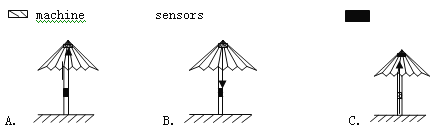







【题目】
Festivals | |||
Symbol | Name | Date | Country |
| Spring Festival | January or February | China |
| Mother’s Day | The second Sunday in May | the USA |
| Boys’ Day | May 5th | Japan |
| Christmas Day | December 25th | Western countries |


【1】Mother’s Day often comes on______.
A. the second Saturday in January
B. the third Saturday in December
C. the second Sunday in May
D. the fifth Sunday in May
【2】Of all the festivals in the form(表格),______ comes last in a year.
A. Christmas Day B. Boys’ Day
C. Mother’s Day D. Spring Festival
【3】The symbol of
A. flowers B. fish
C. trees D. dumplings
【4】Americans may celebrate______ festival(s) in the form.
A. 1 B. 2 C. 3 D. 4
【5】The festival for boys is only celebrated in _______.
A. China B. the USA
C. Japan D. Canada