题目内容
书面表达
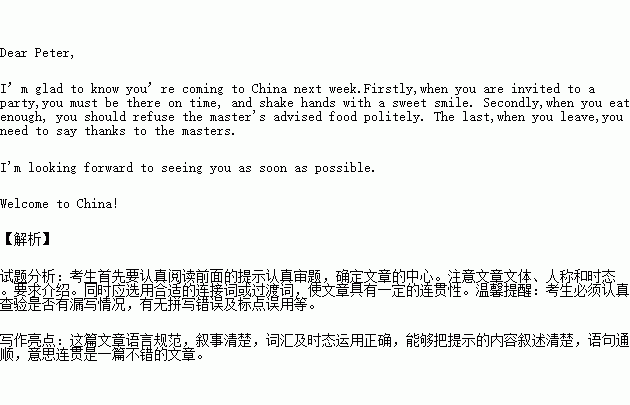
假如你是李丽,写一封信向你的英国笔友Peter介绍一下中国的餐桌礼仪。80词左右,开头结尾已给出,不计入总词数。
Dear Peter,
I’m glad to know you’re coming to China next week.___________________________
________________________________________________________________________________
________________________________________________________________________________
________________________________________________________________________________
________________________________________________________________________________
________________________________________________________________________________
________________________________________________________________________________
Welcome to China!

 开心快乐假期作业暑假作业西安出版社系列答案
词汇运用
With language understand use if make kind help another in they unless |
There are a lot of 1. in the world. But the most widely spoken language is English. Many people u__2.___ and use it all over the world. Indeed, English is a very important and 3. language. ___4.___ we know English, we can hardly travel anywhere and we will have difficulty 5. ourselves understood. English is greatly used in study of all 6. of subjects. Several books are written 7. English every day to teach people many useful things. Therefore, the English language has 8. to spread(传播) knowledge to all parts of the world.
English has also served to bring together the different peoples of the world by helping 9. to talk with one 10. .
补全对话
方框中选择最佳选项完成对话,有两项多余。
A. How’s everything going? B. Yes, I’m Wendy. C. I will go to America to see you as soon as the vacation comes. D. I’m in a new class, but the teacher and classmates treat me very well. E. Yes, this is Wendy speaking. F. What’s the matter? G. You’re great! |
A: Hello, this is Xiao Hui. Is that Wendy?
B: 1. Oh, Xiao Hui, I’m very glad to hear your voice. I miss you very much.
A: Me, too. 2.
B: Not too bad. My grandparents were very happy to see me when I came back from China.
A: That’s nice. How about your school?
B: 3. What about you?
A: I’m OK. I won first prize in the English speaking contest last month.
B: 4. By the way, my parents miss you, too. They hope you can come to America during your summer vacation.
A: OK, 5.
B: That’s great! We hope to see you soon.
A: See you then.