题目内容
完形填空(共10小题;每小题1.5分,满分15分)
阅读下面短文,从短文后各题所给的三个选项(A、B和C)中,选出可以填入空白处的最佳选项。
There was a terrible earthquake. When the rescuers (救援者) reached one young woman’s house, they saw her .
body. She was kneeling like a person who was worshipping (拜神). Her body was leaning forward (前倾) her two hands were supporting an object. The falling had broken her back. The cold body told them that she had . The rescuers left this house and went on to search the next building.
With a second thought, the team leader went to the house. Again, he knelt down and used his hand to search the little space the dead body.
Suddenly, he cried: “A child! There is a child!”
The whole team worked together. Carefully, they removed the piles of ruined (毁坏的) objects around the dead woman. There was a little boy wrapped in a blanket under his mother’s dead body. Obviously(明显地), when the house was falling, the woman had used her body to her son.
When a doctor opened the blanket to the boy, he saw a cell phone inside. There was a on the screen and it read: “Dear baby, if you live, always remember that I love you.”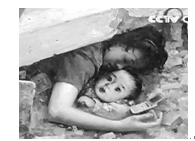
【小题1】A. alive B. dead C. nice
【小题2】A. and B. so C. or
【小题3】A. horse B. hour C. house
【小题4】A. put away B. taken away C. passed away
【小题5】A. back B. away C. near
【小题6】A. into B. under C. next
【小题7】A. 3 months old B. 3-months-old C. 3-month-old
【小题8】A. protect B. remove C. perform
【小题9】A. change B. examine C. laugh
【小题10】A.lesson B. music C. message
【小题1】B
【小题2】A
【小题3】C
【小题4】C
【小题5】A
【小题6】B
【小题7】C
【小题8】A
【小题9】B
【小题10】C
解析试题分析:这篇短文主要介绍了一个伟大的妈妈在地震时,为了保护自己的儿子用身体在倒塌的房屋中为儿子支撑起生存的空间。并留下了一句感人的短信:孩子,如果你活着,记住妈妈爱你。
【小题1】考查形容词及语境的理解。A. alive活着的;B.dead死的;C. nice好的。根据后文可知救援者看到的是她的死尸,故选B。
【小题2】考查连词及语境的理解。A.and并列连词,并且;B.so所以,表示因果关系;C. or否则,或者。她的躯体前倾着,并且她的两只手支撑着一个物体。根据句意可知是并列关系,故选A。
【小题3】考查名词及语境的理解。A.horse马;B.hour 小时;C. house房子。倒塌的房子砸坏了她的脊背。根据上下文及选择对比,故选C。
【小题4】考查动词及语境的理解。A.put away收起来;B. taken away拿走;C.passed away终止,死去。冰冷的尸体告诉他们她早已经死去。根据句意,故选C。
【小题5】考查副词及语境的理解。A.back名词,背;副词,回去;B. away不在;C. near靠近。又想了想,队长返回到那个房子那里。根据后文可知是返回去了,故选A。
【小题6】考查介词及语境的理解。A.into进入······;B. under在······下面;C.next接下来,下一个。在一次,他跪下来搜索死尸下面的狭小的空间。根据上下文可知是在尸体下面的空间里搜索,故选B。
【小题7】考查动词词组及语境的理解。A.3 months old三个月大;B.3-months-old 结构错误,不应该加s;C.3-month-old三个月大的,复合形容词。在妈妈的死尸下面有一个三个月的裹在毯子里的小男孩。根据句子的结构可知缺少形容词做定语,故选C。
【小题8】考查动词及语境的理解。A.protect保护;B. remove移居;C. perform表演。很明显,当房子倒塌时,妈妈用自己的身体保护了她的儿子。根据上文,故选A。
【小题9】考查动词及语境的理解。A.change改变;B. examine检查;C. laugh大笑。医生打开毯子是为了给孩子做检查,故选B。
【小题10】考查名词及语境的理解。A.lesson课程;B. music音乐;C.message信息。根据后文可知是一条短信息,故选C。
考点:情感故事类短文。

We are learning English, but how can we learn English well? A student can know a lot about English, but maybe he can not speak English.
If you want to know how to swim, you must get into the river. And if you want to be a piano player, you must play the piano. So, you see, you can learn English only by using it. You listen to your teacher in class. You must read your lessons every day. You must speak English to your classmates and also you must write in English. Then one day, you may find your English very good.
【小题1】You know a lot about English but maybe you ______.
| A.can’t speak it | B.can study it |
| C.can’t study it | D.can’t use it |
| A.to play with water | B.to go boating |
| C.to learn how to swim | D.to catch a fish |
| A.put your piano away | B.buy a good piano |
| C.play the piano | D.watch others play the piano |
| A.We must have a good English book. |
| B.We must have a good English teacher. |
| C.We must see more English films. |
| D.We must use it often. |
| A.Only my classmates. |
| B.My English teacher and classmates. |
| C.My father and mother. |
| D.All my friends |
Many boys and girls love to watch TV. They spend many hours a day in front of the TV sets. But many parents let their children watch TV only in special time.
TV shows are like books or movies. There are many kinds of TV shows,such as sitcoms,soap operas, sports shows, fashion shows,etc. A child can learn good things and bad things from them. Some shows help children to know the news all over the world. Children don’t have to go to the zoo to see animals. Boys and girls can see sitcoms, sports shows and game shows at home. Some shows teach children how to cook or how to use tools.
Many boys and girls think it is fun to watch TV, but it is also fun to read books, to play games or to visit friends.
阅读短文后选择正确答案。(10分)【小题1】Many boys and girls spend .
| A.4 hours on TV shows on Sunday |
| B.6 hours on TV shows every day |
| C.many hours a day in front of the TV sets |
| D.all their time on TV shows |
【小题2】Many parents .| A.don’t let their children watch TV |
| B.ask their children to watch TV |
| C.watch TV with their children |
| D.let their children watch TV in special time |
【小题3】From TV, boys and girls can .| A.learn nothing |
| B.learn good things and bad things |
| C.learn good things |
| D.learn all the things they can learn from school |
【小题4】Kids like to watch TV, because .| A.it is fun |
| B.they have nothing to do |
| C.it is exciting |
| D.it’s boring |
【小题5】How does the writer like the TV shows?| A.They are good for children. |
| B.They are bad for children. |
| C.Some of them are good for children. Others are not. |
| D.Students should not watch TV. |
Japanese students work very hard but many are unhappy. They have heavy pressures from their parents. Most students are always told by their parents to study harder and harder so that they can have a wonderful life when they grow up .Though this may be a good idea for those very bright students, it can have terrible results for many students who aren’t gifted (有天赋的)enough. Many of them have tried very hard at study but fail in the exams and make their parents lose heart. Some students feel that they are hated by everyone else and they don’t want to go to school any longer .They become dropouts.
It is surprising that though most Japanese are worried about their children, they do not help them in any way .Many parents feel that they are not able to help their children and that it is the teachers’ work to help their children .To make matters worse, a lot of parents send their children to those schools opening in the evening and on weekends. They only help the students to pass the exams and never teach them the very real sense of the world.
Many Japanese schools usually has rules about everything from the student’ clothes to things in their school bags. Child psychologists(心理学家)now think that such strict rules are harmful to the feeling of the students. Almost 40% of the students said that no one had taught them how to get on with others , how to tell right from wrong and how to show love and care for others, even for their parents.
根据材料内容选择最佳答案,将其标号填入题前括号内。
【小题1】 Japanese students have heavy pressures from .
| A.themselves | B.Japan |
| C.their parents | D.their classmates |
| A.a wonderful life | B.their parents |
| C.study | D.themselves |
| A.脱离传统社会的人 | B.文明的社会人 |
| C.逃学的人 | D.偏激的人 |
| A.few | B.a few |
| C.a lot of | D.lot of |
| A.40% | B.50% | C.70% | D.60% |
Hunan TV's new program, Dad,Where Are We Going? has become very popular since last year. The show tells us that fathers should take part in their children's growing-up. In fact, this topic was always mentioned by Zeng Guofan (1811-1872). a famous official(官员)during the late Daoguang Period of the Qing Dynasty (1644-1912).
Although Zeng spent most of his time away from his family, his letters back home to his children and younger brothers have become famous. In these letters, there are many helpful suggestions on proper behavior(行为). Many of his ways on child education are popular among today's Chinese parents, including reading classical books and so on. His child-raising methods are useful for today's busy fathers. Like Zeng, they also spend most of their time away from home.
According to Zeng, the purpose of education was to learn wisdom(智慧)from books, rather than getting an official position. Children should know that the most important purpose of studies is to get more knowledge about nature and life.
"But now ,parents just want their children to be rich and powerful. " Mr. Tang, a writer in China, said.
Some teachers say that parents need to build a good relationship with their children. Parents shouldn't force (强迫)their children to realize their wishes.
In Zeng's letters, he asked his young children to do housework as part of their daily life, even though his children had many helpers. He believed that doing housework would make his children more confident and independent(独立的).
【小题1】When was Zeng Guofan born?
| A.In 1811. | B.In 1644. |
| C.In 1872. | D.In 1912. |
| A.Zeng Guofan was a great writer during the late Guangxu Period. |
| B.Zeng Guofan is one of the fathers in the program, Dad,Where Are We Going? |
| C.Many of Zeng Guofan's ideas on educati'on are not accepted by modern people. |
| D.Zeng Guofan was very busy and spent most of his time away from his family. |
| A.get an official position |
| B.learn wisdom from books |
| C.get high scores in exams |
| D.make a lot of money in the future |
| A.Fathers Influence Their Children's Growing-up |
| B.Zeng Guofan and His Children |
| C.How to Raise a Child |
| D.Dad, Where Are We Going? |
Almost every Chinese person can recite the two lines of the famous poem, “Every grain on the plate comes from hard work(谁知盘中餐,粒粒皆辛苦).” But sadly, many of us don’t actually get the real meaning of these lines: Don’t waste food.
A CCTV program, News One Plus One, reported that the food Chinese people throw away every year is enough to feed 200million people for a year.
Do we have too much food? Of course not. According to the UN World Food Program, there were 925 million hungry people around the world in 2010, especially in developing countries. Six million children die of hunger every year.
Chinese people are well known for being hospitable(好客的) and generous. Many even feel that they lose face if their guests have eaten all the food on the table.
Luckily, a number of people have realized the importance of saving food. Last November, Li Hong, a waitress in a restaurant in Nanjing, got fired because she took some leftover food home for her son. Many people stood by her side and criticized(批评) the waste of food.
What should we do in our daily lives to waste less food? Here are some tips:
1. Do not order too much in a restaurant. Only order as much as you want to eat. If you cannot eat all the food you ordered, take the rest of it home.
2. Don’t be too picky(挑剔的) about food. Some food may not taste great, but your body needs it.
3. Keep an eye on what food you have at home. Don’t buy too much, especially for vegetables and fruit.【小题1】How many people were hungry in the world in 2010 according to the UN World Food Program?
| A.200 million. | B.Six million. |
| C.925 million. | D.625 million. |
【小题2】What does the writer want to show us through Li Hong’s story?| A.Many Chinese restaurants waste a large amount of food. |
| B.Many Chinese people are kind-hearted and ready to help the weak. |
| C.Chinese people feel that they lose face if their guests eat all the food. |
| D.Many Chinese people don’t agree with the behavior of wasting food. |
【小题3】The underlined word “leftover” means in Chinese.| A.过期的 | B.剩余的 | C.腐烂的 | D.难吃的 |
【小题4】According to the passage, we shouldn’t waste food because .| A.food comes from very hard work |
| B.six million children die of hunger every day |
| C.there is enough food to feed all the people |
| D.Chinese are hospitable and generous |
【小题5】Which of the following is a good way to save food?| A.Ordering more than you need at a restaurant. |
| B.Taking home restaurant leftovers. |
| C.Not knowing what you already have at home when shopping. |
| D.Not eating the food you don’t like even if it’s healthy. |
Many companies use guards and expensive alarm systems to protect their property(财产). Soon a new kind of protection will be used—robots. Engineers have been working on the first mobile robots for businesses. The robots will guard factories, warehouses(仓库)and museums at night.
The mobile robots will move around slowly on wheels. They will be able to detect(察觉,发现) people through walls and pick up sounds, such as breaking glass. They can be fixed with loud sirens to frighten thieves, or radios to signal police or guards.
To protect a building, a robot will have to move around without knocking into the walls. Information about the building will have to be stored in the robot’s small, built-in computer. A floor map could be programmed into the computer’s memory, for example.
A mobile robot will not be able to do everything. Unlike human guards, it will not be able to climb stairs, open doors, or move along rough ground. It won’t be able to tell the difference between friends and enemies. Because of that, people will have to be prevented from entering the area it moves.
One kind of mobile robot will be able to “sense” whether a chair or a box has been moved and go around it. This robot will also judge size well enough so that it won’t send an alarm if a cat crosses the room. And if someone tries to steal this robot, it will sound a loud, painful siren. The three-foot-tall robot is hard to be stolen anyway. It weighs about 200 pounds.
U.S. companies pay almost $10 billion a year to protect their property with alarm systems and human guards. Mobile robots may be cheaper.
【小题1】Why is the new kind of robots called mobile robots? Because they can _______________.
| A.guard factories, warehouses and museums |
| B.send loud, painful sirens when it is stolen |
| C.sense moving objects and signal police |
| D.move around and do the programmed work |
| A.From a human guard. | B.From a built-in computer. |
| C.From another robot. | D.From radio signals. |
| A.New Guards. | B.Science and Technology. |
| C.Alarm Systems. | D.Engineers and Robots. |