Passage 1

(09·上海D篇)

The latest research suggests that the key factor separating geniuses from the merely accomplished is not I.Q., a generally bad predictor of success. Instead, it’s purposeful practice. Top performers spend more hours practising their craft. It you wanted to picture how a typical genius might develop, you’d take a girl who possessed a slightly above average language ability. It wouldn’t have to be a big talent, just enough so that she might gain some sense of distinction. Then you would want her to meet, say, a novelist, who coincidentally shared some similar qualities. Maybe the writer was from the same town, had the same family background, or shared the same birthday.

This contact would give the girl a vision of her future self. It would hive her some idea of a fascinating circle who might someday join. It would also help if one of her parents died when she was 12, giving her a strong sense of insecurity and fuelling a desperate need for success. Armed with this ambition, she would read novels and life stories of writers without end. This would give her a primary knowledge of her field. She’s be able to see new writing in deeper ways and quickly understand its inner workings.

Then she would practise writing. Her practice would be slow, painstaking and error-focused. By practising in this way, he delays the automatizing process. Her mind wants to turn conscious, newly learned skills into unconscious. Automatically performed skills. By practising slowly, by breaking skills down into tiny parts and repeating, she forces the brain to internalize a better pattern of performance. Then she would find an adviser who would provide a constant stream of feedback, viewing her performance form the outside, correcting the smallest errors, pushing her to take on tougher challenges. By now she is redoing problems-how do I get characters into a room-dozens and dozens of times. She is establishing habits of thought she can call upon in order to understand or solve future problems.

The primary quality our young writer possesses is not some mysterious genius. It’s the ability to develop a purposeful, laborious and boring practice routine; the latest research takes some of the magic out of great achievement. But it underlines a fact that is often neglected. Public discussion is affected by genetics and what we’re “hard-wired” to do. And it’s true that genes play a role in our capabilities. But the brain is also very plastic. We construct ourselves through behaviour.

76. The passage mainly deals with      .

A. the function of I.Q. in cultivating a writer

B. the relationship between genius and success

C. the decisive factor in making a genius

D. the way of gaining some sense of distinction

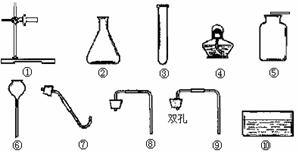
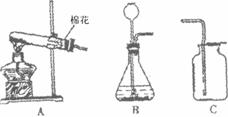
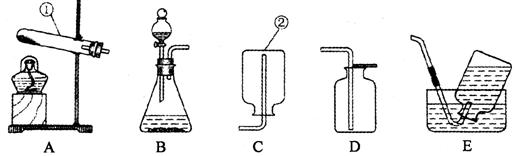
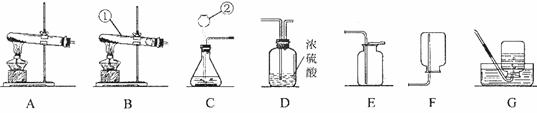
17.(南京)根据下列装置图.回答有关问题:

(1)写出装置中标号仪器的名称:①     ;②      

(2)实验室用高锰酸钾制取氧气,可选用的发生装置是      (填字母)。

(3)写出实验室用过氧化氢溶液和二氧化锰制取氧气的化学方程式         

   并据此选择上图中   (填字母)组装一套制取于燥氧气的装置,收集氧气时,验满

   的方法是                 。

答案:(1)试管  长颈漏斗(2)B  (3)2H2O2eq \o(\s\up 7(MnO2===== 2H2O+O2↑  CDE  将带火星的木条放在集气瓶口,观察到木条复燃

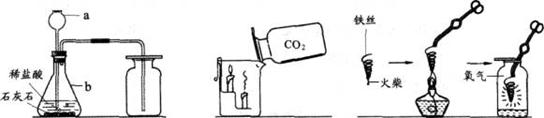
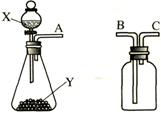
2118.(泰州)如图是实验室常用的两个气体制备、收集、净化的多种功能装置。

(1)若制备的气体是氢气,且产生的气体中不含酸性杂质气

  体,则试剂X常用   ▲   ,用图示放置的乙装置收集

  氢气,A应与   ▲  (填“B”或“C”)相连。

(2)若制备的气体是氧气,Y是黑色粉末,则甲中反应的化学

  方程式为   ▲    。若A、C相连制取氧气,检

验气密性后,还须将装置乙   ▲   

(3)若X是稀盐酸、Y是石灰石,用甲、乙两装置组成发生、     甲    乙

净化、收集CO2气体的系列装置。若乙中放入饱和NaHCO3溶液,该溶液的作用是除去    ▲     ;若乙中放入浓硫酸,浓硫酸的作用是    ▲     

答案:(1) 稀硫酸 C  (2) 2H2O2 ==== 2H2O+ O2↑  装满水或倒立  (3) 除氯化氢气体 干燥气体或除去水蒸气

 0  439511  439519  439525  439529  439535  439537  439541  439547  439549  439555  439561  439565  439567  439571  439577  439579  439585  439589  439591  439595  439597  439601  439603  439605  439606  439607  439609  439610  439611  439613  439615  439619  439621  439625  439627  439631  439637  439639  439645  439649  439651  439655  439661  439667  439669  439675  439679  439681  439687  439691  439697  439705  447090 

违法和不良信息举报电话:027-86699610 举报邮箱:58377363@163.com

精英家教网