网址:http://m.1010jiajiao.com/timu_id_2325445[举报]
听力
现在是试听时间。请听一段对话,然后回答问题。
What is the boy going to buy?
A.Some juice.
B.Some oranges.
C.Some apples.
答案是C。
A)请听下面10段对话。每段对话后有一小题,从题中所给的A、B、C三个选项中选出最佳选项。听完每段对话后,你都将有10秒钟的时间回答有关小题和阅读下一小题。每段对话读两遍。(每小题1分)
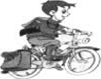
1.How did the boy go to the park?
A.
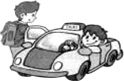
B.

C.
2.What's the weather like now?
A.
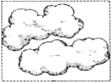
B.
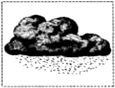
C.
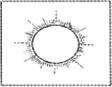
3.What sport does the boy like?
A.

B.

C.

4.Where is Jimmy now?
A.In the office.
B.In the classroom.
C.At home.
5.Who cleans the house at weekends?
A.The woman.
B.The woman's husband.
C.The woman's children.
6.How long has the man waited for the bus?
A.Ten minutes.
B.Thirty minutes.
C.Forty minutes.
7.What time does the man's class start on Fridays?
A.At 10∶00.
B.At 9∶30.
C.At 9∶00.
8.What's the woman going to do?
A.Go to the airport.
B.Have a cup of tea.
C.Wait for the man's uncle.
9.What does the man mean?
A.He doesn't like the chair at all.
B.He will pay 50 dollars for the chair.
C.He can not afford the chair at last.
10.What can we learn from the conversation?
A.Mr.Smith is in London now.
B.Jack is in New York this week.
C.Jack will leave London for Paris.
B)请听下面两段对话和一段独白。每段对话或独白后有几个小题,从题中所给的A、B、C三个选项中选出最佳选项。听每段对话或独白前你都将有40秒钟的时间阅读各小题。每段对话或独白读两遍。(每小题1分)
Conversation 1
11.Where are the two speakers probably talking?
A.On a street.
B.In a bank.
C.In the Hill Building.
12.What is the woman's problem?
A.She has lost her watch.
B.She has bought a broken watch.
C.Something is wrong with her watch.
13.When does the man think the shop closes?
A.At 6∶50 p.m.
B.At 7∶00 p.m.
C.At 7∶10 p.m.
Conversation 2
14.Who is the woman?
A.The man's daughter.
B.The man's wife.
C.The man's student.
15.How long will it take to get to Blue Sky Water World by car?
A.About half an hour.
B.About one hour.
C.About one and a half hours.
16.Where will they probably go this weekend?
A.Sunshine Park.
B.A small zoo.
C.Blue Sky Water World.
Monologue(独白)
17.What will the weather be like at noon?
A.Cloudy.
B.Sunny.
C.Rainy.
18.What is the speaker doing?
A.Giving a talk.
B.Giving a weather report.
C.Making an advertisement.
19.Where shall we park if we want to drive to the beach this afternoon?
A.At the south end of the beach.
B.At the west end of the beach.
C.At the north end of the beach.
20.Which of the following is right?
A.Long Beach is in Australia.
B.The water temperature at the beach is 32 degrees.
C.Long Beach is a good place for swimming and surfing.
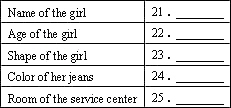
C)请听下面一段短文,根据短文内容完成表格。听短文前你将有50秒钟的时间阅读表格内容。短文读两遍。(每小题1分)
读下面短文,根据短文内容判断句子正误。正确的涂A, 错误的涂B。(共5小题,每小题2分;计10分)
The bicycle is really an important means of transportation in China. Bicycles have become more and more popular in China. People ride bikes to their workplaces, to shopping centers, to schools, and so on. During the rush hour, you can often see a lot of bicycles running . With the largest number of bike riders in the world,China is often called the kingdom of bicycles. There are many advantages(优点) about the bicycle. For example bicycles do not cause(导致) air or sound pollution; compared with cars, bicycles cause no environmental(环境)problems; bicycles save energy() and parking places; riding bikes to travel can be a wonderful exerience; the bicycle make us go anywhere nearby easily; bikes are not very expensive, and almost every family can afford them; riding bikes regularly is also good for people's health.
【小题1】The bicycle is really an important means of transportation in China.
【小题2】China is called the kingdom of bicycles, because it has the largest number of bike riders.
【小题3】Riding bicycles causes some environmental problems..
【小题4】According to the passage, you can go anywhere by bicycle easily.
【小题5】Bikes are very expensive, and almost every family can not afford them.
DIY, which means Do It Yourself, is quite popular in UK. Lots of stores and supermarkets sell DIY things. TV programs show people how to DIY.
English people like DIY. There is a saying in UK---“An Englishman’s home is his castle”. Huge numbers of people spend their holidays making their homes beautiful “castles”. If there is anything that needs fixing around their houses, such as painting the walls or putting in a new shower, they will do the jobs themselves. They share DIY experiences with their friends. More and more people have discovered the joy of DIY. Sometimes people also DIY for saving money. With the economic downturn at present, many people can not afford to buy a bigger house. They are looking at how they can make their houses better without spending a lot of money. It is not surprising that DIY is so popular.
DIY can be difficult. There is a huge market for DIY furniture which people need to put together themselves with a few basic(基本的) tools (工具). However, people often find it not easy to build a piece of furniture because they can’t understand the instructions. Sometimes the instructions are simple and clear, but the furniture itself is difficult to build. One thing is for sure, though most DIY projects are started with the best intentions (目的,意图), many of them may not get finished. DIY can also be dangerous. For example, anything electrical should be done by a professional worker. Unluckily, many people don’t care about this warning and put themselves in danger. It is reported that in just one year over 230 000 people were hurt while doing DIY in UK, including 41 000 who fell off ladders (梯子).
Therefore, DIY can bring us fun and help us save money, but it is not always as easy as it is thought to be if we bite off more than we can chew. Maybe factories should make products that are easier and safer for us to DIY.
【小题1】How do many English people spend their holidays according to the passage ?
| A.Making their homes beautiful. | B.Visiting their friends. |
| C.Traveling all over the world. | D.Making a lot of money. |
| A.Many stores sell DIY things. | B.DIY can bring them fun. |
| C.TV programs teach them to DIY. | D.All DIY projects are easy. |
| A.DIY is a waste of money. |
| B.It is always difficult to DIY. |
| C.We should be careful while doing DIY. |
| D.It’s very safe to DIY. |
| A.we can eat everything we like. |
| B.we should do something difficult. |
| C.we do something that is too difficult. |
| D.we eat too much food that is not safe. |
Going on holidays is best choice for the Europeans to relax themselves, especially in the UK. However, much has changed during the past decades(几十年).
One of the most traditional British holidays was the “seaside holiday”. Families got on a train or into a car and traveled to seaside towns nearby to sunbathe on the beach, buy ice-creams and eat fish and chips and so on.
In the late 1970s, more and more British people started traveling to other countries in Europe for their summer holidays (July-August) because the weather wasn’t very good, even in summer. The “package holiday” was particularly popular with most families.
In the 1980s and 1990s, young people in the UK became wealthier, so many of them traveled to countries all over the world for their holidays.
These years, especially after the world financial crisis(金融危机), most British people can not afford to spend their holidays abroad. They again begin to choose to stay in their own home and go on a few day trips rather than spending money on hotels. They call this sort of vacation a “staycation”.
任务:请阅读上面短文,根据短文内容完成下面表格中的有关信息。
| Time | Kind of holiday | Reason |
| Before the late 1970s | 【小题1】________ | It was a tradition. |
| In the late 1970s | Package holiday | 【小题2】______ |
| 【小题3】__________ | Overseas holiday | Young people became wealthier. |
| These years | 【小题4】________ | The world financial crisis. |
Now the idea of “car sharing” is_____around the world. That’s to say,more people are sharing the___of a car. Not everyone can ____a car. Think about it. __ many families today have one car, a lot of them don’t use it every day. Some cars spend most of their time _____in garages(车库).When we don’t use them ,we have to pay for ____ and other things. That needs a lot of money. To _____ money, some people _____with the idea of “car sharing”. If we share a car, we only pay when we use it.
Now more and more people are _____to do car sharing. In
Switzerland(瑞士),40000 people
are doing it. Japan is also _____ to make “car sharing” popular aroun d
the country. Car sharing is a new____ in vehicle. It’s very easy____us to go
___we want ____buying a car. It also reduces(减少)air____.Let’s
do it at once.
1.A. famous B.different C. important D. popular
2.A.use B.way C.try D.drive
3.A.afford B. rent C. drive D. raise
4.A.Because B. Though C.So D.But
5.A.playing B. living C. staying D. running
6.A.parking B.
driving C.running
D.
putting
7.A.waste B.save C.afford D.use
8.A.come up B. come down C . come over D. come out
9.A.leaving B.remembering C. starting D. forgetting
10.A.able B. trying C.making D.doing
11.A.way B.try C. thought D. idea
12.A.from B.for C.of D.with
13.A.somewhere B.everywhere C.nowhere D.anywhere
14.A.never B.hardly C.without D.with
15.A.trouble B. pollution C. problem D. matter
查看习题详情和答案>>