网址:http://m.1010jiajiao.com/timu_id_2314309[举报]
|
broadcast1/'brɔ:dkɑ:st||ˈbrɔdˌkæst/n[C] a programme on the radio or on television: a radio news broadcast | live broadcast ( = a programme that you see or hear at the same time as the events are happening) broadcast2 v past tense and past participle, broadcast 1 [ I,T] to send out radio or television programmes: The interview was broadcast live across Europe. 2 [T] to tell something to a lot of people: There was no need to broadcast the fact that he lost his job. broadcaster /ˈbrɔːdkɑːstə || ˈbrɔːdkæstər/ n [C] |
curious/ ˈkjʊəriəs || 'kjur-/ adj 1 wanting to know about something: When I mentioned her name everyone was curious. | [ +about] I’m incurious about this book she's supposed to be writing. |curious to see/hear/know etc: Mandy was curious to hear what Peter had to say himself.—opposite INCURIOUS 2 strange or unusual: a curious noise coming from the cellar | curious that It's very curious that she left without saying goodbye. curl1 /kɜ:l|| kɚrl/ n 1[C] a small mass of hair |
|
flask / flɑ:sk || flæsk/n [C] I BrE a special type of bottle that you use to keep liquids either hot or cold, for example when travelling 2 a flat bottle usually used to carry alcohol 3 a glass bottle with a narrow top, used in a LABORATORY flat1/ flæt / adj flatter, flattest 1▶ SURFACE◀ smooth and level, without raised or hollow areas, and not sloping or curving: a flat-bottomed boat |a perfectly flat sandy beach | flat as a |
pollute / pə'lu:t/ v [T] 1 to make air, water, soil etc dangerously dirty and not suitable for people to use: beaches polluted by raw sewage | industrial emissions that pollute the air 2 pollute sb’s mind to give someone immoral thoughts and spoil their character: fears that Lawrence's novels would pollute young minds--polluted adj: polluted rivers--polluter n [C] pollution / pəˈlu:ʃn /n [U] 1 the process of making |
1.The pronunciation of the word "broadcast" is ____ or/ˈbrɔdˌkæst /.
A. /'brɔ:dkɑ:st/ B. /'brəud'sɑ:st/ C. /bræd'kɔst/ D. /'bru:dkɑ:st/
2.The word"____ "can be used as an adjective (形容词).
A. pollute B. pollution C. curious D. curiously
3.Which of the following is a flask?

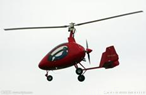

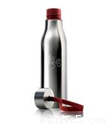
A. B. C. D.
4. The word "pollute" means "______".
A. to tell something to a lot of people B. wanting to know about something
C. a programme on the radio or on TV D. to make air. water, soil, etc dirty
5.These texts are probably from ______.
A. a magazine B. a dictionary
C. a newspaper D. an advertisement
查看习题详情和答案>>
听力部分(25分)
一、听短对话,回答问题(共5小题,计5分)
听下面5段对话,每段对话后有一个小题。从题中所给的A、B、C三个选项中选出最佳选项。听完每段对话后,你都有10秒钟的时间来回答有关小题和阅读下一小题。每段对话仅读一遍。
1.What are they talking about?
A.Buying a birthday present.
B.Learning English.
C.Having a birthday party.
2.What does the woman mean?
A.The man should stop smoking.
B.The man should stop drinking coffee.
C.Drinking coffee is better than smoking.
3.What is the most useful way for Eric to improve his English?
A.Watching English movies.
B.Reading magazines.
C.Practicing speaking English.
4.What is Teddy’s attitude(态度)to too much homework?
A.To copy others’.
B.To try his best.
C.To forget it.
5.What did the girl use to do according to the dialogue?
A.Go to bed late.
B.Be afraid of her father.
C.Sleep with the light on.
二、听较长对话,回答问题(共6小题,计12分)
听下面两段长对话。每段对话后有几个小题,从题中所给的A、B、C三个选项中选出最佳选项。听每段对话前,你有时间阅读各个小题,每小题5秒钟;听完后,各小题给出5秒钟的作答时间。每段对话读两遍。
听下面一段对话,回答第6至第8小题,对话读两遍。现在,你有15秒钟的时间阅读这三个小题。
6.What do they want to do next Spring Festival?
A.Follow the customs.
B.Have a special one.
C.Just stay at home.
7.What kind of places does the man prefer to visit?
A.Cities.
B.Beaches.
C.Swimming pools.
8.Who are the two speakers according to the dialogue?
A couple.
B.Mother and son.
C.Father and daughter.
听下面一段对话,回答第9至第11小题,对话读两遍。现在,你有15秒钟的时间阅读这三个小题。
9.What will the weather probably be like tomorrow?
A.Sunny.
B.Cloudy.
C.Rainy.
10.What does the boy plan to do at first?
A.Go on a picnic.
B.Go to the cinema.
C.Play ping-pong.
11.What does the boy finally decide to do?
A.Go to the cinema.
B.Read computer books.
C.Play ping-pong.
三、听独白,回答问题(共4小题,计8分)
听下面一段独白,并按独白的要求在试卷上完成任务,你可以边听边完成任务,然后你会看到4个问题和相关的选项。请从每个问题A、B、C三个选项中选出最佳选项。听独白前,你有20秒钟的时间阅读有关材料和4个小题。听完独白后,你有20秒钟的时间来选择有关选项。独白连读两遍。
参考词汇:
amylum:['?m?l?m]淀粉 iodine['a??da?n]碘酒 dissolve[d?'z?lv]溶解
chopstick['t??pst?k]筷子 mixture['m?kst??]混合物 Vitamin[v?t?m?n]维生素
12.What is not used in this experiment(实验)?
A.Boiling water.
B.Vegetable.
C.Milk.
13.What can be used if you don’t have a glass?
A.A glass
B.A bowl
C.A chopstick(筷子)
14.Which of the following is the last step of the experiment?
A.Put a little amylum(淀粉)into the glass.
B.Drop(滴)some iodine(碘酒)into the mixture(混合物).
C.Drop the juice of the green vegetables into the glass.
15.What color will it be if there is some Vitamin C(维生素C)in the vegetable?
A.Blue
B.Milk white
C.Yellow
| |||||||||||||||||||||||||||||||||||||||||||||||||||||||||||||||||||||||||||||


broadcast1/'brɔ:dkɑ:st||ˈbrɔdˌkæst/n[C] a programme on the radio or on television: a radio news broadcast | live broadcast ( = a programme that you see or hear at the same time as the events are happening)
broadcast2 v past tense and past participle, broadcast 1 [ I,T] to send out radio or television programmes: The interview was broadcast live across Europe. 2 [T] to tell something to a lot of people: There was no need to broadcast the fact that he lost his job.
broadcaster /ˈbrɔːdkɑːstə || ˈbrɔːdkæstər/ n [C]
curious/ ˈkjʊəriəs || 'kjur-/ adj 1 wanting to know about something: When I mentioned her name everyone was curious. | [ +about] I’m incurious about this book she's supposed to be writing. |curious to see/hear/know etc: Mandy was curious to hear what Peter had to say himself.—opposite INCURIOUS 2 strange or unusual: a curious noise coming from the cellar | curious that It's very curious that she left without saying goodbye.
curl1 /kɜ:l|| kɚrl/ n 1[C] a small mass of hair
flask / flɑ:sk || flæsk/n [C] I BrE a special type of bottle that you use to keep liquids either hot or cold, for example when travelling 2 a flat bottle usually used to carry alcohol 3 a glass bottle with a narrow top, used in a LABORATORY
flat1/ flæt / adj flatter, flattest
1▶ SURFACE◀ smooth and level, without raised or hollow areas, and not sloping or curving: a flat-bottomed boat |a perfectly flat sandy beach | flat as a
pollute / pə'lu:t/ v [T] 1 to make air, water, soil etc dangerously dirty and not suitable for people to use: beaches polluted by raw sewage | industrial emissions that pollute the air 2 pollute sb’s mind to give someone immoral thoughts and spoil their character: fears that Lawrence's novels would pollute young minds--polluted adj: polluted rivers--polluter n [C]
pollution / pəˈlu:ʃn /n [U] 1 the process of making
86. The pronunciation of the word "broadcast" is ____ or/ˈbrɔdˌkæst /.
A. /'brɔ:dkɑ:st/ B. /'brəud'sɑ:st/ C. /bræd'kɔst/ D. /'bru:dkɑ:st/
87. The word"____ "can be used as an adjective (形容词).
A. pollute B. pollution C . curious D. curiously
88. Which of the following is a flask?


A. B. C. D.
89. The word "pollute" means "______".
A. to tell something to a lot of people B. wanting to know about something
C. a programme on the radio or on TV D. to make air. water, soil, etc dirty
90. These texts are probably from ______.
A. a magazine B. a dictionary
C. a newspaper D. an advertisement
查看习题详情和答案>>not talking about disappearing frogs. I'm talking about absent vowels (元音). I got a message the other day
that said," Mt@ 3rd st crnr@ 12", signed (签字) "BT". What did it mean? A young man in the office told
me that BT meant" beauty" and translated:" A beautiful young woman wants to meet you at the corner of
Third Street at noon."
The following week I was at a private dining club when a Hong Kong banker named David told me he
had met with a man who pronounced his name Choong,but spelt C - H - N - G." There can't be many names
with no vowels in them," he said. It turned out he was sitting next to a Singaporean doctor named Ng. Vowels
are disappearing at high speed among businesses, too. Ever wondered what happened to Reebok, the
sportswear company? It's still around but has renamed itself Rbk. Kentucky Fried Chicken became KFC.
I've read articles saying that the no-vowels trend (趋向) is caused by companies trying to give their
products the shorthand spelling liked by young people. But a research finds that the real reason is often more
uninteresting. Flickr,one of the busiest websites on the Internet, was set up by people who wanted the name
Flicker but were too careless to register (注册) that word.
Have any readers ever been to a small town in the mountains of California called Zzyzx? A man named
Curtis Howe Springer founded it as a health club and called it Zzyzx because he thought it sounded different.
The business failed. People who looked through lists for somewhere to go never reached it.
Older readers may remember the computer game Zzyzzyzz that appeared in 1982. Fans did not know
how to ask for it. James Gleick's book Faster has been re-titled FSTR. But the revision is half-hearted with
the main text of the book still having vowels. Why not write the whole book in the simpler way? U cn stll rd
the wtht vwls. On the other hand,just know that vowel-free words can be explained in different ways. One
day I'll get a message from a BT who may be a beauty. But I'm afraid a bat (蝙蝠) will be out there.
B. to study a new language
C. to correct a new mistake
D. to show a new method
B. here and there
C. present in a place
D. without special purposes
B. It helps us write more quickly.
C. It bringsa lot of fun to people.
D. It causes some trouble in life.
B. He doesn't mind the matter.
C. He doesn't think it's good to do so.
D. He accepts the idea at last.