网址:http://m.1010jiajiao.com/timu_id_1700125[举报]
第二卷(非选择题 共35分)
第一节:对话填空(共10小题;每小题1分,满分10分)
阅读下面对话,掌握其大意,并根据所给字母的提示,在标有题号的右边横线上写出一个英语单词的完整、正确形式,使对话通顺。
W: Hello, Professor Black. You’ve been invited to a 76 a 3-day 76________
conference in Britton and to give a paper on your l 77 research. 77 _______
M: That’s great. When will it s 78 ? 78 _______
W: On the third of next m 79 . 79_______
M: That won’t l 80 me much time to prepare a report. 80 _______
W: You have still got a week. This is a chance not to be m 81 . 81_______
Many famous s 82 from over the world will be at the conference. 82 _______
M: Are you going?
W: No, I’m afraid not, I’m going on an important business t 83 to 83 _______
Beijing .But I was asked to have a report r 84 at the conference. 84 _______
Would you mind reading it for me?
M: No, It’s a p 85 to do something for you. 85_______
查看习题详情和答案>>第一节(共5小题;每小题1.5分,满分7.5分)
请听下面5段对话。每段对话后有一个小题,从题中所给的A、B、C三个选项中选出最佳选项。听完每段对话后,你都有10秒钟的时间来回答有关小题和阅读下一小题。每段对话仅读一遍。
1.What is the probable relationship between the speakers?
A.Employer and employee.
B.Teacher and student.
C.Mother and son.
2.What is the date tomorrow?
A.July 4th
B.July 5th
C.July 6th
3.What colour is the shirt?
A.Yellow
B.Green
C.Blue
4.When did the dialogue happen?
A.At 7:00
B.At 6:30
C.At 6:00
5.How long does it take the man to drive from his house to the university during rush hours?
A.25 minutes
B.40 minutes
C.50 minutes
第二节(共12小题;每小题1.5分,满分18分)
请听下面4段对话或独白。每段对话或独白后有几个小题,从题中所给的A、B、C三个选项中选出最佳选项。听每段对话或独白前,你将有时间阅读各小题,每小题5秒钟;听完后,各小题将给出5秒钟的作答时间。每段对话或独白读两遍。
请听第6段材料,回答第6至8题。
6.What is the woman complaining?
A.The cost is high
B.She sits on packing cases
C.The chairs are old
7.How many chairs would the speakers probably buy?
A.At least two
B.Eighty
C.Six
8.When is the market open?
A.At weekdays
B.At 6 every morning
C.On Saturdays
请听第7段材料,回答第9至11题。
9.What is Alice doing all the morning?
A.Telephoning her friends
B.Writing letters
C.Crying
10.What does Alice plan to do?
A.Hold a grand party
B.Buy a diamond necklace
C.Make more friends
11.How many friends will Alice persuade to agree to her plan?
A.11
B.12
C.13
请听第8段材料回答12至14题
12.What does the woman like to eat?
A.Meat balls
B.Steamed fish
C.Dumplings
13.What does the woman like to drink?
A.Coffee
B.Coca Cola
C.Beer
14.Why does the woman want a quick meal?
A.Because she wants to go home to see a film
B.Because she wants to go home to see a TV play.
C.Because she wants to go home to read a book.
听第9段材料,回答第15至17题。
15.How many children does the woman have?
A.Three sons and two daughters
B.Three daughters and two sons
C.Three daughters and one son
16.How does the woman feel about her children?
A.She is proud of them
B.She si disappointed with them
C.She is tired of them
17.According to the talk, Which countries has Jerry been to?
A.Russia, Greece, Austria and France
B.France, Australia, Greece and Russia
C.France, America, Greece and Russia
第三节(共3小题;每小题1.5分,满分4.5)
请听下面一段独白,用所听到的独白中的词或数填空,每空限填一个词或一个数。在听本段独白前,你将有时间阅读各小题,每小题5秒钟;听完后,各小题将给出5秒钟的作答时间,本段独白读两遍。
请听第10段材料,回答第18至20题。
What to do before travel
听力
第一节(共5小题;每小题1.5分,满分7.5分)
听下面5段对话。每段对话后有一个小题,从题中所给的A、B、C三个选项中选出最佳选项。听完每段对话后,你都有10秒钟的时间来回答有关小题和阅读下一小题。每段对话仅读一遍。
1.What does the man want to do?
A.To go out with Sally.
B.To see Sally.
C.To talk to Sally.
2.When will the man be free?
A.On Wednesday afternoon.
B.On Tuesday afternoon.
C.On Wednesday morning.
3.Why is the man so eager to post the letters?
A.He has already delayed posting them.
B.He is asked to post them next morning.
C.He will have no time to do them next morning.
4.What can we learn from the conversation?
A.The fire broke out suddenly.
B.Everything was burnt down in the fire.
C.No one died in the fire.
5.Why are they in such a hurry?
A.They are late for school.
B.They want to catch the train.
C.They don’t want to be late for the party.
第二节(共15小题;每小题1.5分,满分22.5分)?
听下面5段对话或独白。每段对话或独白后有几个小题,从题中所给的A、B、C三个选项中选出最佳选项。听每段对话或独白前,你将有时间阅读各个小题,每小题5秒钟;听完后,各小题将给出5秒钟的作答时间。每段对话或独白读两遍。
听第6段材料,回答第6~8题。
6.How long did the woman work in the travel agency?
A.Two weeks.
B.A few months.
C.A year.
7.Why did Joe go to Canada?
A.To find a job.
B.To spend his holidays.
C.To visit his relatives.
8.What can we learn from the conversation?
A.The man is leaving for Canada too.
B.The man has been in touch with Joe ever since Joe left for Canada.
C.Neither of them has seen Joe for a long time.
听第7材料,回答第9~11题。
9.Where was Colin Boyle born?
A.In Dublin.
B.In London.
C.In Paris.
10.Why wasn’t the woman able to get the tickets for the concert?
A.All tickets were sold out.
B.She is too poor to buy a concert ticket.
C.She couldn’t afford the expensive tickets.
11.How will the woman get the tickets?
A.The singer will give the woman the tickets.
B.The woman will get some tickets at the cheaper price.
C.The concert hall manager will let them in free of charge.
听第8段材料,回答第12~14题。
12.How does the man seem to feel after this interview?
A.Nervous.
B.Hopeful.
C.Sad.
13.How many people were NOT chosen for the second interview?
A.4.
B.8.
C.12.
14.What does the man’s girlfriend want?
A.She hopes to find a job near the man.
B.She hopes the man finds a job near her.
C.She hopes the man gets a job far away from her home.
听第9段材料,回答第15~16题。
15.Who will come to the airport to meet the woman?
A.Her daughter.
B.The managing director.
C.The manager.
16.What is the most probable relationship between the two speakers?
A.Boss and secretary.
B.Workmates.
C.Husband and wife.
听第10段材料,回答第17~20题。
17.Why are Martha’s eyes red?
A.She is sick in her eyes.
B.She is sorry to leave her children.
C.She’s been weeping.
18.What do you know about the children?
A.They still love their father.
B.They know nothing about their parents’ problems.
C.They don’t like to talk to their parents any more.
19.How often can Tony and George see their father in future?
A.Every summer.
B.Twice a month.
C.Every day.
20.What are the parents doing now?
A.They’re quarreling before the children.
B.They’re complaining to the children of their problems.
C.They’re telling the sons their future arrangement.
选做题:听取信息(共5小题;每小题1分,满分5分)?
听下面1段对话或独白。请根据题目要求,从所听到的内容中获取必要的信息,填入标号为*21~*25的空格中。录音读两遍。你有80秒钟的作答时间。
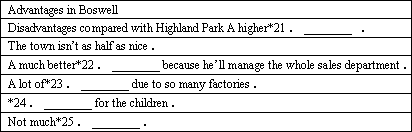
听力
第一节(共5小题;每小题1.5分,满分7.5分)
听下面5段对话。每段对话后有一个小题,从题中所给的A、B、C三个选项中选出最佳选项。听完每段对话后,你都有10秒钟的时间来回答有关小题和阅读下一小题。每段对话仅读一遍。
1.How did the woman get there?
A.By car.
B.By bus.
C.By bike.
2.What can we learn from this dialogue?
A.The man wants to go to Washington.
B.The man wants to go to San Francisco.
C.There are no flights to Washington for the rest of the day.
3.Why doesn’t the man like to ride a motorcycle?
A.Driving lessons are too expensive.
B.Taking the bus is cheaper.
C.Motorcycling is too dangerous.
4.What’s their topic?
A.The sun.
B.Right and wrong.
C.The weather.
5.What happened to Ross?
A.He was killed by the car.
B.He was safe in the accident.
C.Someone saved Ross’s life.
第二节(共15小题;每小题1.5分,满分22.5分)
听下面5段对话或独白。每段对话或独白后有几个小题,从题中所给的A、B、C三个选项中选出最佳选项。听每段对话或独白前,你将有时间阅读各个小题,每小题5秒钟;听完后,每个小题将给出5秒钟的作答时间。每段对话或独白读两遍。
听第6段材料,回答第6~7题。
6.How many times did the lady visit the Great Lakes?
A.Once.
B.Twice.
C.Several times.
7.Why are the Great Lakes famous?
A.They have many waterfalls.
B.They are a little far away.
C.They are the largest fresh-water lakes in North America.
听第7段材料,回答第8~10题。
8.What do Swiss people like to do in the evening?
A.Listening to music.
B.Walking.
C.Going to the cinema.
9.Which of the following is mentioned as the outing sporting activities?
A.Running.
B.Hunting.
C.Fishing.
10.We know the people in Switzerland are ________ from this passage.
A.very busy
B.very friendly
C.very polite
听第8段材料,回答第11~12题。
11.What does the man think of his new job?
A.He is very excited to have a new job.
B.He is not satisfied with the new job.
C.He has a job in the computer center.
12.What kind of work does he like most?
A.Working in the computer center.
B.Working in the school office.
C.Working in a workshop.
听第9段材料,回答第13~15题。
13.Who is the speaker?
A.The captain of the plane.
B.The waitress.
C.Someone at the airport.
14.Where is the plane landing?
A.San Lusia.
B.San Maria.
C.Santa Maria.
15.What do passengers need to do before they exit through the customs?
A.Wait for one hour.
B.Get their luggage.
C.Check the information board.
听第9段材料,回答第13~15题。
16.Where did the speaker go?
A.Paris.
B.Tokyo.
C.Singapore.
17.When did the speaker buy his ticket?
A.Fourteen days ago.
B.Thirteen days ago.
C.On Monday morning.
18.How did the speaker go to the airport?
A.On a bus.
B.In a car.
C.On a train.
19.What can we learn from the passage?
A.He had never been in a plane before.
B.He is often in a plane.
C.He has been in a plane only twice.
20.How did he find his flying?
A.It was dangerous.
B.He enjoyed it.
C.It was terrible.
第三节:听取信息(共5小题;每小题1.5分,满分7.5分)
听下面1段对话。请根据题目要求,从所听到的内容中获取必要的信息,填入标号为21~25的空格中。听录音前,你将有10秒钟的阅题时间,录音读两遍。你有80秒钟的作答时间。

听力
第一节(共5小题;每小题1.5分,满分7.5分)
听下面5段对话。每段对话后有一个小题,从题中所给的A、B、C三个选项中选出最佳选项,听完每段对话后,你都有10秒钟的时间来回答有关小题和阅读下一小题。每段对话仅读一遍。
1.What’s the man going to do this evening?
A.Go to the park.
B.Read a book.
C.Visit his friend.
2.How much has Jack saved?
A.20 yuan.
B.16 yuan.
C.4 yuan.
3.When did the man leave college?
A.In 1985.
B.In 1987.
C.In 1989.
4.How many meetings did the man attend?
A.Several.
B.Two.
C.Three.
5.What happened to Ross?
A.He was killed by the car.
B.He was safe in the accident.
C.Someone saved Ross’s life.
第二节(共15小题;每小题1.5分,满分22.5分)
听下面5段对话或独白。每段对话或独白后有几个小题,从题中所给的A、B、C三个选项中选出最佳选项,听每段对话或独白前,你将有时间阅读各个小题,每小题5秒钟;听完后,各小题将给出5秒钟的作答时间。每段对话或独白读两遍。
听第6段材料,回答第6~8题。
6.What’s the man’s plan for his future?
A.Take a business course in Shanghai.
B.Learn some English in Shanghai.
C.Do some business in Shanghai.
7.What can you tell about the man?
A.He used to live in Shanghai.
B.He used to live in Xi’an.
C.He used to live in Beijing.
8.What do the two speakers agree to?
A.Going to the evening school.
B.Improving their school.
C.Practicing business.
听第7段材料,回答第9~11题。
9.What are they probably talking about?
A.Their work.
B.Their business.
C.Their holidays.
10.What does the woman’s father do?
A.He works on a farm.
B.He runs a store.
C.He works on a beach.
11.What is the man going to do this summer?
A.He’ll stay at home reading.
B.He’ll go to the beach.
C.He is going camping.
听第8段材料,回答第12~14题。
12.Where is Jim from?
A.America.
B.England.
C.Canada.
13.What isn’t Jim good at?
A.Chinese.
B.Most of the subjects.
C.We don’t know.
14.What do we learn from the dialogue?
A.Jim will work at Chinese during the holiday.
B.Jim will work at most of the subjects during the holiday.
C.Jim will take an exam soon.
听第9段材料,回答第15~17题。
15.Where is the lady going?
A.To the post office.
B.To the bank.
C.To the police station.
16.Why couldn’t the man help her?
A.Because he was too busy.
B.Because he was a strange man.
C.Because he was new here himself.
17.Where is the bank located?
A.Two hundred yards to the post office.
B.Two hundred yards from the bookshop.
C.Between the bookshop and the post office.
听第10段材料,回答第18~20题。
18.What is the talk mainly about?
A.Farm life.
B.City life.
C.School life.
19.Where do American farmers go shopping?
A.In big cities.
B.In the towns nearby.
C.In their own villages.
20.What’s the life like in Asia compared to that in America?
A.City life is the same; farm life is the same, too.
B.City life is the same; farm life is different.
C.Different both in cities and on farms.
第三节:听取信息(共5小题;每小题1.5分,满分7.5分)
听下面1段对话。请根据题目要求,从所听到的内容中获取必要的信息,填入标号为21~25的空格中。听录音前,你将有10秒钟的阅题时间,录音读两遍。你有80秒钟的作答时间。
