网址:http://m.1010jiajiao.com/timu_id_1380951[举报]
your own bags and clothes, and at the bags and clothes of your classmates. How
many different advertisements can you see which use English words?
Often bags and clothes show the name of the company that made them. This
is a popular form. A special picture or symbol called a logo is sometimes used.
Logos appear on many different products. They are popular because when you
see a logo, it is hard to forget that product or company.
It is common to see advertisements on TV and hear them on the radio. Most
advertisements are very short. Sometimes the advertisers use a short sentence
which is easy for people to say and remember. Nike, for example, has a simple
English sentence which is used all around the world--Just do it. Advertisements
often use funny situations as well. It is simple to remember it.
All advertisements are designed to make people buy a product. An
advertisement for a soft drink, for example, might show a group of young people
who are having fun. The young people are all drinking the soft drink. Advertisers
are saying to you, "Why don't you buy this drink and be like these people? You
can be young and modern. "
You might think those advertisements are not after you, but the next time you
buy a soft drink, ask yourself this question: Why am I buying this particular
(特别的) product?
B. many bags have the name of the company that made them
C. having soft drinks makes a person young and modern
D. advertisements are only after young people
B. a useful product
C. difficult to understand
D. easy to buy
B. long
C. funny
D. famous
B. make you young and modern
C. make you buy the product
D. show you what you need to buy
B. Advertisements on TV and radio
C. Advertisements about sports
D. Advertisements around us
[ ]
B. How a / to go
C. What / go
D. What a / going

Chairman Mao once said: “It is not hard to do one good deed. It is hard to do good deeds all your life.” Guo Mingyi, 52, a worker in Anshan, Liaoning, did just that. Over the past 20 years, Guo has donated 60,000 milliliters(毫升) of blood. That is the blood of 10 people put together.
Once, on a cold winter of 2009, Guo got a call from the hospital. The doctors told him that a patient needed a blood donation. Guo didn’t have time to eat lunch. He travelled in the snow to get to the hospital. When he finished donating the blood, he was so tired that he fell asleep on the hospital bed.
Guo and his family live a simple life. He and his wife and daughter live in a house of only 40 square meters. They don’t have a lot of money, but Guo saves money to support poor children. In the past 16 years, he has donated over 100,000 yuan to more than 180 poor students. When the parents met him, many cried. “He looks poorer than us,” they said.
Guo has also offered hands to thousands of workers, friends and strangers. His warm heart has moved many people. They call him a “Modern-Day Lei Feng”.
Recently, Chinese leaders called on people to learn from Guo. They say young people especially should learn his selfless devotion(无私奉献).But Guo said he did these things in order not to get famous. “It’s just that some people need some help, and there should be someone standing out to give them a hand,” he said.
1.When was Guo Mingyi born in Anshan, Liaoning?
A. In 1940 B. In 1950 C. In 1960 D. In 1970
2.Why did Guo Mingyi donate the blood to a patient on a cold winter of 2009?
A. Because they are good friends.
B. Because he had no money to eat lunch.
C. Because he wanted to sleep in the hospital
D. Because he wanted to help the patient very much.
3.Which of the following is RIGHT about Guo Mingyi?
A. He is a common businessman. B. He has a very rich family.
C. He wants to be famous a lot. D. He devotes what he has to helping others
4.What does the writer write the passage for?
A. To learn from Gou Mingyi’s selfless devotion.
B. To donate blood to the people in need.
C. To raise money for poor students.
D. To remember Lei Feng.
5.Which part of the newspapers can we see the passage ?
A. Sports news B. Health care C. People D. Nature
查看习题详情和答案>>
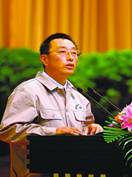
Chairman Mao once said: “It is not hard to do one good deed. It is hard to do good deeds all your life.” Guo Mingyi, 52, a worker in Anshan, Liaoning, did just that. Over the past 20 years, Guo has donated 60,000 milliliters(毫升) of blood. That is the blood of 10 people put together.
Once, on a cold winter of 2009, Guo got a call from the hospital. The doctors told him that a patient needed a blood donation. Guo didn’t have time to eat lunch. He travelled in the snow to get to the hospital. When he finished donating the blood, he was so tired that he fell asleep on the hospital bed.
Guo and his family live a simple life. He and his wife and daughter live in a house of only 40 square meters. They don’t have a lot of money, but Guo saves money to support poor children. In the past 16 years, he has donated over 100,000 yuan to more than 180 poor students. When the parents met him, many cried. “He looks poorer than us,” they said.
Guo has also offered hands to thousands of workers, friends and strangers. His warm heart has moved many people. They call him a “Modern-Day Lei Feng”.
Recently, Chinese leaders called on people to learn from Guo. They say young people especially should learn his selfless devotion(无私奉献).But Guo said he did these things in order not to get famous. “It’s just that some people need some help, and there should be someone standing out to give them a hand,” he said.
1.When was Guo Mingyi born in Anshan, Liaoning?
A. In 1940 B. In 1950 C. In 1960 D. In 1970
2.Why did Guo Mingyi donate the blood to a patient on a cold winter of 2009?
A. Because they are good friends.
B. Because he had no money to eat lunch.
C. Because he wanted to sleep in the hospital
D. Because he wanted to help the patient very much.
3.Which of the following is RIGHT about Guo Mingyi?
A. He is a common businessman.
B. He has a very rich family.
C. He wants to be famous a lot.
D. He devotes what he has to helping others
4.What does the writer write the passage for?
A. To learn from Gou Mingyi’s selfless devotion.
B. To donate blood to the people in need.
C. To raise money for poor students.
D. To remember Lei Feng.
5.Which part of the newspapers can we see the passage ?
A. Sports news B. Health care C. People D. Nature
查看习题详情和答案>>
Most people make their living with their hands. But Tom makes his living(谋生)with his feet. A very good living it is, too.
Tom’s story began in a very small city in England. His parents were very poor. Seven people lived in their small house. Tom had no place to play in but in the street.
Tom’s father often played football, and little Tom wanted to play football, too. So his father made a nice ball for him to play. The little boy played it every day.
At last Tom learned to play a real football, and after a few years he could play football very well.
Now Tom is one of the best football players.
根据短文内容,选择正确答案(10分)
【小题1】Tom made his living with his______.
A、hands B、head C、feet
【小题2】Tom’s parents lived in a_____city in English.
A、small B、big C、new
【小题3】Tom’s father____a football for him to play.
A、bought B、borrowed C、Made
【小题4】A few years later, Tom was_____at playing football.
A、well B、good C、bad
【小题5】Tom plays football_____ than many other players.
A、harder B、worse C、better