网址:http://m.1010jiajiao.com/timu3_id_2822077[举报]
根据句意,用括号内所给单词的适当形式填空
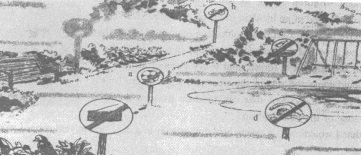
1.Along the street you can see many traffic (sign).
2. The girl can’t walk on because of (hungry).
3. There were many (home) children in the village after that earthquake.
4. Our English teacher once (coach) several excellent students for the English contest.
5.There are all kinds of (advertise) on TV these days, and we shouldn’t believe all of them.
查看习题详情和答案>>
When I was nine years old, I used to go to the post office with my mother, sending greeting cards to my aunt in Singapore. To me, these trips were really 16 memories. And receiving mail through a mailbox outside our gate was just as exciting. My small hands could 17 get the mail without using a key! I always couldn’t wait to see how much I was 18 . Oh, a letter! From Singapore! I would run back home and show it to my 19 . When there was a letter for me, I wouldn’t run—I would open it right there.
After my family moved back to Singapore, I 20 going to the post office. Years later, my company sent me to Shanghai, and the post office found me again. Two years ago I celebrated my 21 with five friends on top of the mountain in Longsheng, China. At sunrise we 22 up to a beautiful view from the mountain top. Later in the afternoon, as we were going 23 the mountain and returning from the sunrise viewing place, a 24 shop caught our attention. It only sold noodles, coffee and had a China 25 sign.
We asked the owner if she could really send mail. She happily said yes. It seemed hard to believe, 26 we were at the highest top of the mountain. I picked one postcard out and asked my friends to write 27 a birthday note. We bought a stamp, wrote some notes and gave the shop owner the postcard.
Three weeks later, I arrived home and 28 my mailbox: He llo, postcard! I broke into a big smile.
That birthday postcard attracted me again to the post office and all its delights. I had 29 the post office all these years. Today I 30 send postcards to friends. And every time I am at the post office buying stamps, I cannot help but smile—how one postcard will make its way across the world and brighten up someone’s day.
1. A. bad B. poor C. good D. short
2. A. easily B. simply C. hardly D. specially
3. A. weighing B. getting C. selecting D. accepting
4. A. friend B. aunt C. mother D. owner
5. A. enjoyed B. stopped C. hated D. considered
6. A. wedding B. return C. success D. birthday
7. A. broke B. woke C. grew D. stood
8. A. around B. over C. up D. down
9. A. cold B. dirty C. small D. modern
10. A. Traffic B. Life C. Police D. Post
11. A. because B. though C. while D. when
12. A. him B. me C. her D. them
13. A. bought B. repaired C. painted D. opened
14. A. missed B. influenced C. studied D. visited
15. A. just B. seldom still D. never
| |||||||||||||||||||||||||||||||||

| |||||||||||||||||||||||||||||||||||||||||||||||||||||||||||