网址:http://m.1010jiajiao.com/timu3_id_2782708[举报]
The giant panda only lives in the wild in China. In the early 1980s, were only 1,000 left in the wild. The main reason why pandas are endangered is that the area where pandas can live has become smaller.
The WWF works to help giant pandas in the wild in many ways. One of the ways that helps them is to increase the size of panda reserves(自然保护区). Some reserves need to be joined together by planting bamboo between them to make “corridors”. These are paths that lead from one reserve to another. No one may harm the pandas in these areas. The corridors let pandas move from one habitat(栖息地) to another to look for food. ②People are working very hard to make sure the giant panda does not die out.
【小题1】 How long and heavy can a giant panda grow to be?
_____________________________________________________________________________
【小题2】 将文中划线的句子①改为被动句。
So it is not surprising that _____________________by the World Wide Fund for Nature.
【小题3】Why are the giant pandas endangered?
_____________________________________________________________________________
【小题4】 Give a way to help the giant pandas in the wild, please.
_____________________________________________________________________________
【小题5】 将文中划线的句子②翻译成中文。
____________________________________________________________________________ 查看习题详情和答案>>
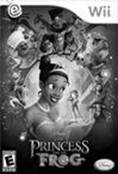
| Tickets Information Dates: 30th July — 8th August The Princess Mon —Fri, 10 a.m., 7 p.m. And The Frog Sat —Sun, 10 a.m., 2 p.m., 7 p.m.
Ticket prices: $25 per child or adult (day shows) $35 per child or adult (evening shows) Family packages: $85 for 4 tickets (10 a.m., 2 p.m. shows) $120 for 4 tickets (7 p.m. shows) Latecomer Policy: Please arrive early. Latecomers will not be allowed to enter until a proper break in the shows. Tel:617— 219 4300 Children: As courtesy (礼貌) to other audience, children under 3 years old will not be allowed in. |
| A.For 10 days. | B.For 12 days. | C.For 15 days. | D.For 18 days. |
| A.Latecomers | B.Adults without children |
| C.School students | D.Kids under 3 years old |
| A.85 | B.100 | C.120 | D.140 |
Bamboo (竹子) is one of nature's (自然) most surprising plants. Many people call this plant a tree, but it is a kind of grass.
Like other kinds of grass, a bamboo plant may be cut very low to the ground, but it will grow back very quickly. A Japanese scientist reported one bamboo plant which grew 1. 5 metres(4 feet) in 24 hours! Bamboo grows almost everywhere in the world except Europe. There are more than 1, 000 kinds of bamboo.
Not all bamboo looks the same. Some bamboo plants are very thin. They may only grow to be a few centimetres wide while others may grow to more than 30 centimetres (1 foot) across. This plant also comes in different colours, from yellow to black to green.
Bamboo has been used to make many things such as hats and kitchen tools( 厨房用具). Because it is strong, bamboo is also used to build buildings.
Many Asian countries have used bamboo for hundreds of years. They often use bamboo for buildings and supporting (支撑) new buildings and bridges while they are being built.
In Africa, poor farmers are taught how to find water using bamboo. These African countries need cheap way to find water because they have no money, and their fields often die from no rain and no water. Bamboo pipes( 管子) help poor farmers bring water to their thirsty fields without spending a lot of money.
【小题1】How is bamboo like grass?
| A.It grows quickly. | B.It's wood. ` | C.it is easy to cut. | D.It is very thin. |
| A.in China | B.in Europe | C.on mountains | D.in Africa |
| A.it is cheap | B.it has different colours |
| C.it is strong | D.it has been used by Asians |
| A.make money | B.be trees | C.grow quickly | D.carry water |
| A.a short time |
| B.many thousands of years |
| C.many hundreds of years |
| D.about 100 years |
(A reporter is interviewing a foreign visitor at the Shanghai Expo.)
Reporter: Excuse me, I’m reporter from a student magazine.
(1)_____________________________________________?
Visitor: Sure, please.
Reporter: (2)_____________________________________________?
Visitor: I’m from Germany.
Reporter: (3)_____________________________________________?
Visitor: I came here two days ago.
Reporter: (4)_____________________________________________?
Visitor: Yes, just a little. I began studying Chinese two months ago.
Reporter: How do you like the Shanghai Expo?
Visitor: I like it very much. The China pavilion(中国馆) impressed me most.
Reporter: Thank you for answering my questions.
(5)_____________________________________________. 查看习题详情和答案>>
Mary’s Timetable
|
|
Monday |
Tuesday |
Wednesday |
Thursday |
Friday |
|
8:00~8:45 |
English |
History |
English |
Physics |
Chinese |
|
8:55~9:40 |
Chinese |
Art |
Chinese |
Chinese |
English |
|
9:50~10:35 |
Math. |
English |
History |
Math. |
Music |
|
10:45~1130 |
P.E. |
Geography |
History |
P.E. |
Geography |
|
11:30~1:30 |
Noon break(午休) |
||||
|
1:30~2:15 |
Music |
P. E. |
P.E. |
English |
Self-study |
History (历史) Geography(地理) Physics(物理)
阅读表格,选择正确答案
1.Which lesson does Mary have every day?
A. English B. Chinese C. History D. Math
2. Mary has a rest at noon for_______.
A. 2 hours B. 1 hour C. 1.5 hours D. 2.5 hours
3. How many music lessons does Mary have in a week?.
A. three B. four C. two D. one
4. The third class begins at _____in the morning.
A. 9:35 B. 9:55 C. 9:50 D. 9:40
5.When does Mary have history?
A. Tuesday B. Friday C. Tuesday and Wednesday D. Monday
查看习题详情和答案>>