网址:http://m.1010jiajiao.com/timu3_id_2754803[举报]
【小题1】Which of the following wasn’t invented in China?
| A.Papermaking | B.Tea | C.The abacus | D.Potato chips |
| A.It was invented in 1861. |
| B.It became an Olympic event in 1936. |
| C.The first basketball match was held in 1891. |
| D.It was invented by a Canadian doctor called James Naismith. |
| A.throw the ball to each other. |
| B.run form one end of the court to the other. |
| C.get the ball into the basket as many times as possible in a required time. |
| D.get the ball from other’s control(控制) |
| A.The car | B.The calculator | C.Flying disk | D.The computer. |
A about three thousand years ago. B. in around 1610
C. before 1610 D. three thousand years before 1610.
【小题6】Which is the symbol of 2010 Guangzhou Asian Games?
A. | B. | C. | D. |

The London Olympic Games are coming soon. This summer, Chinese sports fans will be able to watch the exciting games in 3-D on CCTV.
When you watch 3-D movies or TV, you have to wear a special pair of glasses. The 3-D glasses make the people and the things on the screen look like they are in the room with you.
3-D, means having three *dimensions: *width, height and *depth. 3-D technology is based on the way the human brain and eye work. Because the *pupils of a person’s eyes are about 6.5cm apart, when we look at something, each eye sees it from different *angle. Our eyes send the two pictures to our brain, and the brain puts them together. The small difference between the picture from the right eye and the picture from the left eye make us see depth.
While watching 2-D films, we don’t have to wear the special glasses. We see the pictures in two dimensions, each eye get the same information. This is because there is only one way of watching it.
So the aim of 3-D technology is to get a different picture into each eye of the person. It uses two film *projectors. One *projects a left eye picture and the other projects a right eye picture. When we are in the cinema, we can see different pictures in each eye at the same time with the help of the 3-D glasses.
While watching 3-D films, we feel that we are actually in the same environment as the things we are watching. However, some people are against watching 3-D films. One of the reasons is the 3-D glasses makes the screen of the film or TV look darker. It is bad for eyes. What’s more, people with eye problems may get headaches if they spend too much time watching 3-D movies, because their brains need to work harder to “read” the pictures.
【小题1】Paragraph 3 mainly tells us __________.
| A.how we see things in 3-D | B.how we watch the Olympic Games |
| C.how 3-D films are made | D.where we watch 3-D films or TV |
| A.no | B.different | C.dark | D.the same |
| A.We don’t have to wear 3-D glasses if we watch games in 3-D on TV. |
| B.The 3-D technology is based on the way the human ear and eye work. |
| C.All the people can have fun watching 3-D movies or TV for a long time. |
| D.3-D glasses make us see different pictures in each eye at the same time. |
| A.they make them more excited or sadder |
| B.3-D glasses make the screen look darker |
| C.3-D films make all people get headaches |
| D.they dislike watching the Olympic Games |
请根据括号中的中文提示、英文释义或句意,写出句中所缺单词,使句子通顺。
1.Wish you good luck and great (成功) in the exam.
2.To be a ( someone who flies a plane), you need hard training in flying.
3.I am using a micro letter, it’s easy to send voice, picture and (文本)messages.
4.He is feeling blue, I don’t know whether I should speak to him or keep (quiet, with no sound at all).
5.The aim of “Free Lunch For Children” is to poor kids with free lunches in western China.
查看习题详情和答案>>
After spending years searching for a planet with life, scientists may have found one. In September 2010, a team of US scientists discovered a planet called Gliese 581g. It has a surface temperature neither too hot nor too cold for liquid(液态)water. Scientists think there is a chance that the planet could have life.
The planet Gliese 581g goes around a star called Gliese 581, which is about 20 light-years from Earth. That is about 194 trillion(万亿)kilometres -500 million times farther away from us than the moon.
A spacecraft traveling at a one-tenth of the speed of light would reach Gliese 581g within about 220 years. A human can’t live that long, but robotic explorers could make the job easier. However, our fastest spacec raft don’t come anywhere near that one-tenth light-speed mark.
At present, scientists don’t know what the surface might be like on Gliese 581g. What they know is that the planet is at the right distance from its star to have liquid water. It’s also at the right distance to have an atmosphere that could protect the water if it is on the surface.
Although spacecraft won’t be getting there anytime soon, one way to look for life on Gliese 581g is to turn our radio telescopes(望远镜)towards the planet and search for radiation(放射). By studying the radiation, scientists would find out about the chemicals(化学物质)around the planet and discover if Gliese 581g has an atmosphere. If it has one, studying the atmosphere would give us a good idea whether the planet has life or not. But it’ll probably be many years before we can do this properly.
People have been arguing about whether there is alien life on Gliese 581g. Any discussion about alien life is just guessing at this point, according to its discoverers.
1.What did scientists find in September 2010?
A.A planet with water. B.A planet similar to the earth.
C.A planet without life. D.A planet near the earth.
2.According to the article, Gliese 581g ________.
A.is at the right distance from its star B.moves around the earth
C.is as far away from us as the moon D.can be reached in about 220 years
3.Paragraph 5 is mainly about ______.
A.the possibility of living on Gliese 581g
B.the kinds of chemicals around Gliese 581g
C.the way of looking for life on Gliese 581g
D.the aim of studying the radiation on Gliese 581g
4.Which of the following is the best title for the passage above?
A.Gliese 581g, a Likely Living Planet B.Gliese 581, a Likely Living Planet
C.Gliese 581g and Its Star D.Gliese 581g and Radiation
查看习题详情和答案>>
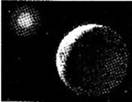
After spending years searching for a planet with life, scientists may have found one. In September 2010, a team of US scientists discovered an Earth-sized planet called Gliese 581g. It has a surface temperature neither too hot nor too cold for liquid(液态)water. Scientists think there is a chance that the planet could have life.
The planet Gliese 581g goes around a star called Gliese 581, which is about 20 light-years from Earth. That is about 194 trillion(万亿)kilometres -500 million times farther away from us than the moon.
A spacecraft traveling at a one-tenth of the speed of light would reach Gliese 581g within about 220 years. A human can’t live that long, but robotic explorers could make the job easier. However, our fastest spacecraft don’t come anywhere near that one-tenth light-speed mark.
At present, scientists don’t know what the surface might be like on Gliese 581g. What they know is that the planet is at the right distance from its star to have liquid water. It’s also at the right distance to have an atmosphere that could protect the water if it is on the surface.
Although spacecraft won’t be getting there anytime soon, one way to look for life on Gliese 581g is to turn our radio telescopes(望远镜)towards the planet and search for radiation(放射). By studying the radiation, scientists would find out about the chemicals(化学物质)around the planet and discover if Gliese 581g has an atmosphere. If it has one, studying the atmosphere would give us a good idea whether the planet has life or not. But it’ll probably be many years before we can do this properly.
People have been arguing about whether there is alien life on Gliese 581g. Any discussion about alien life is just guessing at this point, according to its discoverers.
【小题1】What did scientists find in September 2010?
| A.A planet with water. | B.A planet similar to the earth. |
| C.A planet without life. | D.A planet near the earth. |
| A.is at the right distance from its star | B.moves around the earth |
| C.is as far away from us as the moon | D.can be reached in about 220 years |
| A.the possibility of living on Gliese 581g |
| B.the kinds of chemicals around Gliese 581g |
| C.the way of looking for life on Gliese 581g |
| D.the aim of studying the radiation on Gliese 581g |
| A.Gliese 581g, a Likely Living Planet | B.Gliese 581, a Likely Living Planet |
| C.Gliese 581g and Its Star | D.Gliese 581g and Radiation |