网址:http://m.1010jiajiao.com/timu3_id_2618019[举报]
In the 19th and early 20th centuries, most American students went to a one-room schoolhouse. A single teacher would typically(典型地) have students in the first through eighth grades, and she taught them all. The number of students varied from six to 40 or more. The youngest children sat in the front, while the oldest students sat in the back. The teacher usually taught reading, writing, arithmetic, history, and geography. Students memorized(记忆) and retold their lessons.
The classroom of a one-room schoolhouse probably looked much like your own. The teacher’s desk stood on a raised platform(讲台) at the front of the room, however, and there was a wood-burning stove since there was no other way of heating. The bathroom was outside in an outhouse.
In Honeoye Falls, New York, there is a one-room schoolhouse where kids today can experience what it was like to the students in the late 19th century. For a week during the summer, they wear 19th century clothes and learn the way children learned more than a hundred years ago.
What else has changed about school since the 19th century? For more information, please visit our website: www. Locallygacy.com.
小题1: What does the word “varied” in the Paragraph Two mean in Chinese?
| A.变化 | B.排列 | C.调整 | D.减少 |
| A.reading, writing, sports, history, and science. |
| B.reading, art, arithmetic, history, and geography |
| C.reading, writing, arithmetic, history, and geography |
| D.reading, physics, chemistry, history, and geography |
A.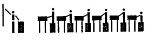 | B. |
C.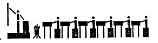 | D.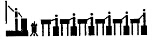 |
| A.try the food in the late 19th century |
| B.learn the subjects over a century ago |
| C.memorized and retell their lessons they have learn |
| D.experience the way children learned over a century ago |
| A.They had only one teacher. |
| B.They had different classrooms. |
| C.They could choose the seats they liked. |
| D.They learned more subjects than we do now. |
What is the best way to study? This is a very important question. Some Chinese students often 31 very hard for long hours. It is a 32 habit, but it is not a better way to study. An efficient(讲效率的) student must 33 enough sleep, enough food and enough rest. Every week you 34 to go out for a walk or visit some friends or some nice places. It's good 35 your study. When you return to your studies, you'll find yourself 36 than before and you'll learn more.
Maybe we can 37 that learning English is 38 taking Chinese medicine. We don't mean that it's bitter (苦的). We mean that like Chinese medicine, the efficiency of your study 39 slowly but surely. 40 slowly but surely every day and effects will come just like Chinese medicine.
|
1. |
|
|
2. |
|
|
3. |
|
|
4. |
|
|
5. |
|
|
6. |
|
|
7. |
|
|
8. |
|
|
9. |
|
|
10. |
|
查看习题详情和答案>>
| |||||||||||||||||||||||||||||||||||||||||||||||||||||||||||||||
| 完形填空。 | ||||
| What is the best way to study? This is a very important question. Some Chinese students often 1 very hard for long hours. It is a 2 habit, but it is not a better way to study. An efficient (讲效率的) student must 3 enough sleep, enough food and enough rest. Every week you 4 to go out for a walk or visit some friends or some nice places. It's good 5 your study. When you return to your studies, you'll find yourself 6 than before and you'll learn more. Maybe we can 7 that learning English is 8 taking Chinese medicine. We don't mean that it's bitter (苦的). We mean that like Chinese medicine, the efficiency of your study 9 slowly but surely. 10 slowly but surely every day and effects will come just like Chinese medicine. | ||||
|
| |||||||||||||||||||||||||||||||||||||||||||||||||||||||||||||||||||||||||||||||||||||||||||||||||||||||||||||||||||||||||||||||||||||||||||||||