听力

第一节

听下面5段对话。每段对话后有一个小题,从题中所给的A、B、C三个选项中选出最佳选项。听完每段对话后,你都有10秒钟的时间来回答有关小题和阅读下一小题。每段对话仅读一遍。

W:Concert tickets are $6 for adults, half price for children.

M:OK, I’d like three adults and two children’s tickets, please.

1.How much will the man pay for the tickets?

A.$6.

B.$24.

C.$18.

W:You look sleepy.When did you go to bed last night?

M:We went to bed at 6∶30, but we had promised to wake up   2   hours later to meet your 9∶00 train.

2.What do we learn from the conversation?

A.The man woke at 8∶30.

B.The man had 9 hours to sleep.

C.The man woke at 9∶00.

W:When do you work?

M:Well, most days I work until six but on Thursdays I get off early at about 4∶30.

3.When does the man finish working on Monday?

A.At 5∶00.

B.At 6∶00.

C.At 4∶30.

M:I want to have this coat dry-cleaned.

W:Very well, sir.Your name and room numbers, please.

4.Where do you think the woman is working?

A.At a hotel.

B.At a cleaner’s.

C.On the train.

M:Now Mrs Snow, what can you remember about the attack?

W:Well, I was on my way home when a man wearing a stocking hit me on the head.

5.What is the man’s job?

A.A customer.

B.A policeman.

C.A headmaster.

第二节

听下面5段对话或独白。每段对话或独白后有几个小题,从题中所给的A、B、C三个选项中选出最佳选项。听每段对话或独白前,你将有时间阅读各个小题,每小题5秒钟;听完后,各题将给出5秒钟的作答时间。每段对话或独白读两遍。

听第6段材料,回答第6~8题。

W:Have you traveled much?

M:Well, I’ve been around the world several times.

W:What countries have you visited then?

M:I have been to France, Italy, Japan and Ireland.

W:Why did you visit them?Was it just for vacation or work?

M:In most cases, it was for vacation.I once worked in France for two years.

W:Have you ever been to Britain on vacation?

M:Oh, yes.I’ve often been to Britain.

6.How many countries are mentioned in the dialogue?

A.Four.

B.Three.

C.Five.

7.Why did the man visit those countries?

A.For holidays.

B.For work.

C.Both A and B.

8.In what country do you think the man stayed the longest time?

A.France.

B.Japan.

C.Italy.

听第7段材料,回答第9~11题。

M:How long have you lived here?

W:Since last June...about a year.

M:Was it cold last winter?

W:Yes, it was, but not as cold as Paris.December and February were much colder than January.

M:Did you have much snow?

W:Yes.But we didn’t have as much snow as you had in Paris.

M:What about the other seasons?

W:I think autumn was the most beautiful season.The days were clear and dry, and it was sunny all the time.But November was terrible.We had a lot of rain.

M:What was last spring like?

W:It wasn’t very nice.But May was nicer than March and April.

M:What’s summer like?

W:It was wonderful.

9.What were the two people talking about?

A.The weather in China.

B.The weather in Paris.

C.The weather in some place we don’t know.

10.How did the woman like the weather in autumn there?

A.She didn’t like it at all.

B.She did like it.

C.She thought it was terrible.

11.What was the weather like in summer?

A.It wasn’t very nice.

B.It was bad.

C.It was nice.

听第8段材料,回答第12~14题。

M:Let me see now.Which train do I need to get on?

W:Excuse me.Do you need any help?

M:Yes.I want to go to Tokyo Tower, but I’m really lost.This is my first visit to Japan, so I have no idea on how to ride the trains.

W:First, you need to buy a ticket to your destination.From here, it’s a hundred and thirty yen.

M:A hundred and thirty yen.Okay.

W:Then, get on the Subway Line at platform number 4.

M:Number 4, all right.Oh, and how often do the trains come around this time of day?

W:Usually, they come about every six minutes or so.

M:All right.And where do I get off the train?

W:Get off three stops from here.The sign at the station is written in English, so you’ll be able to read it.

M:Three stops.Got it.Thanks for your help.

W:You’re welcome.Good luck.

12.Where should the man get on the train?

A.Platform number 3.

B.Platform number 4.

C.Platform number 5

13.How often do the trains come?

A.About every five minutes.

B.About every six minutes.

C.About every seven minutes.

14.Where should the man get off the train?

A.At the first stop from here.

B.At the second stop from here.

C.At the third stop from here.

听第9段材料,回答第15~17题。

M:Windy, isn’t it?

W:Yes, it is.

M:Oh...where are you going?

W:To Germany.I’m going home.

M:Oh, you’re German.

W:Yes, you’re English, aren’t you?

M:Yes, I am.

W:Where are you going?

M:To Portugal.

W:On holiday?

M:No, I’m going to take some photographs.

W:Photographs?

M:Yes, I work for a travel magazine.

W:Ah.

M:What do you do?

W:I’m a student.

M:What are you studying?

W:Medicine.

M:Oh, my brother is a doctor.

W:Ah, really?

M:Cold, isn’t it?Would you like a coffee?

W:Yes, I’d love one.

M:Let’s go to the restaurant then.

15.What’s the weather like?

A.It is windy and warm.

B.It is windy and cold.

C.It is sunny and cool.

16.What’s the native language of the woman?

A.German.

B.English.

C.We don’t know.

17.What is the man going to Portugal for?

A.For holidays.

B.For work.

C.To see a friend of his.

听第10段材料,回答第18~20题。

  How does television affect our lives?It can be helpful to those who carefully choose the programs that they watch and harmful to those who watch it too much.

  In China, many people worry that children and young people are watching too much television.A survey of 300 youngsters in Shanghai last year showed that, on average, they spent half of their free time watching television.And two-thirds of them spent about two and a half hours reading romance and detective stories.Another survey of school-aged children in Wuhan found that half of them said they read very little.

  During the Barcelona Olympic Games, tens of millions of Chinese viewers stayed up late to watch the opening ceremonies and other programs.

  And television is quickly taking the place of printed material as the major source of news for most Chinese.A recent survey in Beijing found that 63 percent of those surveyed got their news from television through CCTV and local TV stations.

18.What is the main topic of the passage?

A.The Barcelona Olympic Games.

B.TV programs on Chinese television.

C.Effects of television on our lives.

19.How many people watched the Barcelona Olympic Games on television in China?

A.Tens of thousands.

B.Tens of millions.

C.Ten million.

20.According to a survey(调查)in Shanghai, how much time did young people spend on television each day?

A.Two and a half hours.

B.Three hours.

C.Three and a half hours.

听力

第一节

听下面5段对话。每段对话后有一个小题,从题中所给的A、B、C三个选项中选出最佳选项。听完每段对话后,你都有10秒钟的时间来回答有关小题和阅读下一小题。每段对话仅读一遍。

W:What do you think of the movie?

M:It’s very interesting.But it’s a pity I missed the first part.

1.What are the two speakers talking about?

A.The weather.

B.A movie.

C.A basketball match.

W:You are late again.What’s the matter with you?

M:I’m sorry, Miss Green.But I didn’t catch the school bus.That’s why I was late for school.

2.Where did the conversation probably take place?

A.In a restaurant.

B.In a book shop.

C.In a classroom.

W:I wonder if Jim will be here by 8∶00.He’s supposed to be.

M:His wife said he left at 7∶30, so he should be here by 8∶15 at the latest.

3.What time is Jim supposed to arrive?

A.8∶15.

B.8∶00.

C.7∶30.

W:How often should I take these pills and how many should I take?

M:Take two pills every six hours.

4.How many pills should the woman take in twenty-four hours?

A.Six.

B.Eight.

C.Twelve.

xW:The room is filled with smoke.I can hardly breathe.

M:I agree.Smoking shouldn’t be allowed in this room.

5.What can be concluded from this conversation?

A.The woman is bothered by some people smoking heavily.

B.The room is on fire and full of smoke.

C.Smoking is strictly forbidden in the room.

第二节

听下面5段对话或独白。每段对话或独白后有几个小题,从题中所给的A、B、C三个选项中选出最佳选项。听每段对话或独白前,你将有时间阅读各个小题,每小题5秒钟;听完后,各小题将给出5秒钟的作答时间。每段对话或独白读两遍。

听第6段材料回答第6~8题。

W:It’s Alice’s birthday next Tuesday.What shall we buy for her birthday?

M:Does she like reading? We can buy her a book.

W:Well, she had lots of books already.Besides, her birthday present last year was also a book.

M:How about a basketball?

W:No, she doesn’t like basketball, but she likes football.

M:Get her a football, then?

W:Do you know how much a football costs?

M:I have no idea, about 20 yuan, maybe.

W:But I have only 6 yuan.How much do you have?

M:I have eight.Why not go and ask John if he would like to join us?

6.What was the birthday present they decided to buy?

A.A book.

B.A basketball.

C.A football.

7.How much money did the two speakers have altogether?

A.6 yuan

B.14 yuan

C.8 yuan

8.Why did they decide not to buy Alice a book?

A.Because she didn’t like reading at all.

B.Because she had lots of books in her room.

C.Because she had lots of books and her birthday present last year was a book.

听第7段材料回答第9~11题。

M:What’s the matter, Alice?

W:Sorry, Mr Harrison.I missed my train.

M:Why did you miss the train?

W:Because I left home a little late.

M:Did you get up late or something?

W:No.My aunt called me at the last minute.

M:Tell her not to call you in the morning.

W:I will, Mr Harrison.I’m really sorry for being late.

M:If you are late again, I can’t let you pass for this class.

W:Oh, please.

9.What’s the relationship between the two speakers?

A.Secretary and boss.

B.Teacher and student.

C.Doctor and patient.

10.Why was she late?

A.Her aunt called her to get up late.

B.She missed the bus.

C.She got a telephone call.

11.What can we know about the man?

A.He is strict with his students.

B.He is cold to Alice.

C.He gets angry easily.

听第8段材料,回答第12~14题。

W:Is it true that you don’t swim at all now?

M:I’m afraid so.I’m too old.

W:But you’re only twenty!

M:That’s too old for a swimmer.If I swam in an international competition now, I wouldn’t win.So I’d rather not swim at all.

W:But don’t you enjoy swimming?

M:I used to, when I was small.But if you enter for big competitions, you have to work very hard.I used to get up at 6∶00 a. m.to go to the pool.I had to swim before school, after school and on weekends.I swam thirty five miles every week at that time.

W:But you were famous at fifteen.And look at all those cups!

M:It’s true that I have some wonderful memories.I enjoyed visiting other countries,and my Olympics were very exciting.But I missed more important things.While other boys were growing up, I was swimming.

12.At what time did he get up when he was small?

A.At six in the morning.

B.At six thirty in the morning.

C.At five to six in the morning.

13.How many miles did he swim every week?

A.Thirty miles a week.

B.Thirteen miles a week.

C.Thirty-five miles a week.

14.Which is right according to the dialogue?

A.The man is 40 now.

B.At the age of 15, the man became well-known.

C.The man doesn’t enjoy traveling.

听第9段材料回答第15~17题。

M:Hi, Shirley, how about going to the football game today?

W:I’m not going to it.I’m planning to watch it on television.

M:What’s that? Do you feel too poor to watch a football game?

W:Money’s not the problem.I find it easier to follow football on television than in the stadium.When I see the game in the stadium, I feel as if I’m too far away from the action.

M:I know just what you mean.But there’s always so much excitement.People are cheering and shouting when you’re there.

W:You’re right there, but I can’t even see who has the ball, I can’t get very excited.So I really prefer watching it on television.

M:I see your point.Well, enjoy the game.

W:You too.

15.What are the man and the woman talking about?

A.Viewing a football game.

B.Interviews with football players.

C.Money problem about a football game.

16.Why is the woman not going with the man?

A.Because she is too poor to buy a ticket.

B.Because she doesn’t like people’s cheering and shouting in the stadium.

C.Because she finds it easier to follow football on television than in the stadium.

17.Which is right according to the dialogue?

A.The man likes people’s cheering and shouting in the stadium.

B.The woman can’t get excited while watching the football game on television.

C.There’s always so little excitement in the stadium.

听第10段材料回答第18~20题。

  When the Americans were getting ready to send their first men to the moon, an old Irishman was watching them on TV in the bar of a hotel.There was an Englishman in the bar, too, and he said to the Irishman, “The Americans are very clever, aren’t they? They are going to send some men to the moon.It’s a very long way away from our world.”

  “Oh, that’s nothing, ” the Irishman answered quickly.“The Irish are going to send some men to the sun in a few months’ time.That’s much farther away than the moon, you know.”

  The Englishman was very surprised when he heard this.“Oh, yes, it is, ”he said.“But the sun’s too hot for people to go to.”

  The Irishman laughed and answered, “Well, the Irishmen aren’t stupid, you know.We won’t go to the sun during the day, of course.We’ll go there during the night.”

18.Who were in the bar of the hotel?

A.Some Americans.

B.An Irishman.

C.An Englishman and an Irishman.

19.What was the Irishman doing?

A.He was drinking.

B.He was watching TV.

C.He was reading.

20.What was on TV?

A.The Americans were getting ready to go to the moon.

B.The Irish were ready to send some men to the sun.

C.Some Englishmen were sent to the moon.

听力

第一节

听下面5段对话。每段对话后有一个小题,从题中所给的A、B、C三个选项中选出最佳选项。听完每段对话后,你都有10秒钟的时间来回答有关小题和阅读下一小题。每段对话仅读一遍。

W:Oh, Michael…I didn’t tell you.My sister phoned yesterday.She wants to get married.

M:Married! She’s only seventeen.

1.What does Michael think of the woman’s sister?

A.She is not old enough to get married.

B.She is too old to get married.

C.She is married.

M:Waitress! I’d like the menu, please.

W:Here you are, sir.

2.Where is the man?

A.In a bookstore.

B.In a train station.

C.In a restaurant.

M:Has the TV been repaired?

W:Yes.We’d expected the repairs to cost us about      dollars, but they charged us twice as much.

3.How much did the lady pay?

A.$15.

B.$20.

C.$30.

M:Hello, Jane.How lucky to run into you.Can you and Tom come to dinner tomorrow evening?

W:I think so.I don’t think we’re going out.

4.How does the woman respond?

A.She refuses to go to dinner.

B.She agrees to go to dinner.

C.She is angry.

M:I have to go to class because I have a test, but if I could, I’d go with you to the cinema.

W:That’s too bad.I wish that you could come along.

5.Where is the man going?

A.To class.

B.To the cinema.

C.To the doctor’s office.

第二节

听下面5段对话或独白。每段对话或独白后有几个小题,从题中所给的A、B、C三个选项中选出最佳选项。听每段对话或独白前,你将有时间阅读各个小题,每小题5秒钟;听完后,各小题将给出5秒钟的作答时间。每段对话或独白读两遍。

听第6段材料回答第68题。

M:Hello, Mrs Smith.How are you?

W:Fine, thanks, Mr Downs.How’s your boy, Jack?

M:He is a bit tired.You know, he goes to school at eight o’clock every morning.He doesn’t get home till after four.Then he does his homework after ten.It often takes him a couple of hours to finish it.

W:Poor boy.Children work hard at school nowadays, don’t they? Does he like it?

M:School, you mean? Yes, he does.He likes his teachers, and that always makes a difference.

W:Yes, it does.Does he go to school by bus?

M:No, he walks.He likes walking.He meets some of his friends at the corner and they go together.

W:What does he do when it rains?

M:His uncle takes him in the car.He passes the school on the way to the office.

6.What are the two talking about?

A.Mrs Smith.

B.Mr Downs.

C.Mr Downs’ son.

7.How long does a school day last?

A.At least 8 hours.

B.About 6 hours.

C.Nearly 7 hours.

8.How does Jack usually go to school?

A.By bus.

B.On foot.

C.By car.

听第7段材料,回答第911题。

M:Hello! Can I speak to Susan, please?

W:Speaking.Is that you, Tom?

M:Yes, it is.I am going to New Zealand in two weeks’ time, and my wife is going with me.

W:Oh, how lucky you are! How long are you going for?

M:For a couple of months, maybe half a year.My boss wants me to help set up a branch company there.Well, Susan, you have been to New Zealand several times.Can you give us some suggestions, or just tell us about that country?

W:I’d love to.We can have a talk sometime.

M:Why not come over to dinner in my house this weekend.My wife wants to meet you as well.

W:All right.What about Saturday?

M:OK.See you at 6∶00 p. m., this coming Saturday.Goodbye!

9.Who answered the phone?

A.Tom.

B.Tom’s wife.

C.Susan.

10.When are they going to New Zealand?

A.In half a year.

B.In a couple of months.

C.In two weeks.

11.Where are they going to meet?

A.At Susan’s.

B.At Tom’s.

C.In New Zealand.

听第8段材料,回答第12~14题。

M:As you can see, Maria, the railway station is very crowded during rush hours.

W:How many people do you suppose ride into New York every day to work?

M:I don’t know.Must be several hundred thousand at least.Maybe a million.

W:I’m glad they’re not all taking this train.

M:Oh, they come from all directions, and by many different means, by railroads, ferries and subways.Then of course, some people drive in.

W:I’m a little afraid I’ll get lost.

M:You’ll soon learn that New York is a very easy city to get around.

W:Let’s see, the “Avenues” run north and south and the “Streets” run east and west, don’t they?

M:That’s right.You won’t get lost when you travel alone.

W:I hope not.

12.What can Maria see?

A.Many trains.

B.Many planes.

C.Many people.

13.What’s the woman afraid of?

A.Driving in.

B.Taking ferries(摆渡).

C.Getting lost.

14.What kind of city is New York, according to the man?

A.An easy city to get around.

B.A city full of subways.

C.A city difficult to get around.

听第9段材料,回答第1517题。

W:Good afternoon.

M:Good afternoon.My name’s William Turner.I want to make an appointment to see Dr Smith please.

W:Yes, of course, Mr Turner.May I have your address please?

M:108 Park Road, London.

W:Yes, we have you on our records.Can you manage this afternoon at 3:00?

M:Fine.

W:Will 3:00 be all right?

M:Well, yes, but I prefer a later time so I can come along after work.

W:Then what about 5:30?

M:Well, that’s fine.Thank you.Goodbye.

W:Goodbye.

15.Who is William Turner?

A.A close friend of Dr Smith’s.

B.A patient of Dr Smith’s.

C.Both A and B.

16.When will Mr Turner go to see Dr Smith?

A.At 4∶00 p. m.

B.At 5∶00 p. m.

C.At 5∶30 p. m.

17.What’s the main idea of this dialogue?

A.Mr Turner wants to make an appointment with Dr Smith.

B.Mr Turner will go to see Dr Smith at 5∶30 p. m.

C.Mr Turner is a patient of Dr Smith’s.

听第10段材料,回答第1820题。

If a Chinese comes to England and wants to drive his car there, he must know the English rules of the road and the English traffic signs.One rule is that he must always drive on the left.Another rule is that he mustn’t drive faster than thirty mph through town and villages.If he does not pay attention to this speed limit, the police will soon be after him.The third rule is that cars on the main road have right of way.It is not easy to drive in London, because the traffic is so busy and buses and trucks sometimes block the roads.It is much less difficult to find your way if you go by one of the red buses or the underground.There are bus stops at every street corner.And if you cannot find one, ask a policeman.He will help you at once.

18.On which side of the road are cars driven in England?

A.On the left.

B.On the right.

C.The passage doesn’t tell about that.

19.What can we know from the passage?

A.We know police in England are often after you.

B.We know police in England are often helpful.

C.We know police in England are often impolite.

20.What’s the best title for this passage?

A.English Traffic

B.Come to England

C.Traffic Rules

听力

第一节

听下面5段对话。每段对话后有一个小题,从题中所给的A、B、C三个选项中选出最佳选项。听完每段对话后,你都有10秒钟的时间来回答有关小题和阅读下一小题。每段对话仅读一遍。

W:What exactly are you looking for?

M:I’m looking for a toy…for my nephew.

1.Where does the conversation most probably take place?

A.In a record shop.

B.In a jeweler’s shop.

C.In a toy shop.

M:When did your brother first begin to smoke?During college?

W:No.He didn’t start until after graduation from college.

2.When did her brother start smoking?

A.During college.

B.After college.

C.Before graduation.

W:What a shame about your accident!What a way to end your holiday!

M:Yes, it was bad luck.I suppose I should have been more careful.

3.What are they talking about?

A.A holiday.

B.An accident.

C.Luck.

W:Tony, your coat looks nice.Was it expensive?

M:The ad said that the coat was on sale for      dollars, but actually it was $22.

4.How much did the coat cost?

A.The coat cost $22 in a sale.

B.He said that he had bought a coat for $20, but he was lying.

C.His coat actually cost $2 more than the advertised price.

M:Hello!You know it’s our teacher’s birthday tomorrow.Well, we’re collecting money to buy him a present from the class.

W:What a nice idea!Here’s 50 cents, is that enough?

5.Why does the second person give 50 cents?

A.The class will have a party.

B.Everybody should give 50 cents.

C.To buy a present for their teacher.

第二节

听下面5段对话或独白。每段对话或独白后有几个小题,从题中所给的A、B、C三个选项中选出最佳选项。听每段对话或独白前,你将有时间阅读各个小题,每小题5秒钟;听完后,各小题将给出5秒钟的作答时间。每段对话或独白读两遍。

听第6段材料回答第6~7题。

M:A wonderful film, wasn’t it?

W:Oh, yes, it was.I enjoyed it very much.But now what I need is some sleep.

M:Yes.It’d be nice to have a good rest.But I feel like a drink now.

W:As a matter of fact, I’m dying for a drink, too.I wouldn’t mind a cup of tea right now.

M:All right, let’s go to the teahouse and have some.

W:OK, let’s go.

M:I’d like a piece of cake to go with the drink.

W:I guess we can get some there also.

6.What did they do before the conversation?

A.They slept.

B.They had a drink.

C.They saw a film.

7.What do they want most now?

A.A drink.

B.A piece of cake.

C.Sleep.

听第7段材料回答第8~10题。

Now here is a story.Please listen carefully.

By midday the sun was so strong that Jim could not go any further.There were no trees near the path, so he stopped under a big rock.After drinking the rest of his water, he took off his shirt and rolled it under his head.

Then he lay down on the ground and went to sleep.It was so late in the afternoon when he woke up.He was just about to jump up when he felt something moving under his feet.He looked down.A long black snake was just about to move across his legs.

Jim watched, too afraid to do anything.The snake moved across his legs;he hesitated for a moment, then moved on and disappeared under the rock, Jim jumped to his feet, paused only to pick up his shirt and ran off down the path.

8.Why did Jim stop?

A.Because there was a rock on the path.

B.Because there were no trees.

C.Because it was too hot.

9.When he woke up, what did he find?

A.He found a snake by his feet.

B.He found his shirt was stolen.

C.He found a man standing in front of him.

10.Which is right according to the passage?

A.There are a few trees near the path.

B.Jim wasn’t afraid at all when he saw the snake.

C.At last the snake moved under the rock.

听第8段材料回答第11~13题。

W:Excuse me, but I think you made a wrong turn.You were supposed to turn left on Wilson Broward.

M:Oh, I’m sorry.Didn’t you say 1323 Wilson?

W:No, 3023.It’s OK, though.You don’t have to take me there.I can walk from here.

M:Why don’t I just make a U-turn at the corner?

W:Well, you shouldn’t make a U-turn there.It’s a oneway street.See the sign up ahead.

M:Well, maybe if I turn left here, I can come down the next street.

W:You can’t do that either during rush hour.Really though, don’t go to any trouble.Sometimes one can wait thirty minutes for a taxi.So I’m happy to get this close.

M:Thirty minutes!I’ve been riding around all day looking for passengers.

11.Who are the speakers?

A.A passer-by and a policeman.

B.A passer-by and a driver.

C.A passenger and a taxi-driver.

12.What is the woman’s house number?

A.1323.

B.3023.

C.4023.

13.Why can’t the man turn left?

A.It is rush hour.

B.It is a one-way street.

C.The street is too narrow.

听第9段材料回答第14~16题。

W:Well, do you want to have a picnic in the park on Saturday?

M:That’s a good idea.And we can ride our bikes for a while, too.

W:Then there’s a party.

M:Party?What party?

W:Have you forgotten?Mark and Mary invited us for dinner on Saturday night.

M:I have forgotten.What time will we get home, do you think?

W:Probably late.Mary wants to go out after dinner to a place where we can dance.

M:Then we’ll sleep all day on Sunday.

W:Oh, not all day.Don’t you have something special that you want to do on Sunday?

M:We talked about going to that new movie.

W:Oh, yes!We can go in the evening.There are some new paintings in museum that I want to take a look at in the afternoon.

M:It sounds like a busy weekend.

W:Our weekends are always busy.But that’s why in New York there is always so much to do!

14.What will they do on Saturday night?

A.Have a picnic.

B.Dance in the home of Mark and Mary.

C.Have dinner with Mark and Mary.

15.What time will they go to see the new movie?

A.On Sunday evening.

B.On Sunday afternoon.

C.On Sunday morning.

16.What will they not do in the weekend?

A.Seeing paintings.

B.Riding bikes.

C.Taking pictures.

听第10段材料回答第17~20题。

  Good evening.It’s 11∶15…and it’s time for the Olympic Report.Our report tonight is coming live by satellite from the Olympic Games.

  Swimming Good evening.Well, today’s most important event was certain the women’s 200-meter freestyle.The American, Doris Kennedy, was first and got the gold medal.She swam 200 meters in a new world record time of      minute 58 seconds.The USA won two gold medals yesterday, and three the day before, so in the first three days they’ve won six gold medals.

  Gymnastics Here we are in the Olympic Gymnasium.Olga Ivanovna, the fifteen-year-old Russian gymnast, has just finished her performance.We’re waiting for the results now.And here’s the result!She’s got an average of 9.5 points.That’s the best score today!

17.Where did the man send his Olympic Report?

A.From the USA.

B.From where the Olympic Games were held.

C.From the broadcast station.

18.How many gold medals did the Americans get in swimming in the first three days?

A.Three.

B.Five.

C.Six.

19.Who got the best score in gymnastics that night?

A.An American gymnast.

B.A Russian gymnast.

C.A Romanian gymnast.

20.Which is right according to the passage?

A.The time for the Olympic Report is 11∶50 pm.

B.The time for the Olympic Report is 11∶15 am.

C.An American swimmer got the first gold medal in the women’s 200-meter freestyle.

听力(共两节,满分30分)

第一节(共5小题;每小题1.5分,满分7.5分)

听下面5段对话。每段对话后有一个小题,从题中所给的A、B、C三个选项中选出最佳选项。听完每段对话后,你都有10秒钟的时间来回答有关小题和阅读下一小题。每段对话仅读一遍。

1.What does the woman mean?

A.She’s too busy to help the man today.

B.She’ll finish the report by noon.

C.She’ll have time later on in the day.

2.What has happened to the camera?

A.Someone fixed it.

B.Sharon repaired it.

C.It’s been thrown out.

3.How many of unclear centres’ positions are mentioned in the talk?

A.Two.

B.Three.

C.Four.

4.For how many hours is the museum open?

A.7.

B.8.

C.9.

5.What’s the flat like?

A.Small but expensive.

B.Small but comfortable.

C.Large and comfortable.

听力原文:(Text 1)

M:Would you have some free time to look at this report for me?

W:I’m kind of busy now.How does late this afternoon sound?

(Text 2)

M:Sharon, do you want me to try to fix that broken camera of yours?

W:Thanks, but I’ve already had it taken care of.

For man is man and master of his fate.人就是人,是自己命运的主人。

(Text 3)

W:It’s said that three more nuclear power station centres will be built in China.

M:How do you know that?

W:I got it from the news:A top Chinese official said one power center will be built in eastern China, another is planned in the north-eastern part of the country.

(Text 4)

W:I’d like to go to the Science Museum.Do you know what time it’s open?

M:Yes, it’s open from 9 a. m. until 5 p. m.But it has an hour’s break.

(Text 5)

M:You live in a flat, don’t you?

W:Yes.It’s small but comfortable.It’s very near my office and isn’t expensive.

第二节(共15小题;每小题1.5分,满分22.5分)

听下面5段对话或独白。每段对话或独白后有几个小题,从题中所给的A、B、C三个选项中选出最佳选项。听每段对话或独白前,你将有时间阅读各个小题,每小题5秒钟;听完后,各小题将给出5秒钟的作答时间。每段对话或独白读两遍。

听第6段材料,回答第68题。

6.When did Paul’s trouble start?

A.The day before today.

B.The other day.

C.The day before yesterday.

7.What illness has Paul got?

A.Headache.

B.Stomachache.

D.Flu.

8.How often must he take the medicine?

A.Three times a day before meals.

B.Three times a day after meals.

C.Three times a day with meals.

听力原文:(Text 6)

W:Come in and sit down, Paul.Now, what’s the trouble?

M:I’ve got a terrible pain in my stomach, doctor.

W:I see.When did it start?

M:It started yesterday.I didn’t eat any supper.

W:Have you got a temperature?

M:I think so.I feel very hot.

W:Let’s see.Yes.You’ve got quite a high temperature.

M:I’ve got an awful headache, too, and my throat hurts.Very often I blow my nose.

W:Hmmm.I think you’ve got the flu.

M:Is it serious?

W:No, not at all, but you must stay in bed for three days and take this medicine.

M:How often must I take it?

W:Three times a day after meals.

M:Thank you, doctor.Goodbye.

听第7段材料,回答第911题。

9.When will the man leave?

A.Monday.

B.Tuesday.

C.Sunday.

10.Who told the man the news?

A.His sister.

B.His father.

C.His mother.

11.How long will the man stay at home at most?

A.Two days.

B.Three days.

C.Four days.

听力原文:(Text 7)

W:I hear you’re going home, aren’t you?

M:I wanted to go on Monday, but I couldn’t get a ticket for Monday.I bought a ticket for Tuesday.

W:Why are you in such a hurry?

M:My mother is ill.She has been sent to the hospital.

W:How did you get the news?Did your mother send you a letter?

M:My sister telephoned me this morning.She asked my father and me to go back.

W:Then how long are you going to stay at home, two or three days?

M:At most four days.I’ll be back for the meeting.

听第8段材料,回答第1214题。

12.How many days has the man got for his vacation?

A.25 days.

B.10 days.

C.15 days.

13.Why does the man go to Hawaii for his vacation with his family?

A.Because they want to climb the mountains.

B.Because they want to go fishing and swimming.

C.Because they want to relax themselves.

14.Where is the woman going this summer?

A.Going to Egypt.

B.Going to Europe.

C.Going to the United States.

听力原文:(Text 8)

W:When are you going to take your vacation?

M:I’ve not a ten-day vacation starting July 25.

W:Where are you going?

M:Hawaii.

W:That sounds like a good place.Is your family going?

M:Yes.We plan to climb the mountains, go fishing, swimming, and wind surfing but most of all relaxing.My wife is taking a whole bunch of books to read.

W:Your children must be all excited about it.

M:Yes, they are.They’re already crossing out the days on the calendar.Are you going to Europe again this summer?

W:No, not this time.We’re going to visit some old friends in Egypt.

M:Are you going by ship or taking a flight?

W:Going by air.

听第9段材料,回答第1517题。

15.What’s the probable relationship between the man and the woman?

A.Teacher and student.

B.Doctor and patient.

C.Friends.

16.What’s the weather like today?

A.Fine.

B.Rainy.

C.Cloudy.

17.According to the dialogue, what do you think happens to John?

A.John has caught a bad cold.

B.John is not wearing enough clothes.

C.John wears a lot of clothes.

听力原文:(Text 9)

W:Hello, John.How are you feeling now?

M:Awful.

W:Shall I open the window?It’s a lovely day.

M:No, thank you, Ausan.I’m cold.

W:Shall I put the fire on?

M:Yes, please.Will you turn it up high?

W:Are you sure?It’s very warm here.

M:I feel very cold.Will you get me another blanket, please?

W:Here you are.Shall I put it on the bed?

M:No.Put it round my shoulders, please.

W:ATCH!

M:What’s the matter, Susan?

W:Will you pass me some tissue paper, please?

听第10段材料,回答第1820题。

18.What is the main topic of the talk?

A.The advantages of refrigeration.

B.Cooking food in the summer.

C.Food in the summer.

19.Which of the following foods would be least likely to go bad in warm weather?

A.Cookies.

B.Chickens.

C.Ice cream.

20.According to the talk what should you do with food that doesn’t seem to be normal?

A.Eat it immediately.

B.Try a little.

C.Throw it away.

听力原文:(Text 10)?

During the summer you should be even more careful than usual of the foods you prepare.Foods go bad faster in hot weather than in cold weather.When you are shopping buy frozen and refrigerated foods.Don’t make long stops on the way home, because frozen foods could become soft or warm.Using insulated bags helps keep food could until you can get home, milk and milk products should be refrigerated immediately.When camping or picnicing, or at any time when refrigeration can’t be made use of, use special dry foods.Don’t leave foods in a hot car or beach bag.Picnic favorites like meat, chicken, and egg salad should be kept in a cooler.Above all, if the food doesn’t seem to be normal in odor or appearance, throw it away immediately.Don’t taste it.

听力(共两节,满分30分)

第一节(共5小题;每小题1.5分,满分7.5分)

听下面5段对话。每段对话后有一个小题,从题中所给的A、B、C三个选项中选出最佳选项。听完每段对话后,你都有10秒钟的时间来回答有关小题和阅读下一小题。每段对话仅读一遍。

1.What’s John’s address?

A.125 Park Road.

B.124 Rock Road.

C.125 Part Road.

2.Where does the conversation probably take place?

A.At a railway station.

B.In a bank.

C.In a post office.

3.What was the original price of the skirt?

A.$24.

B.$12.

C.$6.

4.Where was the two speakers?

A.At a restaurant.

B.In a museum.

C.In a zoo.

5.What’s the man doing?

A.Borrowing a book.

B.Buying a book.

C.Reading a book.

听力原文:(Text 1)

M:Sorry.I have forgotten John’s address.

W:You forgot again!It’s 125 Park Road.

(Text 2)

M:I need some stamps and some envelopes as well.

W:Will you step right over to the second window, please?

(Text 3)

M:Your shirt is quite beautiful in color, isn’t it?

W:Yes, I bought it at a sale for half price.It cost me $12.

(Text 4)

W:Look at those monkeys running around the rock hill.Look at the mother monkey.She is carrying her baby in her arms.

M:Yes, isn’t it interesting?

(Text 5)

M:What can I do if I can’t finish reading it in a week?

W:You may come and renew it.

第二节(共15小题;每小题1.5分,满分22.5分)

听下面5段对话或独白。每段对话或独白后有几个小题,从题中所给的A、B、C三个选项中选出最佳选项。听每段对话或独白前,你将有时间阅读各个小题,每小题5秒钟;听完后,各小题将给出5秒钟的作答时间。每段对话或独白读两遍。

听第6段材料回答第68题。

6.What can we learn about the exam?

A.Not very easy.

B.Shorter.

C.Not good.

7.Why didn’t the girl do well in the exam?

A.She was careless.

B.She didn’t work hard.

C.She was not good at the subject.

8.What kind of the exam did the girl take?

A.The final exam.

B.The mid-term exam.

C.The entrance exam.

听力原文:(Text 6)

M:Hello, Mary! How was your exam yesterday?

W:Not too good.It wasn’t as easy as the last one, and it was longer than before.

M:Well, the final exam is always more difficult.You need to work harder.You will certainly do better next time.

W:I worked very hard, but I was too careless.I made some stupid mistakes.

听第7段材料,回答第911题。

9.When is spring in the UK?

A.From March to May.

B.From March to June.

C.From January to March.

10.Where is she most probably talking?

A.On the telephone.

B.In the train.

C.In the street.

11.What season is it in the UK now?

A.Spring.

B.Winter.

C.Autumn.

听力原文:(Text 7)

M:Hello, Sally.

W:Hello, Ben.I haven’t seen you for years.Where have you been?

M:In the UK.How are you?I miss you and all my friends in Beijing.

W:Fine, thanks.How is the weather in UK?

M:Oh, it’s very cold.But spring will come soon.

W:When does spring begin in the UK?

M:It is being in March.

W:How long does it last?

M:For three months.

听第8段材料,回答第1214题。

12.Where is Tom now?

A.In the school.

B.In a restaurant.

C.At the cinema.

13.Who answers the telephone?

A.Mrs.Brown, Tom’s sister.

B.Mrs.Brown, Tom’s mother.

C.Mrs.Black, Tom’s aunt.

14.What does Bill want Tom to do?

A.Bring some food for the picnic.

B.Bring some toys for the game.

C.Bring some fruit for the trip.

听力原文:(Text 8)

W:Hello!577618.

M:Hello!Could I speak to Tom?

W:I’m sorry he’s out.He’s at the cinema at the moment.

M:Is that Mrs.Brown?

W:Yes, this is Tom’s mother.Do you have anything important to tell Tom?Can I take a message for him?

M:Sure.This is Bill.We’re going to have a picnic next Sunday.Please ask him to bring some delicious food.

M:Thanks a lot.Bye!

W:Bye.

听第9段材料,回答第1517题。

15.Why does Ann use a little tape-recorder?

A.To practice her English.

B.To listen to pop music.

C.To record radio news.

16.Where does the girl plan to go?

A.Around the world.

B.To America.

C.To Europe.

17.What does the man mean?

A.To envy(羡慕)her.

B.To thank her.

C.To hate her.

听力原文:(Text 9)

M:Whose radio is this, Ann?

W:It’s mine, but it isn’t a radio.

M:What is it?

W:It’s a tape-recorder.

M:What do you do with it?

W:I practice my English with it.

M:That’s a very good idea.

W:It’s for our trip.

M:Do you have plans for a trip to America?

W:We have plans for a trip around the world.

M:What a lucky girl you are!

W:Thanks.

听第10段材料,回答第1820题。

18.Which of the following are NOT city government workers?

A.Teachers in public school.

B.Police officers.

C.Doctors.

19.What’s Henry?

A.A fire fighter.

B.A policeman.

C.An office worker.

20.When does Nancy work every day?

A.From 9 a. m. to 5 p. m.

B.From 9 a. m. to 4 p. m.

C.From 8 a. m. to 4 p. m.

听力原文:(Text 10)

Many Americans work in different government departments.There are office workers, fire fighters, police officers and public school teachers and so on.Most city workers may not earn a lot of money but when they are old enough to stop working, they get a good sum of money.Henry and Nancy work for the city of Scattle.Henry is a fire fighter.He is on duty eight hours a day.When he works, he eats and sleeps at the firehouse because the fire fighters have to be ready to answer an alarm at any time.Nancy is a typist in Henry’s office.She works from 9 o’clock in the morning to 5 o’clock in the afternoon.She works five days a week from Monday through Friday.Her job is to type reports of fire.

听力(共两节,满分30分)

第一节(共5小题,每小题1.5分,满分7.5分)

听下面5段对话。每段对话后有一个小题,从题中所给的A、B、C三个选项中选出最佳选项。听完每段对话后,你都有10秒钟的时间来回答有关小题和阅读下一小题。每段对话仅读一遍。

1.Where is the bank?

A.Next to the bookstore.

B.Behind the bookstore.

C.Far from the bookstore.

2.What does the man mean?

A.There are too many shopping centers already.

B.They aren’t going to build one.

C.He hasn’t been to the other centers.

3.What does the man mean?

A.Bob said nothing at the meeting.

B.Something is wrong with Bob’s ears.

C.Bob doesn’t listen to him.

4.What is the woman going to do?

A.See the man smile.

B.Take the man’s photo.

C.Take out the film.

5.What’s the relationship between the man and the woman?

A.They’re friends.

B.They’re mother and son.

C.They’re husband and wife.

听力原文:(Text 1)

M:Excuse me.Could you tell me where the bank is?

W:Turn left here, and it’s right besides the bookstore.

(Text 2)

W:They’re building a new shopping center near my house.

M:Not another one!

(Text 3)

W:Didn’t you tell Bob about the meeting?

M:Whatever I say to him goes in one ear and out of the other.

(Text 4)

W:What are you doing with that camera?

M:Smile.I want a picture of you.

(Text 5)

W:Come in and make yourself at home.Our house is your house while you’re here.

M:Thank you.You’re very kind.

W:Invite your friends, Jim, if you like.

M:You really make me feel at home.

第二节(共15小题;每小题1.5分,满分22.5分)

听下面5段对话或独白。每段对话或独白后有几个小题,从题中所给的A、B、C三个选项中选出最佳选项。听每段对话或独白前,你将有时间阅读各个小题,每小题5秒钟;听完后,各小题将给出5秒钟的作答时间。每段对话或独白读两遍。

听第6段材料,回答第6~7题。

6.How long did Mary have to stay in bed?

A.One day.

B.Two days.

C.The whole of last week.

7.Why does everybody seem to have a cold?

A.Because of the changing weather.

B.Because one day is cold and the next day is colder.

C.Because everybody doesn’t wear his thick coat.

听力原文:(Text 6)

M:Hello, Mary.How are you today? I hear you weren’t well last week.

W:I’m much better now.Thank you.

M:What was the matter? Nothing serious, I hope.

W:Oh, no.I had a cold and had to stay in bed for two days.

M:I’m glad you’re better, anyway.And what about your friend Ann? I hear that she’s ill, too.

W:She was ill, but she’s all right now.I think she caught a cold.

M:Everybody seems to have one now.I think it’s the sudden change of weather.One day hot and the next day cold.

听第7段材料,回答第8~10题。

8.How many times has Linda been to China?

A.Never.

B.Once.

C.Many times.

9.What is Linda doing?

A.She’s visiting the Great Wall.

B.She’s doing sightseeing around the city.

C.She’s enjoying Chinese food.

10.How is the weather?

A.Warm and rainy.

B.Warm and fine.

C.Cool and sunny.

听力原文:(Text 7)

M:Linda, I don’t think you have been here before, have you?

W:No, I’ve traveled a great deal in the country.But this is my first time to come to Beijing.

M:I hope that you like it here.

W:I’m sure that I enjoy it.I’ve heard a lot about the Great Wall and I’ve been eager to visit it for ages.So I’m glad my dream has finally come true.

M:We’d love to take you to go sightseeing.

W:That’s great.Thank you.By the way, what is the weather usually like this time of the year?

M:It’s usually warm and sunny.It seldom rains.

W:So I’ve come here at the right time.

M:I guess you have.

听第8段材料,回答第11~13题。

11.What’s Jim’s phone number?

A.88362507.

B.83365207.

C.83362507.

12.What’s Jim?

A.Jack’s brother.

B.Jack’s classmate.

C.A basketball player.

13.What time is Jack expected to call Jim at?

A.4∶30.

B.4∶40.

C.5∶30.

听力原文:(Text 8)

M:Hello.Is Jack in?

W:No, he’s out at the moment.Who is that speaking, please?

M:Jim, his basketball teammate.May I leave a message?

W:Certainly.Just a moment, please.I need to get a pen…Yes? What’s the message?

M:Please ask him to call me back at five thirty this afternoon.My number is 83362507.

W:83362507?

M:That’s right.Thank you.

听第9段材料,回答第14~16题。

14.How far is the man’s hometown from the sea?

A.It isn’t very far.

B.About one hundred miles.

C.About one hundred kilometres.

15.What do the tourists do in his hometown?

A.They go through the town by bus and look at the old buildings.

B.They go through the town on foot and have a look at the old buildings.

C.They pass through the town by bike and look a the old buildings.

16.What’s the favourite sport there in winter?

A.Skiing.

B.Picnics.

C.Walk.

听力原文:(Text 9)

W:And tell me something about your hometown in, Vemont.It’s quite near the sea, isn’t it?

M:Oh, no.It’s about a hundred miles from the sea.

W:Oh, I see.And is it a very big town?

M:Not really.It’s got a population of about twenty thousand.

W:And is it a very old town?

M:Yes, it is.Many of the buildings go back to the eighteenth century.

W:Really? It must be quite an interesting place then.

M:Yes, it is.We get a lot of tourists.In fact, tourism is our main industry.There isn’t much else in the town at all.

W:Well, what do the tourists do there?

M:Oh, they can walk through the town and look at the old buildings.There are some great restaurants in the town.

W:Are there? And what about museums?

M:No, there aren’t any museum.They are planning to build one, though.

W:And is the scenery nice in the area?

M:Yes, there are lovely mountains near the town, for walks and picnics, and the mountains are very good for skiing in the winter.

W:I see.So it gets quite cold in the winter?

M:Yes, very cold.

听第10段材料,回答第17~20题。

17.Who need more sleep?

A.Adults.

B.Growing children.

C.New-born babies.

18.Why do children need more sleep than adults?

A.Because children need more energy.

B.Because children need dreams.

C.Because children are growing.

19.What probably come into our dreams?

A.The feelings.

B.What we have thought of.

C.What we have never heard of.

20.How will we feel if we sleep well at night?

A.Happier.

B.More worried.

C.Sleepy.

听力原文:(Text 10)

Everyone needs sleep so that their bodies can make up the energy used in the day.Growth takes place mainly when we are asleep.Children need more sleep than grown-ups because they are still growing.New-born babies sleep nearly all the time except when they are being fed.Although we are not conscious of anything when we are asleep, sometimes we dream.When we dream we imagine that we are awake.Often strange things seem to be happening to us.Dreams are a mixture of our fears and hopes and what we have done and thought.Sleep and dreams affect our moods and the moods affect our performance throughout the day.Generally, we will feel happier in the day if we sleep well at night.

听力(共两节,满分30分)

第一节(共5小题;每小题1.5分,满分7.5分)

听下面5段对话。每段对话后有一个小题,从题中所给的A、B、C三个选项中选出最佳选项。听完每段对话后,你都有10秒钟的时间来回答有关小题和阅读下一小题。每段对话仅读一遍。

1.Where is his mother now?

A.At home.

B.In the hospital.

C.At work.

2.How does the man feel about his job?

A.He enjoys it.

B.He doesn’t like it at all.

C.He wants to find a new job.

3.What does the man mean?

A.It will take him a long time to help the woman.

B.He can help her for a while.

C.It won’t take a long time for him to help her.

4.Where did the conversation most probably take place?

A.In a plane.

B.In a coffee shop.

C.In a restaurant.

5.Why couldn’t the man get through?

A.The woman’s telephone was out of order.

B.The woman’s receiver wasn’t put in the right place.

C.The receiver of the telephone was broken.

听力原文:(Text 1)

W:How is your mother feeling these days?

M:Much better,thanks.She should be coming home in a few days.The operation was a success and the doctor says she’ll recover in no time.

(Text 2)

W:You seem to have a lot of work at your office.You’re always staying late and working overtime.

M:That’s true,but I think the work is interesting and fun.I don’t mind the extra hours at all.

(Text 3)

W:Jack,can you help me with this work?

M:Sure,if it won’t take too much time.

(Text 4)

M:Miss,is there still time for a cup of coffee on this fight?

W:Yes,but you have to drink it fast,because we’ll be landing in 10 minutes.

(Text 5)

M:Is your phone out of order?

W:No.Why?

M:I tried calling you but couldn’t get through.

W:I’m sorry.Perhaps the receiver was off the hook.

第二节(共15小题;每小题1.5分,满分22.5分)

听下面5段对话或独白。每段对话或独白后有几个小题,从题中所给的A、B、C三个选项中选出最佳选项。听每段对话或独白前,你将有时间阅读各个小题,每小题5秒钟:听完后,各小题将给出5秒钟的作答时间。每段对话或独白读两遍。

听第6段材料,回答第6~8题。

6.Why does the woman want to buy something for her husband?

A.It’s a birthday present.

B.It’s a Christmas present.

C.His husband isn’t satisfied with the tie.

7.What did the clerk recommend(推荐)the second time?

A.A tie.

B.An electric shaver.

C.Some cosmetics(化妆品).

8.Why did the woman ask the clerk to put a card into the present?

A.To tell her husband how much she paid for the gift.

B.To congratulate him in written words.

C.To post it.

听力原文:(Text 6)

W:Could you help me,please?I’m looking for something for my husband’s birthday next week and I just can’t seem to think of anything to buy.

M:Certainly,madam.You don’t have anything special in mind?

W:Right.I just don’t know.

M:How about a nice silk tie?We have some handsome ties that just arrived from Italy.

W:Not a tie.I gave him one for Christmas and he’s never worn it.He hates ties.

M:What about this?He can use it after he shaves himself.

W:I don’t know.My husband has never used that kind of thing every often.He might not care for that either.Can you think of any other thing?

M:I believe I have just the thing.This wallet is something any man would be proud to own.It has a very deep money pocket.

W:That does sound nice.Please wrap it.Would you put this card in with it?

M:Certainly,madam.It will take just a few minutes.

W:All right.I’ll wait.

听第7段材料,回答第9~11题。

9.Where are the two speakers?

A.On a bus.

B.In the shopping district.

C.At a street corner.

10.What’s the largest building to the left?

A.The bank.

B.The department store.

C.City Hall.

11.What does the man need?

A.Clothing.

B.Shoes.

C.Cigarettes.

听力原文:(Text 7)

M:There’s a lot of traffic on the street.Is this the shopping district?

W:Yes,it is.There are a lot of stores,office buildings,and theatres near here.

M:What is the largest building on the left?

W:That’s department store.It sells clothing,furniture,food-almost everything.

M:Do you buy everything in the same store?That’s very handy,isn’t it?It saves a lot of time.I need some clothes.

W:There’s a men’s clothing store next to the bank building on the right.There are also some good stores on Lincoln Street.

M:That’s a beautiful theatre on the corner.What do all the signs in front of it mean?

W:There’s a new play there tonight.The building next to the theatre is a hotel.

M:Is that the post office across the street?

W:No,that’s the City Hall.The post office is between the bus station and the Richmond Hotel.

M:Is that far from here?

W:No,it’s just three blocks straight ahead.

听第8段材料,回答第12~14题。

12.Where does the conversation probably take place?

A.In a library.

B.In the woman’s office.

C.In a bookstore.

13.What is the woman trying to do?

A.To buy a book.

B.To borrow a book.

C.To get the writer’s name of a book.

14.What is the man going to do when the book comes in?

A.To send it to the woman’s house.

B.To write to the woman.

C.To call the woman.

听力原文:(Text 8)

W:I’ve been trying to get hold of the book for some time.

M:Well,I’m sorry we haven’t got it...but we can order it for you.

W:How long should it take to get it?

M:Only a few days.

W:All right.

M:Now,what was the title?

W:Never Say Never.

M:Do you happen to know the name of the author?

W:Yes,it’s Claudia Jameson.

M:Jameson.OK,now could I have your name please?

W:Yes.Anne…that’s with an “e” at the end…Parker.

M:Anne Parker.Can I have your telephone number,as well?

W:737506.

M:Thank you very much.As soon as it comes in,I’ll ring you.

W:Thank you very much.

听第9段材料,回答第15~16题。

15.What kind of man is described by the man speaker?

A.A teenager.

B.A young adult.

C.A middle-aged man.

16.What color are the man’s eyes?

A.Black.

B.Blue.

C.Brown.

听力原文:(Text 9)

W:Can you describe him?Is he tall or short?

M:Tall.Not very tall,but fairly tall.

W:Thin?Fat?

M:Well,he’s certainly not fat.He’s very fit and strong.

But he’s not thin either.

W:Can you say he’s well-built?

M:Yes,exactly.He’s well-built.About twenty-one or twenty-two years old.

W:Fair or dark hair?

M:Fair.

W:Is his hair long or short?

M:About shoulder-length.

W:What color are his eyes?

M:He has blue eyes.

W:I see.Can you tell us anything else?What’s he wearing,for example?

M:Yes,I can,actually.He’s wearing a big white sweater,white shorts and an open-necked shirt.

W:Thank you for calling.We’ll try to find him.

听第10段材料,回答第17~20题。

17.How many librarians are in charge of the library?

A.Only one.

B.A single man.

C.We both.

18.What’s the passage mainly about?

A.The duties of the librarian.

B.The rules of the library.

C.The length of the students’ borrowing books.

19.How many books can students borrow at a time?

A.Two books.

B.Three books.

C.Four books.

20.Which of the following is NOT true of the rules for good behaviour in the library?

A.The students should keep the books in good condition when they return them.

B.The students should not keep books longer than two weeks if they don’t finish them.

C.The students want to take away some books with the permission given by the librarian.

听力原文:(Text 10)?

  We have a big well-equipped library in our school.There is a librarian in charge of it.Students of the school may borrow books from the library but they may not lend them to others without the permission of the librarian.Students may borrow three books at a time.They may keep the books for 2 weeks.If they do not return them by the end of this period,they may be refused permission to borrow any more.?

  There are a number of rules for good behaviour in the library.Students ought to put back the books in their correct places on the shelves.They ought to leave the books carefully and keep them in good condition.Students may not talk or disturb others in the library.They ought to keep quiet when they are passing along outside the library.

听力(共两节,满分30分)

第一节(共5小题;每小题1.5分,满分7.5分)

听下面5段对话。每段对话后有一个小题,从题中所给的A、B、C三个选项中选出最佳选项。听完每段对话后,你都有10秒钟的时间来回答有关小题和阅读下一小题。每段对话仅读一遍。

1.How much will the woman pay if she buys two pounds of tomatoes?

A.$0.80.

B.$2.20.

C.$0.30.

2.How long does it take the woman to drive home when it isn’t rush hour?

A.Twenty minutes.

B.Twenty-five minutes.

C.Fifty minutes.

3.What does the man mean about Betty?

A.She doesn’t like going shopping.

B.She went shopping yesterday.

C.She prefers shopping to studying.

4.What do you know from the conversation?

A.The man had to work overtime.

B.Henry failed to meet the man.

C.The man had a traffic accident.

5.What does the woman mean?

A.She doesn’t believe the man.

B.They are not going to land.

C.She isn’t afraid.

听力原文:(Text 1)

W:I thought that your tomatoes are eighty cents a pound.

M:They used to, but the price has gone up thirty cents.

(Text 2)

M:How long does it take you to drive home when there is not much traffic?

W:Only twenty-five minutes.But if I can’t leave my office before 5∶30 p,m., it sometimes takes me fifty minutes.

(Text 3)

W:Didn’t Betty go shopping with you yesterday?

M:Even if she hadn’t had a lot of studying, she would have preferred staying at home to going shopping.

(Text 4)

W:If the traffic wasn’t so bad, I should have been home at six o’clock.

M:What a pity!Henry was here to see you.

(Text 5)

W:What was that noise?

M:It was the pilot putting the wheels down.We must be coming to land.Are you frightened?

W:You must be joking.

第二节(共15小题;每小题1.5分,满分22.5分)

  听下面5段对话或独白。每段对话或独白后有几个小题,从题中所给的A、B、C三个选项中选出最佳选项。听每段对话或独白前,你将有时间阅读各个小题,每小题5秒钟;听完后,各小题将给出5秒钟的作答时间。每段对话或独白读两遍。

听第6段材料,回答第6~8题。

6.What can the woman be?

A.She is a waitress at a hotel.

B.She is the secretary of Mr Li.

C.She works at the Blackwood Hotel.

7.How could the man get in touch with Mr Green?

A.Dial 411 to find a proper phone number.

B.Dial 707.

C.Find the hotel.

8.Why did the man ask the woman to change the dollar?

A.To pay for the information.

B.To get on the bus.

C.To make the phone call.

听力原文:(Text 6)

W:Oh, excuse me, Mr.Li.I almost forget there is a phone message here for you.A Dr Green called and asked you to call him back.

M:Where is he now, do you know?

W:He’s staying at the Blackwood Hotel, Room 707.

M:Thank you very much.Do you happen to have the number of the Blackwood?

W:I’m sorry, I don’t.But you can get it from information.Just dial 411.

M:Oh, and could I trouble you for changing a dollar?

W:All right.Here is your change.By the way, the public phones are over there on your right.

M:I see.Thank you.

听第7段材料,回答第9~11题。

9.What does the man want to learn?

A.Computer science.

B.Skills, such as driving.

C.language.

10.How long does the course last?

A.About 20 days.

B.About 35 days.

C.About 2 months and 5 days.

11.When can he take the final exams?

A.From September 15 to 17.

B.From August 16 to 18.

C.From July 12 to 16.

听力原文:(Text 7)

M:Excuse me, Miss.

W:Yes, young man.May I help you?

M:Yes, I’d like to get some information about the summer course at the English Training Center.

W:Sure.What can I tell you?

M:Can you tell me the starting and finishing time of course, please?

W:Yes.The course begins on July 15 and runs until August 20.

M:Right, and what course will we learn?

W:Well, you have varieties of courses.You have listening and speaking courses, reading and writing.There are also classes in audio-visual training and chances to use the language laboratory as well.

M:Right, and what time will the classes be held?

W:Well, most of them are in the morning.There are only a few classes in the afternoon.

M:Right.Do you have a timetable?

W:I’m sorry.My workmate isn’t here at the moment, so I can’t get a timetable for you yet.

M:That’s OK.And when will the final exams be held?

W:At the end of the term.They begin on August 16 and run until August 18.

M:OK.Well, thank you, Miss.

听第8段材料, 回答第12~14题。

12.Who answers the telephone?

A.Tom.

B.Susan’s husband.

C.Susan.

13.When are they going to New Zealand?

A.In two weeks.

B.In a couple of months.

C.In half a year.

14.Where are they going to meet?

A.At Susan’s.

B.At Tom’s.

C.In New Zealand.

听力原文:(Text 8)

M:Hello!Can I speak to Susan, please?

W:Speaking.Is that you, Tom?

M:Yes, it is.I am going to New Zealand in two weeks, and my wife is going with me.

W:Oh, how lucky you are!How long are you going for?

M:For a couple of months, maybe half a year.My boss wants me to help set up a branch company there.Well, Susan, you have been to New Zealand several times.Can you give us some suggestions or just tell us about that country?

W:I’d love to.We can have a talk sometime.

M:Why not come over to dinner in my house this weekend.My wife wants to meet you as well.

W:All right.What about Saturday?

M:OK.See you at 6∶00 p.m., this coming Saturday, Goodbye!

听第9段材料,回答第15~17题。

15.When does this conversation take place?

A.Just before the term begins.

B.After the first week of classes.

C.In the middle of the term.

16.Why has the woman come to see Dr.Taylor?

A.She had promised that she would.

B.She has been sick.

C.She needs his approval(赞成)for her courses.

17.What does Dr.Taylor seem most worried about?

A.She already knew the material.

B.She entered the hospital.

C.Her course load was too heavy.

听力原文:(Text 9)

W:Excuse me, Dr.Taylor.Your secretary said that I should come right in.

M:Please do, Jennie.How can I help you?

W:Would you please sign your name on my schedule card.Here, on the line above “Adviser’s Agreement.”

M:Sure.But let’s look it over together first.How many courses do you have here?

W:Six.

M:Six? That’s quite a heavy load.Any particular reason?

W:I had to drop my chemistry course last term when I went into the hospital.So, I need to take it again.

M:So, you’ve already learned a lot of the material.

W:Right.And calculus is the part of second-year requirement.

M:Let’s see, chemistry, calculus.Oh, I see, you will be in my seminar on modern American novel.

W:Yes, I’m looking forward to it, and Romantic poetry seminar.too.

M:Two seminars? That’s rather a lot.Can you manage the work?

W:I think so.The introductory economics is fairly easy, and so is the music course.

M:Well, then I’ll be happy to sign the card.However, I insist you come to see me after the first week of classes, so we can make sure this isn’t too much for you.

W:That’s a promise.

听第10段材料,回答第18~20题。

18.What’s the weather like today?

A.Cool.

B.Warm.

C.Hot.

19.What special view will the tourists get in this park?

A.Houses of all shapes and styles.

B.Birds of all colors.

C.School and teachers and the pupils.

20.What do people do here in autumn and winter?

A.Take photos.

B.Watch birds.

C.Enjoy the beauty.

听力原文:(Text 10)?

Ladies and gentlemen, your attention, please.Our bus will arrive at Lake Park in a few minutes.You can feel the comfortable cool air coming from the lake.This is the favorite place for tourists in the summer, especially on a hot summer afternoon like today.This lake is one of the great wonders of nature.No one knows when and how it was formed.But people began to build houses around the lake a hundred years ago, so in this park you can have a special view of houses of all shapes and styles and colors.It is like an architecture show.In late autumn and winter, this park is the best place for bird watching.School teachers like to bring children here and they just love it.Now our bus is driving around the lake.You can sit back and enjoy the beauty of everything here.The bus will take us to a good spot, where you can take the most wonderful photos you have ever taken.Here we are.Please get off and watch your step.Return to the bus in twenty minutes.Thank you!

听力

第一节 听独白或对话(共15小题;每小题1.5分,满分22.5分)

听下面5段对话或独白。每段对话或独白后有几个小题,从题中所给的A、B、C三个选项中选出最佳选项。听每段对话或独白前,你将有时间阅读各个小题,每小题5秒钟;听完后,各小题将给出5秒钟的作答时间。每段对话或独白读两遍。

听第1段对话,回答第1~3题。

1.How many times has Linda been to China?

A.Never.

B.Twice.

C.Many times.

2.What’s Linda doing?

A.She’s visiting the Great Wall.

B.She’s doing sightseeing around the city.

C.She’s enjoying Chinese food.

3.How is the weather?

A.Warm and wet.

B.Warm and fine.

C.Cool and rainy.

听第2段对话,回答第4~6题。

4.How long does it probably take the woman to get to Singapore?

A.More than 12 hours.

B.Less than 13 hours.

C.No more than 10 hours.

5.On which day is the woman going to do more work than on the other two?

A.Sunday.

B.Monday

C.Tuesday.

6.When is the woman going to a meeting?

A.In the afternoon.

B.In the morning.

C.In the evening.

听第3段对话,回答第7~9题。

7.What is the possible relationship between the two speakers?

A.Teacher and student.

B.Good friends.

C.Mother and son.

8.What did the boy often do at school?

A.He often stayed after school.

B.He was often late for class.

C.He often fell asleep in class.

9.Which of the following statements is true?

A.The boy prefers to drop out and work.

B.The boy has no interest in history class.

much interest neither in school nor in work.

C.The boy is discouraged because he hasn’t passed the exam.

听第4段对话,回答第10~12题。

10.Who are the two speakers?

A.A man and his wife.

B.A man and his sister.

C.A man and his girlfriend.

11.Why is the man unhappy about their weekends?

A.They seldom invite friends over.

B.They seldom go out for a picnic.

C.They seldom spend weekends together.

12.Which aspect of the picnic do the man and woman differ on?

A.Who should get the car ready.

B.How many friends they should invite.

C.What food and drink they should prepare.

听第5段独白,回答第13~15题。

13.The speaker is probably talking to ________.

A.A foreign expert

B.A group of visitors

C.A group of new students

14.What’s the total number of departments in the college?

A.More than four.

B.Five.

C.Six.

15.How many teachers are there in the English department?

A.35.

B.15.

C.45.

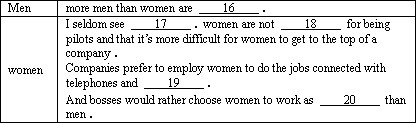
第二节 听取信息(共5小题;每小题2分,满分10分)

听下面一段对话。请根据题目要求,从所听到的内容中获取必要的信息,填入标号为16~20的空格中。听录音前,你将有10秒钟的阅题时间,录音读两遍。你有80秒钟的作答时间。

 0  77215  77223  77229  77233  77239  77241  77245  77251  77253  77259  77265  77269  77271  77275  77281  77283  77289  77293  77295  77299  77301  77305  77307  77309  77310  77311  77313  77314  77315  77317  77319  77323  77325  77329  77331  77335  77341  77343  77349  77353  77355  77359  77365  77371  77373  77379  77383  77385  77391  77395  77401  77409  151629 
违法和不良信息举报电话:027-86699610 举报邮箱:58377363@163.com

精英家教网