题目内容

An Experiment

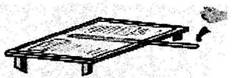
Materials: Newspaper, ‘ACE’ hardware ruler (1/8 “think”), a flat table.

Purposes: We’ll show that there is air pressure pushing on us, from every direction while we’re on this Earth.

【小题1】C

【小题2】B

【小题3】D

【小题4】A

练习册系列答案
相关题目

Federal regulators Wednesday approved a plan to create a nationwide emergence alert (警报) system using text messages delivered to cell phones.

Text messages have exploded in popularity in recent years, particularly among young people. The wireless industry's trade association, CTIA, estimates(估计) more than 48 billion text messages are sent each month.

The plan comes from the Warning Alert and Response Network Act, a 2006 federal law that requires improvements to the nation's emergency alert system. The act tasked the Federal Communications Commission (FCC) with coming up with new ways to alert the public about emergencies.

"The ability to deliver accurate and timely warnings and alerts through cell phones and other mobile services is an important next step in our efforts to help ensure that the American public has the information they need to take action to protect themselves and their families before, and during, disasters and other emergencies," FCC Chairman Kevin Martin said following approval of the plan.

Participation in the alert system by carriers –telecommunications companies is voluntary, but it has received solid support from the wireless industry.

The program would be optional for cell phone users. They also may not be charged for receiving alerts.

There would be three different types of messages, according to the rules.

The first would be a national alert from the president, likely involving a terrorist attack or natural disaster. The second would involve "approaching threats," which could include natural disasters like hurricanes or storms or even university shootings. The third would be reserved for child abduction (绑架) emergencies, or so-called Amber Alerts.

The service could be in place by 2010.

1. What is the purpose of the approved plan?

A. To warn people of emergencies via messages.

B. To popularize the use of cell phones.

C. To estimate the monthly number of messages.

D. To promote the wireless industry.

2. The improvement to the present system is in the charge of ____.

A. CTIA     B. the Warning Alert and Response Network

C. FCC      D. federal regulators

3. The carriers’ participation in the system is determined by _____.

A. the US federal government              B. mobile phone users

C. the carriers themselves                 D. the law of the United States

4. Which of the following is true of cell phone users?

A. They must accept the alert service.

B. They may enjoy the alert service for free.

C. They must send the alerts to others

D. They may choose the types of messages

5. An alert message will NOT be sent if _____.

A. a child loses his way.              B. a university shooting happens

C. a natural disaster happens           D. a terrorist attack occurs

6. Which of the following would be the best title for the text?

A. Cell Phone Alerts Protecting Students

B. Cell Phone Alerts by Wireless Industry

C. Cell Phone Alerts of National Disasters

D. Cell Phone Alerts Coming Soon

C

In 1879, a group of explorers made an incredible find. They discovered paintings of remarkable beauty on the walls of a cave in Spain. Some scientists believed that these paintings were created by early humans from the Stone Age, between ten and thirty thousand years ago. Other scientists and the public did not believe the claim, but over the years, it was proven correct. Our ancestors had incredible artistic talents.

Most of the cave art that has been discovered has been found in Spain and France. A smaller number of such caves are located in Italy, Portugal, Russia, and other countries. Scientists believe that many more caves will be discovered in the coming years, and are concentrating their efforts on Africa and the area between Europe and Asia. These two regions of the world were, populated first by humans.

Cave art was carved or painted on the walls and roofs of caves, usually near the entrance. The entrance area was probably chosen to take advantage of daylight and to allow many people to view the paintings. In some cases, the art appears much deeper in caves and requires artificial light. Evidence suggests that the artists used torches or shallow bowls in which animal fat was burned.

9.What was the response of general public to the discovery of cave art made by Stone Age people?

A. They believed it at first.

B. They did not believe it.

C. They thought it was beautiful.

D. They ignored it.

10.According to the passage, what can we conclude about animal fat?

A. It does not burn.

B. Stone Age artists used it to preserve their paintings.

C. It can be burned to produce light.

D. Stone Age artists mixed it with their food.

11.. Where do scientists expect to find more cave paintings?

A. In Central and South America.

B. In Spain and France.

C. In the places where there are caves with large openings.

D. In the regions of the world first populated by humans.

12.Where would this passage be most likely to appear?

A. In a textbook about early human history.

B. In a textbook about modern art.

C. In a dictionary.

D. In an encyclopedia entry about caves.

二、完形填空 (2分×15=30分)

Charlie Chaplin was the first international star of the modern art of movies. He was especially beloved for his Little Tramp  21 . He was the first screen artist to write,  22  and perform in his own films; in fact, in some cases, Charlie Chaplin even wrote the music for his movies. He was also the first artist to use his work to pass a  23  of equality and justice(正义) for all —  24  for the "little guy". Charlie Chaplin's career and life made  25  the first global icon (偶像); his too-small hat, his too large shoes and his trademark moustache were instantly recognized by audiences from Chicago to China, from Iowa City to India. And they  26  are today. All of these make Charlie Chaplin the first citizen of our global village.

Chaplin, a native of London, was born in 27  on April 16, 1889 to music hall performers. Chaplin only saw his 28  twice until the age of seven. The man 29  him and his mother about a year after Chaplin was 30 . During Chaplin's earliest years, his mother was a(n) 31  and performer. Then her voice gave out, her stage career 32 , and she began actively attending Church of England services. At the age of  33 , Chaplin's mother was considered as the insane and sent to Cane Hill lunatic asylum (疯人院), and the court sent Charlie and his brother to live with his father, 34  had by then stopped all payments of child support.

Charlie Chaplin lived with his father only a short time 35  his mother was released from the lunatic asylum and then picked up Charlie and his brother, to live with her once again.

21. A. character                 B. behaviour        C. personality    D. gentleman

22. A. act                      B. shoot             C. direct                   D. edit

23. A. possibility       B. message            C. culture             D. promise

24. A. generally         B. widely             C. especially         D. totally

25. A. him              B. them              C. us               D. it

26. A. really                    B. still                C. always                  D. ever

27. A. happiness          B. luck                    C. poverty           D. peace

28. A. brother         B. teacher        C. mother       D. father

29. A. taught              B. left                C. loved                D. expected

30. A. born             B. young             C. ill              D. old

31. A. actor              B. artist               C. dancer             D. singer

32. A. ended            B. began            C. broke              D. continued

33. A. eight            B. seven            C. nine             D. ten

34. A. which            B. what           C. he               D. who

35. A. then             B. when           C. before           D. until

违法和不良信息举报电话:027-86699610 举报邮箱:58377363@163.com

精英家教网