题目内容

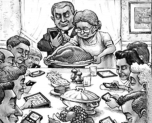
Growing up in my Grandma’s house as a boy was an experience that would shape me for the rest of my life. We were poor in everything but . yet I learned so much about life there. My Mom, Dad, Grandma, two , and I were all into a home made from two old shabby cars. I always knew what my next would look like because I had seen my older brother them the year before, I always knew what we were going to be in winter, because I had it in the garden during the summer. , I never felt poor. No king ever ate as good as we did on Sundays after church when Grandma her homemade meatballs, spaghetti(意大利式细面条)and freshly baked bread.

we had so little I can still remember Dad, Mom, and Grandma giving so much. We were always with others. Everyone who our family could expect a of spaghetti, or a jar of vegetables, or a flower pot full of fresh flowers. I can still remember my parents’ eyes whenever they passed something on to others. We never felt than when we shared what we were given. I learned early that the greatest joy comes from giving getting. Giving makes your spirit greater.

Don’t be afraid to what you have to others. Share everything you have. If you have a beautiful , then smile at whoever you come across. If you have a few extra dollars, then give them to the people in need. If you have a talent, then share it with others. If you have a heart full of love, then give it to everyone. No life ever truly lives it becomes a gift, so make your whole life a gift to the world.

1.A. spirit B. education C. wealth D. health

2.A. nephews B. brothers C. sisters D. cousins

3.A. divided B. admitted C. locked D. crowded

4.A. food B. room C. glasses D. clothes

5.A. choosing B. cutting C. wearing D. cleaning

6.A. doing B. eating C. 1earning D. giving

7.A. developed B. plantedC. polluted D. poisoned

8.A. Meanwhile B. Therefore C. Besides D. However

9.A. cooked B. earned C. washed D. sold

10.A. Unless B. Since C. When D. Although

11.A. chatting B. communicating C. sharing D. exchanging

12.A. visited B. warned C. supposed D. saved

13.A. basket B. cup C. spoon D. plate

14.A. opened B. shone C. hurt D. glanced

15.A. freer B. calmer C. happier D. poorer

16.A. less than B. fewer than C. other than D. rather than

17.A. take up B. pick up C. pass on D. give in

18.A. face B. smile C. band D. figure

19.A. convenient B. contemporary C. vital D. special

20.A. until B. after C. because D. If


1.A

2.B

3.D

4.D

5.C

6.B

7.B

8.D

9.A

10.D

11.C

12.A

13.D

14.B

15.C

16.D

17.C

18.B

19.D

20.A

【解析】

试题分析:人生最大的快乐来源于给予,而不是索取。生命只有在它成为对世界对他人的礼物后,它才算真正地活过。

1.

2.ecause I had seen my older brother 25 them the year before, ”可知,和“我”住在一起的除了祖母和父母外,还有我的两个哥哥。所以,选择B.brothers.

3.A. divided“分开”B. admitted“承认,准许进入”C. locked“锁”D. crowded“拥挤,挤”,文章此部分主要讲“我”的家经济上并不富裕,所以一家人“挤”着住在一个由两辆破车改造而成的家里。故只能填D. crowded.

4.because I had seen my older brother them the year before”可知,“我”从“我”的哥哥前一年穿的衣服就知道,今年“我”要穿什么了。所以该空填名词D.clothes.

5. 动词ing辨析。“我”知道“我”将要穿什么衣服,通过看哥哥前一年“穿”什么,故答案为C.wearing.

6. 动词辨析。“我”知道“我们”在冬天“吃”什么,因为“我”在夏天已在菜园里种下了种子。所以,该空选择B.eating.

7. A. developed“发展,”B. planted“种植”C. polluted“污染”D. poisoned“下毒,毒害”,冬天能吃上的东西,显然是在夏天的时候已经“种”上了,所以答案定为B.planted.

8.A. Meanwhile“同时”B. Therefore“所以”C. Besides“此外”D. However“然而”,此空副词的选择,要考虑上下文的逻辑关系,上文主要讲“我”的家境贫寒,但该句的句意为“‘我’并不觉得穷。”所以,填D.However,表示转折。

9.A. cooked“煮,做饭”B. Earned“赚得,挣得”C. washed“洗”D. sold“卖”,由上文“No king ever ate as good as we did”(皇帝也没我们吃的好),所以该处应是祖母为“我们”“做”的意大利面和现烤的面包。此空正确答案为A.cooked.

10.A. Unless“除非” B. Since“因为,自从…以来”C. When“当…的时候” D. Although“虽然,尽管”,该句的句意为:“虽然‘我们’有的东西不多,但‘我’记得父母和祖母给了‘我’很多。”所以,选 D. Although来引导让步状语从句。

11.A. chatting“聊天”B. communicating“交流”C. sharing“分享”D.exchanging“交换”,该段主要讲述“我们”乐于分享,由该段中“We never felt 35 than when we shared what we were given.”(“我们”在分享所被给予的东西时,最为快乐。)可知,该空应填C.sharing.

12.A. visited“拜访,访问”B. warned“警告,提醒”C. supposed“假设,认为”D. saved“救,节省”,根据文意显然是每个“客人”到“我”家都会得到一盘意大利面或是一罐菜或是一个装满了花的花盆。“客人”即everyone who visited our family(拜访我们的人),所以选A.visited.

13.A. basket“篮子”B. cup“杯子”C. spoon“匙,一勺”D. plate“盘子”,根据常识,我们往往用盘子来装意大利面,故选D. plate.

14.A. opened“打开”B. shone“发光,闪耀”C. hurt“伤害”D. glanced“一瞥”,该句讲的是“我”的父母无论何时在给别人东西时,他们的眼神都是明亮的。所以,此空填B. Shone.

15.

16. A. less than “小于,少于”B. fewer than “少于”C. other than “除了,不同于”D. rather than “而不是”,该句句意:“‘我’在很早就知道,最大的快乐来自于给予‘而不是’索取。”所以,此空填D. rather than.

17.A. take up“占用,从事”B. pick up“拾起,获得”C. pass on“转交,给”D. give in“屈服”,上文一直在谈论share“分享”,故该句话告诉大家不害怕把你的东西“给”他人,所以此空正确答案为C. pass on“转交”.

18.A. face“面孔” B. smile“笑容” C. band“乐队” D. figure“体型”,该句主句部分讲到要分享笑容,所以if引导的条件句语意应为:“如果你的‘笑容’甜美的话,”故答案为 B. smile.

19. A. convenient “方便的”B. contemporary“同时代的,当代的” C. vital“至关重要的”D. special“特殊的”,此空要选一形容词来修饰名词“天赋”,要分享的天赋,自然应是“独特的,特殊的”才有必要与人分享。所以,要选D. Special.

20. A. until“直到…才”B. after“在…之后”C. because“因为”D.if“如果”,该句句意:“生命只有在它成为礼物后,它才算真正地活过。”即“直到…才”,所以答案定为 A. until.

考点:富含人生哲理的议论文

练习册系列答案
相关题目

If you want to stay young, sit down and have a good think. This is the research finding of a team of Japanese doctors, who say that most of our brains are not getting enough exercise—and as a result, we are aging unnecessarily soon.

Professor Taiju Matsuzawa wanted to find out why otherwise healthy farmers in northern Japan appeared to be losing their ability to think and reason at a relatively early age, and how the process of aging could be slowed down.

With a team of colleagues at Tokyo National University, he set about measuring brain volumes of a thousand people of different ages and varying occupations.

Computer technology enabled the researchers to obtain precise measurements of the volume of the front and side sections of the brain, which relate to intellect (智能) and emotion, and determine the human character. (The rear section of the brain, which controls functions like eating and breathing, does not contract with age, and one can continue living without intellectual or emotional faculties.)

Contraction of front and side parts—as cells die off—was observed in some subjects in their thirties, but it was still not evident in some sixty- and seventy-year-olds.

Matsuzawa concluded from his tests that there is a simple remedy to the contraction normally associated with age—using the head. The findings show in general terms that contraction of the brain begins sooner in people in the country than in the towns. Those least at risk, says Matsuzawa, are lawyers, followed by university professors and doctors. White collar workers doing routine work in government offices are, however, as likely to have shrinking brains as the farm worker, bus driver and shop assistant. Matsuzawa’s findings show that thinking can prevent the brain from shrinking. Blood must circulate properly in the head to supply the fresh oxygen the brain cells need. “The best way to maintain good blood circulation is through using the brain,” he says, “Think hard and engage in conversation. Don’t rely on pocket calculators.”

1.The team of doctors wanted to find out ________.

why certain people age sooner than others

B. how to make people live longer

C. the size of certain people’s brains

D. which people are most intelligent

2.On what are their research findings based?

A survey of farmers in northern Japan.

B. Tests performed on a thousand old people.

C. The study of brain volumes of different people

D. The latest development of computer technology.

3.The word “subjects” in Paragraph 5 means ________.

something to be considered

B. branches of knowledge studied

C. persons chosen to be studied in an experiment

D. any member of a state except the supreme ruler.

4.According to the passage, which people seem to age slower than the others?

A. Lawyers. B. Farmers.

C. Clerks. D. Shop assistants.


When I was about 10, I was walking down the street with my mother. She stopped to speak to Mr. Lee. I knew I could see Mr. Lee anytime around the neighborhood, so I just stood there. After we passed him, my mother stopped and said something unforgettable, "You let that be the last time you ever walk by somebody you know without opening your mouth to speak, because even a dog can wag its tail when it passes you on the street. "That sentence sounds simple but it made me become who I am.

At work, I used to say hello to the president of the company and ask him how our business was doing. But I also spoke to the people in the cafe and people who cleaned the buildings, and asked them how their children were doing, for every single person deserves to be accepted, no matter how humble(低微的)they are. I remember that after a few years of passing by the president, I had the courage to ask him for a chat. We had a great talk. At some point, when I asked him how far he thought I could go in his company, he said that if I wanted to, I could get all the way to his seat.

I've become vice-president, but that hasn't changed how I treat people. I speak to people wherever I am. Speaking to people creates a pathway into their world, and it lets them come into mine, too.

The day you speak to someone who has his head down and then see him lift it up and smile, you will realize how powerful it is just to open your mouth and say hello.

1.What is the best title for this passage?

A. The power of being talkative

B. My mother's influence on me

C. The power of saying hello

D. My way to become vice-president

2. It is implied in the first paragraph that .

A. the writer didn't like Mr. Lee

B. the writer didn't say hello to Mr. Lee on that occasion

C. the writer didn't get along well with his mother

D. the writer's mother stopped to say hello to everyone she met

3. What can we learn from the second paragraph?

A. The writer didn't say hello to everyone in the company.

B. The writer made a very good impression on the president of the company.

C. The president of the company thought the writer was much better than him.

D. The president of the company actually didn't like the writer at all.

4.For the writer, saying hello to others .

A. is a way to get what he wants

B. has become a habit and a way of life

C. is a way to show respect for his mother

D. is important in making him remembered

5.According to Paragraph 3, in the writer’s opinion, speaking to others can .

A. make our world much better

B. make people much happier every day

C. help people understand each other better

D. help people work much better


It has become the modern substitute of glancing at your watch—the furtive(偷偷的)look at a phone screen to check for new messages or have a quick look at Facebook. Researchers have now found why we often feel such a strong urge to glance at our handset. Using your mobile, they say, is easily affected by other people.

A University of Michigan team say people are twice as likely to pull out their phones to check their messages or emails if they’re with someone who has just done the same. It also found that females were more likely to use their mobile than men because it was more ‘consistent ’ with the daily lives of women.

The team watched students in dining halls and coffee shops around campus, observing pairs of students sitting at tables for as long as 20 minutes and recorded their cellphone use at 10-second intervals.

“What we found most interesting was just how often people were using their mobile phones, ” Dr Daniel Kruger, the study’s co-author, said. “Every person we observed used his/her phone at least once while one woman was on hers about half of the time. You may see others checking their incoming messages and be encouraged to check your own. ’’

Overall, the students used their cellphones in an average of 24 percent, the researchers found. But they were significantly more likely to use their phones (39.5 percent) when their companion had just done so in the previous 10-second interval than without the social clue, the researchers said, adding that this behavior was often repeated.

Cell phones create an alternative way for one’s attention and may both promote and interrupt ongoing social activities, the researchers wrote.

Kruger believes this pattern could be related to the effects of social acceptance and rejection. If one person in a pair engages in another conversation through their phone, his or her companion may feel rejected. That companion then might be forced to connect with others from outside so as not to feel left out.


1.People’s strong desire to check their messages partly results from ___________.

A. the same behavior of other people

B. the new messages of their handsets

C. the update service of Facebook

D. the modern substitute of their watches

2.Why do women use their phones more frequently?

A. They want to show off their modern mobiles.

B. They desire to meet the demands of society.

C. They try to set a good example for others.

D. They are more likely to be influenced by others.

3.How might one feel when his companion is busy checking messages?

A. Relaxed. B. Ashamed.

C. Ignored. D. Surprised.

4.The underlined part “this behavior” in Paragraph 5 refers to _______________.

A. receiving social clues B. using the cellphones

C. joining in activities D. engaging in conversations

5.Which of the following can be the best title of the passage?

A. Social Acceptance And Rejection

B. Females Use Mobiles More than Men

C. How Do People Check Messages?

D. Cellphone Use Is Spreading


违法和不良信息举报电话:027-86699610 举报邮箱:58377363@163.com

精英家教网