题目内容

The relics______ the 12th century is of great value to study the life and settlement of the local people


  1. A.
    that dated from
  2. B.
    dated back to
  3. C.
    which is dated from
  4. D.
    dating back to
D
试题分析:句意:追溯到12世纪的这个遗址对于研究当地人的生活及定居情况是很有价值的。date from=" date" back to追溯到;relics与date back to或date from之间是主动关系,故排除BC,选项A的时态不对,应该用一般现在时date from,故选D。
考点:考查非谓语动词的用法。
点评:本题难度适中。不容置疑,高考将继续加强对非谓语动词的考查,试题的特征将继续呈现出“情景化”和“设问角度的多样化”的趋势,但试题的难度将会有所控制。
即学即练:This castle _______ Roman times.
A. that dated from  B. dated back to   C. dates back to  D. dating back to
解析:C。句意:这个城堡可追溯到罗马时代。
练习册系列答案
相关题目
The largest-ever chariot pit (战车坑) of relics with carts and horse bones has been discovered in Henan Province. It may lead to the uncovering of chariot pit groups that could be a key to understanding Chinese civilizations that existed more than 2,000 years ago.

 Experts said the relics are dated more than 300 years earlier than the famous warriors (武士) in Shaanxi Province. What excited the experts were two other projects that located two huge pits with similar features.

 “It is absolutely a miracle. These relics indicate that there could be a tomb group in this area, which is likely to be important for China’s archaeological (考古学的) studies,” said Ma Juncai, a leading relic researcher in the province.

 In ancient China, carts, sheep, spoons and so on were buried to ensure that dead people had a happy afterlife. The number and quality of the sacrifices indicated the social status of the dead. The custom was carried into the Qin Dynasty. Emperor Qinshihuang’s tomb, located near Xi’an, the capital of Shaanxi Province, is accompanied by thousands of wood or clay figures of warriors and horses. The tomb is probably the most well-known.

 The discovered pit measures 10.4 meters long, 8.4 meters wide and 5 meters deep. It holds 20 carts in different sizes. The smallest one is 1.05 meters long and 1.3 meters wide.

 Experts think that 40 horses are likely to be found as well. Careful plans need to be made to deal with the demanding uncovering. “The clay is very weak and a small misstep can destroy the whole project. That’s why we need to take every step very carefully to protect these cherished cultural relics,” Ma said.

What’s the passage mainly about?

  A. The dead people’s sacrifices in ancient China.

  B. China’s archaeological studies.

  C. The discovery of a large chariot pit in Henan.

 D. The history of Chinese civilizations.

According to Ma Juncai, the uncovering of the three pits is a miracle because _______.

  A. it shows there may be a tomb group there

  B. it’s helpful in discovering Emperor Qinshihuang’s tomb

  C. the relics are dated such a long time ago

  D. the relics are more than 300 years older than the ones in Shaanxi

It can be inferred from Paragraph 4 that ______.

A. all dead people had sacrifices in ancient China

B. the discovered pit is the most well-known in the world

C. the discovered pit dates back to the Qin Dynasty

D. Emperor Qinshihuang wanted to maintain his power after death

Careful plans for the uncovering are needed because ______.

  A. another 40 horses are likely to be found as well

  B. the whole uncovering could be destroyed easily

  C. experts are too busy to spare time for it

  D. the government hasn’t agreed to it

Which of the following statements is TRUE according to the passage?

  A. The discovery has drawn the leading experts’ attention.

  B. A lot of cultural relics have been discovered in Henan.

  C. 40 horses have been discovered together with the chariot pit.

  D. The discovered carts in the chariot pit are similar in size.

The largest-ever chariot pit(战车坑)of relics with carts and horse bones has been discovered in Henan Province. It may lead to the uncovering of chariot pit groups that could be a key to understanding Chinese civilizations that existed more than 2,000 years ago.

Experts said the relics are dated more than 300 years earlier than the famous warriors(武士)in Shanxi Province. What excited the experts were two other projects that located two huge pits with similar features.

“It is absolutely a miracle. These relics indicate that there could be a tomb group in this area, which is likely to be important for China's archaeological(考古学的)studies,”said Ma Juncai,a leading relic researcher in the province.

In ancient China,carts,sheep,spoons and so on were buried to ensure that dead people had a happy afterlife. The number and quality of the sacrifices indicated the social status of the dead The custom was carried into the Qin Dynasty. Emperor Qinshihuang's tomb,located near Xi'an,the capital of Shanxi Province,is accompanied by thousands of wood or clay figures of warriors and horses. The tomb is probably the most well-known.

The discovered pit measures 10.4 meters long,8.4 meters wide and 5 meters deep. It holds 20 carts in different sizes. The smallest one is 1.05 meters long and 1.3 meters wide.

Experts think that 40 horses are likely to be found as well. Careful plans need to be made to deal with the demanding uncovering.“The clay is very weak and a small misstep can destroy the whole project. That's why we need to take every step very carefully to protect these cherished cultural relics,”Ma said.

1. What's the passage mainly about?

A. The dead people's sacrifices in ancient China.

B. China's archaeological studies.

C. The discovery of a large chariot pit in Henan.

D. The history of Chinese civilizations.

2. According to Ma Juncai, the uncovering of the three pits is a miracle because ________.

A. it shows there may be a tomb group there

B. it's helpful in discovering Emperor Qinshihuang's tomb

C. the relics are dated such a long time ago

D. the relics are more than 300 years older than the ones in Shanxi

3. It can be inferred from Paragraph 4 that ________.

A. all dead people had sacrifices in ancient China

B. the discovered pit is the most well-known in the world

C. the discovered pit dates back to the Qin Dynasty

D. Emperor Qinshihuang wanted to maintain his power after death

4. Careful plans for the uncovering are needed because ________.

A. another 40 horses are likely to be found as well

B. the whole uncovering could be destroyed easily

C. experts are too busy to spare time for it

D. the government hasn't agreed to it

5. Which of the following statements is TRUE according to the passage?

A. The discovery has drawn the leading experts' attention.

B. A lot of cultural relics have been discovered in Henan.

C. 40 horses have been discovered together with the chariot pit.

D. The discovered carts in the chariot pit are similar in size.

    BEIJING—Nine pieces of art relics from a temporary exhibition in the Palace Museum were stolen at midnight on May 8, 2011. It was the first theft in 20 years at the heavily guarded former home of emperors(皇帝), also known as the Forbidden City. The nine pieces—all small Western-style gold purses and cosmetics containers(化妆盒)covered with jewels and made between 1920 and 1945—were on loan(出借)from Hong Kong-based Liang Yi Museum and being on show in the Chengsu Hall of the Palace Museum.

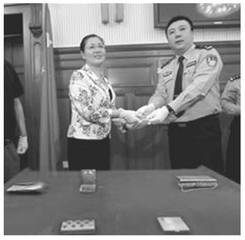
    Police have recovered six stolen relics and returned them to the museum, but three pieces remain missing, according to the spokesman for the Beijing municipal police. The six stolen pieces were got from a man named Shi Baikui from Eastern China’s Shandong Province, who admitted stealing the pieces. Shi entered the museum as a visitor on May 8 and then hid himself inside and waited until closing time, according to police. He then broke a window on the northern side of the exhibition hall to gain entry and proceeded to steal relics.

    Police say Shi said he wanted to sell the relics to a store in Beijing but was turned away because the store owner said the pieces were fake(赝品). He then threw away the relics.

    The Beijing police are offering rewards to anyone who can provide them with any information or tips on the other three lost relics from the Palace Museum. The amount of the reward has not been determined yet, since authorities are evaluating the value of the stolen pieces. It is hoped that with all citizens’ help the other three can be recovered as soon as possible.

60. What’s the passage mainly about?

A. Many rewards were offered for Palace Museum stolen relics

B. Six stolen relics were returned to the Palace Museum

C. Shi Baikui, the first thief in the Forbidden City

D. Nine stolen relics were all recovered by police

61. According to Paragraph 1, the nine stolen relics _______.

A. were bought from Hong Kong-based Liang Yi Museum

B. don’t belong to the Palace Museum of China

C. were small daily items used by Chinese women in the 20s~40s

D. were being on show in the Chengsu Hall of the Summer Palace

62. How did the thief go into the Palace Museum?

A. He entered the museum by acting as a visitor.

B. He broke a door and climbed into the museum.

C. He worked there and had the key to the museum.

D. The passage doesn’t mention how the thief entered the museum.

63. The underlined phrase “turned away” (in Paragraph 3)possibly means _______.

A. criticized                  B. invited               C. accepted                  D. refused


四、阅读理解(15小题,计30分)
There are probably no other two museums in the world that share such a similar name. In Chinese, they are both called Gugong. In English, the one in Taipei is named the "National Palace Museum". The other one is in Chinese mainland--the Palace Museum standing inside the Forbidden City (紫禁城) in Beijing.
The name suggests the two museums are connected, and soon they may be. The "National Palace Museum" has a collection of more than 650,000 pieces of ancient Chinese artwork, making it one of the largest in the world. Most of the collection is made up of high quality art collected by China's ancient emperors.
After years of waiting, people from the Chinese mainland could soon get a look at the relics (文物)that were once housed in Beijing' s Palace Museum.
In late February, the mainland agreed to lend 29 Qing Dynasty relics from the Palace Museum to Taiwan to display in October. They hope the favor will be returned. It is reported that the second half of the swap(交换)might happen within the next three to five years.
Chinese citizens are already drawing up lists of relics they'd most like to see in a mainland exhibition. These include the jade cabbage(翡翠玉白菜), the Dongpo look-alike stone(东坡肉形石)and the other half of the Song Dynasty painting Riverside Sceneat Qingming Festival. Half of it has hung in Taipei since 1949; the other half can be seen in Beijing.
45. Which is right about the "National Palace Museum"?
A. The "National Palace Museum" stands inside the Forbidden City in Beijing.
B. It is the largest museum in the world.
C. All the collection in it is made up of high quality art collected by China's ancient emperors.
D. There is the jade cabbage and the Dongpo look-alike stone in it.
46. The underlined sentence "They hope the favor will be returned. "means ________.
A. it's hoped that Taiwan will have some of its relics appear in a mainland exhibition
B. they hope Taiwan will return their favourite relics
C. the mainland hope some relics once housed in Beijing' s Palace Museum will be returned
D. it's hoped that the "National Palace Museum" and the Palace Museum will become one
47. According to the passage, which is right about the painting Riverside Scene at Qingming Festival ?
A. It was painted in Qing Dynasty.
B. In 1949 the whole painting once hung in Taipei.
C. The two halves of the painting were not drawn by the same person.
D. It's likely that half of the painting hanging in Taipei was once housed in Beijing's Palace Museum.

违法和不良信息举报电话:027-86699610 举报邮箱:58377363@163.com

精英家教网