题目内容
Are you an optimist?
“Optimism is the belief that good things will happen to you and that negative events are temporary setbacks (挫折) to be overcome” — this is how the Mayo Clinic, one of the best hospitals in the US, defines (为……下定义) optimism.
Pessimists tend to believe in Murphy’s Law — “Anything that can go wrong will go wrong” — and don’t bother to “waste” their time solving problems. Optimists, by contrast, do not give up easily.
According to Suzanne Segerstrom, psychology (心理学) professor at the University of Kentucky, US, optimists react to difficult situations head-on. They seek advice from others and stay focused on solutions. Even if they fail in the end, they still look for something good in every situation or use it to gather experience and grow in a positive way as a person.
Being an optimist does have its benefits. Optimists are more likely to be happy, popular and successful. Studies have shown that optimists tend to live longer too. According to The New York Times, optimists take better care of themselves and do not tend to develop life-shortening habits, such as smoking, drinking, overeating and getting too stressed.
Whether you are an optimist or a pessimist has a lot to do with genes. But the way you are raised and the effort you yourself put into building your levels of optimism also make a difference. Segerstrom suggests that “act first and the right feeling will follow”.
“People can learn to be more optimistic by acting as if they were more optimistic,” wrote Segeratrom in her book, Breaking Murphy’s Law. She suggested that this would stop one from giving up after every single little failure. “You might succeed more than you expected,” she wrote.
Researchers at the Mayo Clinic also offered several suggestions. Focus on the things that you can control instead of worrying about possible failures. Try to see the good aspects in every situation; even if you are just mopping the floor, take time to stand back and admire how shiny and clean the floor looks when you are done. Hang around with optimistic and cheerful people, and they will help you see the brighter side of life.
72. What do people who live by Murphy’s Law tend to do?
A. See negative events as temporary. B. Give up in the face of problems.
C. Make an effort to solve problems. D. Seek for advice from others.
73. Why are optimists more likely to succeed?
A. They often have fewer unhealthy habits.
B. They react more quickly than pessimists.
C. They focus more on solutions and learn from failures.
D. They usually work harder than pessimists do.
74. Which of the following statements is TRUE according to the text?
A. Pessimists tend to live longer than optimists.
B. Staying with cheerful people is the best way to be optimistic.
C. It’s better to get rid of life-shortening habits if you want to be optimistic.
D. Acting as if you are more optimistic helps build your level of optimism.
75. Which of the following is the best title?
A. The Definition of Optimism B. Why not Be an Optimist?
C. Optimism and Pessimism D. Murphy’s Law
BDAC

 浙江新课程三维目标测评课时特训系列答案
 周周清检测系列答案
 轻巧夺冠周测月考直通高考系列答案
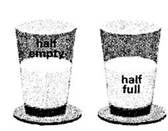
Are you an optimist? Do you look at your glass and see it as half full? Do you believe that every cloud has a silver lining and that generally things turn out for the best? Do you believe that if something is meant to be, it will be? If you reply “yes” to all of these questions, then you are an optimist. You probably are enthusiastic, cheerful and outgoing. You may well be successful atwork and in love.
But you may be misguided because things don’t turn out for the best. You may believe that when one door closes another one opens (for example,you may fail to obtain a new job,another chance will come around soon), Wrong. When one door closes, another door slams in your face. That's bitter reality.
Now a book has been published which confirms what we pessimists(悲观者)have suspected all along. It's called The Positive Power of Defensive Pessimism. Its author argues that defensive pessimism can lead to positive results. Defensive pessimism is a strategy used to manage fear, anxiety and worry. Defensive pessimists prepare for things by setting low outcomes for themselves. They carefully consider everything that may go wrong and plan for ways to handle these problems. And this gives them a sense of control. Lawrence Sanno, a psychology professor, says, “What’s interesting about defensive pessimists is that they tend to be very successful people, so their low opinion of the situation’s outcomes is not realistic. They use it to motivate themselves to perform better. ”
So far, so good. This is not rocket science. Defensive pessimists prepare carefully and consider what might go wrong, whether at work, on a date or even in a sports game. It makes sense to have a back-up plan. There are many sayings in English urging caution. For example, “Don’t put all your eggs in one basket,” and “ Don’t count your chickens until they hatch. “ To have a confident and optimistic approach to life’s problems is good. But listen to what Woody Alien,the American comedian says, ”Confidence is what you have before you understand the problem.”
There are pros and cons to being an optimist and a pessimist. Don’t feel bad if you see the glass half empty. You are a realist. But lighten up and hook up with someone who sees the same glass half full.
【小题1】What is the passage mainly about?
| A.A book that has recently been published. |
| B.The dangers of being too optimistic. |
| C.The benefits of defensive pessimism. |
| D.How to become successful in life. |
| A.he cost is not so high | B.there is no real proof |
| C.it’s not a dangerous thing to do | D.it is quite simple to understand |
| A.an optimist | B.a realist | C.a defeatist | D.a scientist |
| A.“Don’t put all your eggs in one basket.” |
| B.“Every cloud has a silver lining.” |
| C.“Whatever will be, will be.” |
| D.“The glass is half full not half empty.” |