题目内容
【题目】Floods are second only to fire as the most common of all natural disasters.They occur almost everywhere in the world,resulting in widespread damage and even death.Consequently,scientists have long tried to perfect their ability to predict floods.So far,the best that scientists can do is to recognize the potential for flooding in certain conditions. There are a number of conditions,from deep snow on the ground to human error,which cause flooding.
When deep snow melts it creates a large amount of water.Although deep snow alone rarely causes floods,when it occurs together with heavy rain and sudden warmer weather it can lead to serious flooding.If there is a fast snow melt on top of frozen or very wet ground,flooding is more likely to occur than when the ground is not frozen.Frozen ground or ground that is very wet cannot absorb the additional water created by the melting snow.Melting snow also contributes to high water levels in rivers and streams.
Rivers that are covered in ice can also lead to flooding.When ice begins to melt,the surface of the ice cracks and breaks into large pieces.These pieces of ice move and float down the river,They can form a dam in the river,causing the water behind the dam to rise and flood the land upstream.If the dam breaks suddenly,then the large amount of water held behind the dam can flood the areas downstream too.
Broken ice dams are not the only dam problems that can cause flooding.When a large human-made dam breaks or fails to hold the water collected behind it,the results can be devastating.Dams contain such huge amounts of water behind them that when sudden breaks occur,the great force of the water is like a great tidal wave.The dam waters can travel tens of kilometres,cover the ground in metres of mud and litter,and drown and crush every thing and creature in their path.
Although scientists cannot always predict exactly when floods will occur,they do know a great deal about when floods are probably going to occur.Deep snow,ice-covered rivers,and weak dams are all strong conditions for potential flooding.
【1】Which of the following shows the structure of the passage?
("P" stands for "Paragraph".)
A. 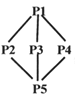 B.
B. 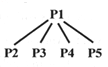
C. 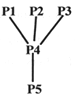 D.
D. 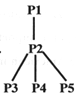
【2】Why does frozen ground probably contribute to flooding when deep snow melts?
A. It is likely to form an ice dam.
B. It is too hard for water to run off.
C. It cannot take in more water.
D. It makes the snow melt too quickly.
【3】Which of the following words has the closest meaning to the underlined word "devastating" in Paragraph 4?
A. Positive. B. Disappointing.
C. Impressive. D. Damaging.
【4】What is mainly talked about in the passage?
A. How floods come into being. B. Where floods usually occur.
C. Why floods do huge damage. D. How to prevent floods effectively.
【答案】
【1】A
【2】C
【3】D
【4】A
【解析】本文是一篇记叙文,洪水是仅次于火灾的第二大常见自然灾害,造成洪水的原因有很多,本文主要从三个方面阐述了造成洪水的原因,一是天气突然变暖导致深雪融化,加之大雨便可能导致洪水的发生;二是由于冰封的河水融化,浮冰破裂,导致形成破冰坝,冰坝破裂而引发洪水;三是由于人造的大坝破裂造成洪水,虽然科学家现在还不能完全准确的预测洪水什么时候发生,但是已经从很大程度上可以预测发生的可能性了。
【1】结构分析题。第一段“There are a number of conditions,from deep snow on the ground to human error,which cause flooding”为总,第二、三、四段为分,分别从三个方面阐述造成洪水的原因,最后一段“Deep snow,ice-covered rivers,and weak dams are all strong conditions for potential flooding.“总结全文,所以文章的结构为总-分-总结构,故选A。
【2】细节理解题。根据“Frozen ground or ground that is very wet cannot absorb the additional water created by the melting snow.”,可知冰封的地面不能吸收(absorb=take in)由于冰雪融化而造成的多余的水。故选C。
【3】词义推测题。根据“When a large human-made dam breaks or fails to hold the water collected behind it,the results can be devastating.”,“devastating”形容的是当人造大坝断裂所造成的后果,结合上下文分析可知,这可能引发洪水,所以这个结果应该是“极具破坏性的”。故选D。
【4】主旨大意题。根据“There are a number of conditions,from deep snow on the ground to human error,which cause flooding.”抓住“cause”一词,意为形成,接着本文从三个方面,“deep snow”、“Broken ice dams”、和“large human-made dam”,分别阐述了洪水形成的原因,故选择A。

 天天向上一本好卷系列答案
 小学生10分钟应用题系列答案
【题目】短文改错(共10小题;每小题1分,满分10分)
得分 | 阅卷 |
请改正下面短文中的错误。文中共有10处语言错误,每句中最多有两处。每处错误仅涉及一个单词的增加、删除或修改。
增加:在缺词处加一个漏字符号(∧),并在其下面写出该加的词;
删除:把多余的词用斜线(\)划掉;
修改:在错的词下画一横线,并在该词下面写出修改后的词。
注意:1.每处错误及其修改均仅限一词;
2.只允许修改10处,多者(从第11处起)不计分。
Last week, our school had organized an activity to climb the West Mountain. As soon as we arrived at the foot of a mountain, we set out for the summit in high spirits. During the climb, we had such much difficulty passing the rocky areas. But under the teacher’s help, we eventually reached the top, where we greeted by the bright sunshine and fresh air. Seeing from the top, the city was extreme beautiful. This event turned out to be very success. Not only did we take a break from our heavy school work, and also we learned what to communicate with each other.