题目内容

【题目】假定你是李华,你的加拿大朋友Michael很想了解中国新农村的变化。

根据以下提示,给Michael写一封电子邮件,并邀请他来参观体验。

注意:

1. 词数100左右;

2. 可适当增加细节,以使行文连贯;

3. 开头和结尾己给出,不计入总词数。

Dear Michael,

_____________________________________________________________________________________________________________________________________________________________________________________________________________________________________________________________________________________________________________________________________________________________

Looking forward to your early reply.

Yours,

Li Hua

【答案】Dear Michael,

I’m delighted to know that you are interested in the new countryside of China.

In the past, the roads were narrow, which was inconvenient to travel around. Usually, a big family was crowded into a small, dark house. So the living conditions were far from satisfactory.

Thanks to China’s rural reform, many villages have developed rapidly in recent years. The roads are wide and smooth. More and more villagers have their own cars. Besides, computers and mobile phones are becoming increasingly popular. Many villages have changed into rich, clean and peaceful ones.

If you like, I’ll guide you around my hometown , appreciating its harmony and beauty.

Looking forward to your early reply.

Yours,

Li Hua

【解析】

本文为提纲类作文,审题是否清楚是一篇书面表达成功与否的关键所在,在整个写作过程中起着决定性作用。本文的要求是你的加拿大朋友Michael很想了解中国新农村的变化根据提示给Michael写一封电子邮件,并邀请他来参观体验。书信格式开头和结尾已给出,避免了文体错误写作时用第一人称“我”,即李华。主体时态为一般现在时、一般过去时和现在完成进行时。

写作时,通过对提示的观察和分析,找出最密切相关的要点,不要任意发挥,画蛇添足,也不要丢三落四,要点不全另外,在体裁明确、中心突出、要点清晰的前提下,应该选择自己最熟悉、最有把握的词语、句型,将要点逐条表达出来。表达时应该综合运用所掌握的知识,避开生僻的词汇,并克服母语的干扰,要注意选择恰当的表示并列、递进、因果或转折意义的过渡词,把所有要点、句子连接起来,使句与句意思连贯,结构衔接,力求准确生动、条理清楚按照英语的习惯方式,用地道的英语表达出来,力求做到语言准确无误。

本文亮点:本文用了书信应该用的格式,用了一般过去时,一般现在时和现在完成时等时态穿插,对比今昔生活的变化。先回忆过去的情形,后以现在的变化突出新农村的美好生活,要点全面,思路清晰,最后发出邀请,请他来参观体验。语言地道,过渡词使用恰当,是一篇好文。


练习册系列答案
相关题目

【题目】

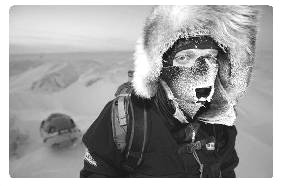
Meet Ben Saunders: adventurer, athlete, motivational speaker. Ben, at the age of 23, was the youngest man to ski solo (单人滑雪) to the North Pole. He dragged a 180-kilogramme sledge (雪橇) over 1,420 miles through the worst Arctic conditions. This year, as well as planning a return to the Arctic, Ben plans to ski solo from the Antarctic coast to the South Pole and back in the autumn, carrying all his supplies on his sledge.

Ben Saunders was fired after persuading the firm to support his disorganized first adventure. “Everything that could go wrong did go wrong. We were attacked by a bear. We started running out of food. It was just desperate. And we didn't get to the Pole; we didn't get there, so we had no media interest. No one heard about it: no book deal, and no speaking. I was so unhappy.”

People said it was impossible for me to get to the Pole. I said, “No, I can get there,” and I did. Self-belief, I see it as being a bit like a muscle — it's my belief that the more you stretch (伸展) yourself the stronger it gets. If you never do anything that's uncomfortable or risky then your self-belief gets weaker. So that's one of the lessons I've figured out along the way. The thing that I've stretched and tested is my self-belief.

“My Antarctic adventure is just practicable and that's what is exciting to me. If I knew it was possible, if I knew I could do it without too much bother, I wouldn't be interested.” Why? “Personally I'm attracted by the human performance element to it. Not that long ago, running a marathon was seen as the top point of human attempt, and now I wouldn't be that surprised if my mum said she was going to run one next year.”

People's horizons (见识) are changing. “I'm not particularly gifted, and I'm absolutely average. I've just chosen this one goal to achieve and I've been working hard to realize it. That's it. And that's the thing that attracts me: with enough training and enough determination, enough focus and preparation, how far can we go? And I don't think I've found out yet.”

1What do we know about Ben Saunders' first adventure?

A. There was no press coverage.

B. It was supported by his company.

C. It was well planned and organized.

D. He actually reached the North Pole.

2According to Ben Saunders, if you want to stretch your self-belief, you should _____.

A. often test your confidence B. try something adventurous

C. aim to reach the North Pole D. always stretch your muscles

3Ben Saunders was excited about his Antarctic adventure because _____.

A. he liked running a marathon

B. he wanted to exercise his body

C. he knew it might be achievable

D. he was sure he could do it easily

4What can we learn from the last paragraph?

A. We have to change our views about adventure.

B. We can never know our possibilities and energies.

C. We should have a reason for going on an adventure.

D. We have to be especially talented to have an adventure.

违法和不良信息举报电话:027-86699610 举报邮箱:58377363@163.com

精英家教网