题目内容
阅读理解
阅读下列短文,从每题所给的四个选项中,选出能回答所提问题或完成所给句子的最佳答案。
McDonald's golden arches and Baskin and Robbins' 31 flavors-you can often find the same fast - food restaurants in different countries. High - rise apartment buildings also often look the same wherever you go. With countries becoming so similar, you might expect us all to live in similar living spaces. In fact, there are still many differences in houses from place to place.
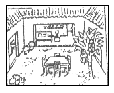
The layout of a typical house depends on the area. In Korea, China, and parts of Latin America, for example, houses are often built around courtyards. Rooms open onto or have a view of this common outdoor space. “Euro - American” houses, on the other hand, usually have rooms opening onto an interior(内部的) hallway.
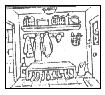
In the Sollth Pacific, where the weather is warm, families often live in groups of openair buildings. In the Turkish countryside, there is often a yard covered with grape vines (葡萄藤), which gives the family a cool place to spend time in the summer. In cold areas of the United States and Canada, many houses have “mud rooms”, where people leave their boots and heavy coats.
In Japan, people keep footwear on shelves there because they do not wear outdoor shoes in the house. Many homes around the world have special areas related to tradition or religion (宗教). The differences in design from place to place are very interesting. They reflect differences in culture, lifestyles, and tradition, as well as differences in the weather.
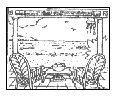
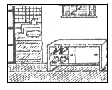
1.Which of the following drawings shows the layout of the house in the U.S.A.?
[ ]
2.Which of the followings is the example to explain “special area related to tradition or religion”?
A.Informal living areas are set up to give shade in summer.
B.A small area is set up to remember gods or ancestors (祖先).
C.“Euro - American” houses are popular in western countries.
D.The same fast - food restanrants can be found everywhere.