题目内容
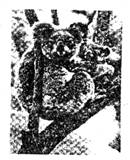
The koala is one of Australia’s most treasured creatures, which is a lovely little creature. But now, it is in big trouble.
Affected by habitat (栖居地) loss and climate change, like many other uniquely Australian animals, koalas are being squeezed into smaller regions. But at present, it is a deadly disease, a somewhat silent killer that causes a further decline in the koala population, that is worrying many scientists about the fate of the koala.
The killer is Chlamydia, which has caused symptoms in up to 50 percent of the wild koalas, with probably even more infected (感染) but not showing symptoms. It has been particularly severe in Queensland, where nearly all koalas are infected. The disease causes many symptoms including eye infections, which can lead to blindness, making it difficult for them to find their primary food.
Treating Chlamydia in wild koalas is a challenge. There is no treatment available for it. Only a small percentage of the animals can be treated successfully and returned to the wild. Besides, there is no national plan in Australia to save the koala;it is up to each region to make management plans for its koala population.
The good news is that researchers are working to test a vaccine (疫苗) that would help prevent further spread. If all goes well, plans can be carried out to distribute the vaccil1e more widely. But it’s impossible to vaccinate all wild koalas.
Another possibility would be to make vaccine distribution a routi11e part of treatment for the thousands of koalas brought into care centers every year after they are injured by cars or dogs.
While it is a combination of problems that are affecting the wild koala population, many experts believe this vaccine would be an important step in helping koalas survive longer. It may buy enough time to give researchers a chance to solve some of the other problems facing Australia’s koalas
- 1.
Which isn’t considered the main cause of koala’s population decline?
- A.Habitat loss
- B.Injuries from cars and dogs
- C.Climate change
- D.A deadly disease
- A.
- 2.
The third paragraph mainly tells us
- A.the serious result Chlamydia has caused to the koala
- B.Chlamydia affected the koala only in particular regions
- C.the most serious symptom of Chlamydia is eye infections
- D.Chla1nydia can seriously affect koala’s primary food
- A.
- 3.
The underlined word “it” in the fourth paragraph probably refers to
- A.the koala
- B.Chlamydia
- C.national plan
- D.eye infection
- A.
- 4.
We can learn from the text that the vaccine
- A.would cure the killer Chlamydia quite effectively
- B.would only be distributed in koala care centers
- C.has already been put into practical use in Australia
- D.cannot be distributed to all the infected koalas
- A.
- 5.
It can be inferred from the text that
- A.a national plan for saving koalas will be made soon in Australia
- B.koala population is declining only in a few regions
- C.researchers need enough time to so1ve the koala problems
- D.experts have lost the best chance to save the infected koalas
- A.
试题分析:文章讲述的正是考拉所面临的严重问题,栖息地和气候变化,尤其是一种特殊的疾病对考拉的影响。
1.细节题。根据第二段Affected by habitat (栖居地) loss and climate change,以及第三段The killer is Chlamydia可知ACD是主要原因,而B则不是。
2.段落大意题。这一段讲述的正是这种病对于考拉的允许及其结果。选A
3.猜词题:从第三段的句子:Treating Chlamydia in wild koalas is a challenge可知治疗野生的考拉的Chlamydia 是有挑战的,后面说没有它的疗法,it 指的是Chlamydia ,选B
4.细节题。根据倒数第三段最后一句But it’s impossible to vaccinate (给注射疫苗) all wild koalas.可知疫苗分配给所有被感染的考拉是不可能的,D正确。
5.推理题。根据文章最后一句It may be enough time to give researchers a chance to solve some of the other problems facing Austalia’s koalas.可知研究人员需要足够的时间,解决考拉的问题,C正确。
考点:考查新闻报道类短文

 口算能手系列答案
The koala(考拉) is possibly one of the best known Australian animals, and is found in four states: Queensland, New South Wales, Victoria and South Australia. The word “koala” comes from an Australian aboriginal word meaning “no drink”.
Sometimes people call them “koala bears” but koala is not a bear. It belongs to a special group of Australian mammals, called marsupial(有袋类). Female marsupials have a pouch where the baby animals live after they are born.
Koalas have soft, thick, grey or brown fur on their backs. The fur on the stomach is white. Koala that live in the south have thicker fur than those in the north because of the cold winters, whereas the koalas in the northern part of the country live in warm to hot weather most of the year so have thinner fur. A koala has a large hairless nose and round ears. Koalas don’t have tails. Adult koalas measure between 7 and 14 kilograms.
Koalas spend nearly all their time in the trees using their sharp, curved claws and long toes to climb about and to hold on to the tree branches. They sleep most of the day, and feed and move from tree to tree mainly at night.
The reason koala sleep for much of the day is because their food eucalyptus(桉树) leaves are very tough so they use a lot of energy to digest. Sleeping saves energy. Eucalyptus leaves are poisonous to almost every other animal. Koalas rarely drink water; they get water from the leaves they eat.
Each koala has a home range made up of several trees that they visit regularly. They normally do not visit another koala’s home trees except that a male is looking for a female to mate with.
【小题1】Which of the following statements is NOT true about the name “koala bear”?
| A.The name was given by the native in Australia |
| B.The word “koala” is an original English word |
| C.The name describes one of its living habits |
| D.The name is partly false |
| A.House | B.Cave | C.Pocket | D.Nest |
| A.The thicker fur can protect them from the colder weather |
| B.It’s always hot in summer in the north |
| C.It’s always cold in the winter in the south |
| D.They have to move to the north in the winter |
| A.Their foods are poisonous |
| B.They want to save energy for the activities at night |
| C.They can’t get enough energy from their tough foods |
| D.They can’t get enough water from their leaves |
 hunters killed the animals for their fur.