题目内容

Toda,I intend ________this book.So I won't go with you to that museum.

[  ]

A.finish reading
B.finishing to read
C.to finish reading
D.to finish to read
答案:C
解析:

  分析:本题考查词的用法。intend t为“试图;想要(做某事)”,其后常接动词不定式作宾语一也可以接。v-ing作宾语。单从intend的用法看,本题中A不能选用。其他的被选项中包含有动词finish,其后只能接v.-ing作宾语,故“读完这本书”应说finish reading this book。  技巧点:对于考查词的用法的考题,首先应注意正确理解句子的含义,结合句意考虑词的用法。如本题中先考虑intend的用法特点,还要考虑finish的用法特点。[


提示:

[


练习册系列答案
相关题目
阅读理解。

     It was the summer of 1965. Deluca, then 17, visited Peter Buck, a family friend. Buck
asked DeLuca about his plans for the future. "I' m going to college, but I need a way to
pay for it," DeLuca recalls saying. "Buck said, 'You should open a sandwich shop. '"
     That afternoon, they agreed to be partners. And they set a goal: to open 32 stores in
ten years. After doing some research, Buck wrote a check for $ 1,000. DeLuca rented
a storefront (店面) in Connecticut, and when they couldn't cover their start-up costs,
Buck kicked in another $ 1,000.
But business didn't go smoothly as they expected. DeLuca says, "After six months, we
were doing poorly, but we didn't know how badly, because we didn't have any financial
controls." All he and Buck knew was that their sales were lower than their costs.
     Deluca was managing the store and going to the University of Bridgeport at the same
time. Buck was working at his day job as a nuclear physicist in New York. They'd meet
Monday evenings and brainstorm ideas for keeping the business running. "We convinced
ourselves to open a second store. We figured we could tell the public, 'We are so
successful, we are opening a second store.' "And they did--in the spring of 1966. Still,
it was a lot of learning by trial and error.
     But the partners' learn-as-you-go approach turned out to be their greatest strength.
Every Friday, DeLuca would drive around and hand - deliver the checks to pay their
suppliers."It probably took me two and a half hours and it wasn't necessary, but as a
result, the suppliers got to know me very well, and the personal relationships
established really helped out." DeLuca says.
     And having a goal was also important. "There are so many problems that can get you
down. You just have to keep working toward your goal," DeLuca adds.
DeLuca ended up founding Subway Sandwich, the multimillion -dollar restaurant chain.

Alfred Korzybski believes that all human beings lead a kind of double life. First, people live in an internal (内在的) world of ideas, feelings, etc. The happenings in this world are patterns of events in the human nervous system . Secondly , people live in a world outside their skins, the external(外在的)world of “reality”. The happenings in this world are patterns of events best known to science.

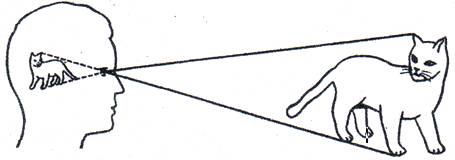
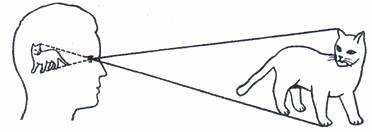
The first world, the patterns of events inside our skins, Korzybski called the INTEN- SIONAL areA.The second, the patterns of events outside our skins, he called the EXTEN- SIONAL area . Think for a moment about the two worlds in which you live. Look , for example, at the following diagram:

INTENSIONAL PATTERNS           EXTENSIONAL PATTERNS

“cat”                             An object we call “cat”.

The word "cat ".                        A pattern of physical and

The image of this cat.                    chemical events best

Ideas about cats.                        known to science.

Feelings about cats.

Physical tensions aroused

by the cat: the urge to

pick it up, to kick it, etc.

Thinking along these lines , Alfred Korzybski began to see what was wrong with the great number of people: they confused intensional events with extensional “reality”. He believed that too many people mistake the events in their own nervous systems for events in the outside world . When they get lost in a strange city , more often than not they are angry at the map they use. In fact, it’s the maps of words in their heads that are to blame.

1.According to Alfred Korzybski, we human beings live in__________.

    A.the world of ideas

    B.the world of reality

    C.either the world of ideas or that of reality

    D.both the world of ideas and that of reality

2.The INTENSIONAL area in the passage refers to the patterns of events__________.

       A.outside our skins                                  B.best known to science

       C.in the human nervous system          D.in the external world of reality

3.Which of the following belongs to EXTENSIONAL pattern?

       A.A computer on the shelf.               B.A computer is useful.

C.I like the computer.                    D.I want to buy the computer.

4.According to what Alfred Korzybski states in the last paragraph, you get lost because of _  .   

    A.the map you bring with you             B.the maps of words in your head

       C.the reality world before you                  D.the strange city you visit

Alfred Korzybski believes that all human beings lead a kind of double life. First, people live in an internal (内在的) world of ideas, feelings, etc. The happenings in this world are patterns of events in the human nervous system. Secondly , people live in a world outside their skins, the external(外在的)world of “reality”. The happenings in this world are patterns of events best known to science.

The first world, the patterns of events inside our skins, Korzybski called the INTEN- SIONAL area. The second, the patterns of events outside our skins, he called the EXTEN- SIONAL area. Think for a moment about the two worlds in which you live. Look, for example, at the following diagram:

INTENSIONAL PATTERNS           EXTENSIONAL PATTERNS

“cat”                             An object we call “cat”.


The word "cat ".                        A pattern of physical and

The image of this cat.                    chemical events best

Ideas about cats.                        known to science.

Feelings about cats.

Physical tensions aroused

by the cat: the urge to

pick it up, to kick it, etc.

Thinking along these lines, Alfred Korzybski began to see what was wrong with the great number of people: they confused intentional events with extensional “reality”. He believed that too many people mistake the events in their own nervous systems for events in the outside world. When they get lost in a strange city, more often than not they are angry at the map they use. In fact, it’s the maps of words in their heads that are to blame.

1.According to Alfred Korzybski, we human beings live in__________.

    A.the world of ideas

    B.the world of reality

    C.either the world of ideas or that of reality

    D.both the world of ideas and that of reality

2.The INTENSIONAL area in the passage refers to the patterns of events__________.

       A.outside our skins                                 B.best known to science

       C.in the human nervous system          D.in the external world of reality

3.Which of the following belongs to EXTENSIONAL pattern?

       A.A computer on the shelf.               B.A computer is useful.

       C.I like the computer.                   D.I want to buy the computer.

4.According to what Alfred Korzybski states in the last paragraph , you get lost because of _  .

       A.the map you bring with you                  B.the maps of words in your head

       C.the reality world before you                  D.the strange city you visit