题目内容
Allow others the space to voice their opinions, ______ they are different from yours.
A. as though B. as if C. unless D. even though
D


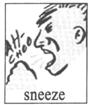 When you cough or sneeze, you’d better turn your head away from others and cover your mouth with the full part of your hand. And then, you should say, “Excuse me.”
This seems so simple, but it is surprising how many kids have never been told to do this. Actually, I notice adults all the time who cough and sneeze in public without placing a hand over the mouth. One important thing I point out to the kids is that after they sneeze or cough on their hands, they should wash their hands as soon as possible. If not, they will be passing those germs (细菌) a
 long to everyt
 hing and everyone they touch.
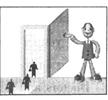
If you come to a door and someone is following you, hold the door. If the door opens by pulli ng, pull it open, stand to the side, and allow the other person to pass through first, then you can walk through. If the door opens by pushing, hold the door after you pass through.
After a few weeks of seeing kids try to get through doors in the school and watching them enter restaurants as the door hit other people, I knew I had to discuss the problem with my students. Teaching them small acts of kindness, such as letting someone else go through a door first as they hold it open, may seem unimportant, but it can go along way toward helping students realize hot to be polite and thank others. Once they’ve been told, they’re halfway there.
When we have to go up moving stairs, we will stand to the right. That will give others who are in a hurry a choice of walking up the left-hand side of the moving stairs. When we are going to enter a lift, the underground, or a doorway, we will wait for others to exit before we enter.
After college when I moved to London, I was surprised at how polite everyone was in the subways. I was even more touched when I traveled to Japan. In both places, people made efforts to make way for others. On moving stairs, everyone stood to the right and walked to the left. On lifts, everyone would stand over to the side and allow others to exit before they would begin to enter.
【小题1】When you cough or sneeze, you should ________.
| A.touch everything | B.cover your mouth |
| C.point out to the kids | D.pass the germs to others |
| A.hold the door | B.pass through | C.close the door | D.stand to the side |
A. doctor doctor | B.traveler | C.parent | D.teacher |
A. the rules of behavior in public B. the easy of communication
C. the acts of kindness among people D. the knowledge of social life
Andrew Carneigie, known as the King of Steel, built the steel industry in the United States, and, in the process, became one of the wealthiest men in America. His success resulted partly from his ability to sell the product and partly from his policy of expanding during periods of economic decline, when most of his competitors were reducing their investments. Carnegie believed that individuals should progress through hard work, but he also felt strongly that the wealthy should use their fortunes for the benefit of society. He opposed charity, preferring instead to provide educational opportunities that would allow others to help themselves. “He who dies rich, dies disgraced”, he often said. Among his more noteworthy contributions to society are those that bear his name, including the Carnegie Institute of Pittsburgh, which has a library, a museum of fine arts, and a museum of national history. He also founded a school of technology that is now part of Carnegie-Mellon University. Other philanthropic(慈善的) gifts are the Carnegie Endowment for International Peace to promote understanding between nations, the Carnegie Institute of Washington to fund scientific research, and Carnegie Hall to provide a center for the arts. Few Americans have been left untouched by Andrew Carnegie’s generosity. His contributions of more than five million dollars established 2,500 libraries in small communities throughout the country and formed the nucleus of the public library system that we all enjoy today.
【小题1】The author quoted(引述) “he who dies rich, dies disgraced” in the passage to show______.
| A.He felt strongly that the wealthy should use their fortunes for the benefit of society. |
| B.He opposed charity. |
| C.The wealthy die from their fortunes |
| D.The wealthy die from not contributing to society. |
| A.his policy of expanding. |
| B.his ability to sell the product |
| C.his ability to produce the product |
| D.his hard work |
| A.the Carnegie Institute of Washington. |
| B.the Carnegie Institute of Pittsburgh. |
| C.the steel industry. |
| D.the Carnegie Endowment for International Peace. |
| A.Few Americans have touched Andrew Carnegie’s generosity. |
| B.Many Americans have touched Andrew Carnegie’s generosity. |
C.we all enjoy Andrew Carnegie’s generosity today. Andrew Carnegie’s generosity today. |
| D.Many Americans were given Andrew Carnegie’s generosity. |
 When
you cough or sneeze, you’d better turn your head away from others and cover your
mouth with the full part of your hand. And then, you should say, “Excuse me.”
When
you cough or sneeze, you’d better turn your head away from others and cover your
mouth with the full part of your hand. And then, you should say, “Excuse me.”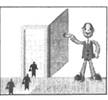 If you come to a door and someone is following you, hold the door. If the
door opens by pulling, pull it open, stand to the side, and allow the other
person to pass through first, then you can walk through. If the door opens by
pushing, hold the door after you pass through.
If you come to a door and someone is following you, hold the door. If the
door opens by pulling, pull it open, stand to the side, and allow the other
person to pass through first, then you can walk through. If the door opens by
pushing, hold the door after you pass through. When we have to go up moving stairs, we will stand to the right. That will
give others who are in a hurry a choice of walking up the left-hand side of the
moving stairs. When we are going to enter a lift, the underground, or a
doorway, we will wait for others to exit before we enter.
When we have to go up moving stairs, we will stand to the right. That will
give others who are in a hurry a choice of walking up the left-hand side of the
moving stairs. When we are going to enter a lift, the underground, or a
doorway, we will wait for others to exit before we enter.