题目内容

Einstein's connection with the politics of the nuclear bomb is well known: He signed the letter to President Franklin Roosevelt that persuaded the United States to take the idea seriously, and he engaged in postwar efforts to prevent nuclear war. But these were not just the isolated actions of a scientist dragged into the world of politics. Einstein's life was, in fact, "divided between politics and equations(方程式)."

Sickened by what he saw as the waste of human lives during the First World War, he became involved in antiwar demonstrations. His support of civil disobedience did little to endear him to his colleagues. Then, following the war, he directed his efforts toward reconciliation(调停) and improving international relations. And soon his politics were making it difficult for him to visit the United States, even to give lectures.

Einstein's second great cause was Zionism(犹太复国主义). Although he was Jewish, Einstein rejected the idea of God. However, a growing awareness of anti-Semitism(反犹太主义), both before and during the War, led him gradually to identify with the Jewish community, and later to become an outspoken supporter of Zionism.

His theories came under attack. One man was accused of motivating others to murder Einstein and fined a mere six dollars. When a book was published entitled 100 Authors Against Einstein, he retorted, "If I were wrong, then one would have been enough!" When Hitler came to power, Einstein then in America declared he would not return to Germany. While Nazi attacked his house and confiscated his bank account, a Berlin newspaper displayed the headline "Good News from Einstein--He's Not Coming Back."

Fearing that German scientists would build a nuclear bomb, Einstein proposed that the United States should develop its own. But he was publicly warning of the dangers of nuclear war and proposing international control of nuclear weaponry. Throughout his life, Einstein's efforts toward peace probably achieved little and won him few friends. His support of the Zionist cause, however, was recognized in 1952, when he was offered the presidency of Israel. He declined, saying he was too naive in politics. But perhaps his real reason was different:" Equations are more important to me, because politics is for the present, but an equation is something for eternity."

1.The reason why Einstein was against the war was that __

A. he tried to get involved in politics B. the nuclear bomb could be built by German scientists

C. many people died during the war in vain D. President Franklin persuaded him to do so

2. We can learn from the passage that Einstein __

A. believed in God B. was proud of being Jewish

C. suggested that nuclear weaponry should be banned D. made great achievements in peace

3. The examples in paragraph 4 are used to prove __

A. many people in support of Zionism hated Einstein

B. the reason why Einstein would not return to Israel

C. Einstein was in danger of being killed

D. Einstein didn't enjoy his popularity in the field Of politics

4.What is the structure of the passage?
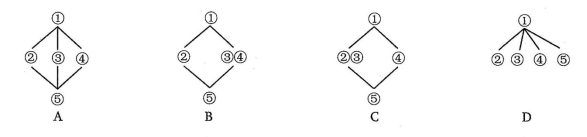
 

1.C

2.B

3.D

4.A

【解析】本文主要介绍了爱因斯坦的政治主张,他反对战争,但是他建议美国发展核武器;他热爱犹太名族,是一名犹太复国主义者。但是他的政治主张受到很多人的反对。

1.C

【试题解析】推理题。本题教难。根据文章第二段1,2行Sickened by what he saw as the waste of human lives during the First World War, he became involved in antiwar demonstrations.可知因为在战争中很多人都失去了生命,所以爱因斯坦是反战的。故C项正确。

2.2】B

【试题解析】推理题。根据第三段2,3行However, a growing awareness of anti-Semitism(反犹太主义), both before and during the War, led him gradually to identify with the Jewish community, and later to become an outspoken supporter of Zionism.可知爱因斯坦是犹太复国主义的坚定支持者,这更说明他是一个热爱犹太名族的人,以自己是犹太人而自豪。故B正确。

3.3】D

【试题解析】推理题。根据本段1,2行His theories came under attack. One man was accused of motivating others to murder Einstein and fined a mere six dollars. When a book was published entitled 100 Authors Against Einstein, he retorted, "If I were wrong, then one would have been enough!"很多人都反对他的政治观点,甚至有人出书来反对他,说明他在政治上并没有受到人们的欢迎。故D正确。

4.4】A

【试题解析】篇章结构题。本文第一段最后一句Einstein's life was, in fact, "divided between politics and equations(方程式).说明爱因斯坦在政治上和学术上是分开的。在2,3,4段里分别讲述了他的政治以及反战的主张。在最后一段进行了一个总结,和第一段最后一句形成呼应。故A项正确。

【长难句解析】

1.Sickened by what he saw as the waste of human lives during the First World War, he became involved in antiwar demonstrations.

【翻译】因为在第一次世界大战中看到很多人死于战争而感到难受,爱因斯坦参加了反战游行。

【分析】本句中前面半句是分词在句中做状语的用法,动词sicken使…恶心;与句子主语he之间构成了被动关系,所以使用过去分词。实际上这里的sickened已经转换成形容词,修饰主语he的情况。

2. Fearing that German scientists would build a nuclear bomb, Einstein proposed that the United States should develop its own.

【翻译】担心德国的科学家会制造出核武器,爱因斯坦建议美国发展自己的核武器。

【分析】本句中含有一个虚拟语气,动词propose建议,后面的宾语从句要使用should+动词原形改成的虚拟语气,should可以省略。英语中有4——四个表示“要求”的词,require, ask ,tell, demand;3——三个表示“建议”的词,suggest, recommend, advice;2——两个表示“命令”的词,order,command ; 1——一个表示“坚持”的词,insist。他们后面接 should+动词原形 的虚拟语气。Should可以省略。

练习册系列答案
相关题目

One of the most famous basketball players in the New Castle ' s history was paralyzed(瘫痪的) in a wheelchair one day and was walking the next. Citizens of New Castle simply refer to it as " The Miracle" .

Joel Haler woke up in his dorm room at Hope College last October totally paralyzed from the waist down. Four hospitals later, the only way he could walk was through Robotic Walking Treatment.

"This past Tuesday ,I was doing the Robotic walk and lasted ten minutes, " Joel said. After that, he gave up. Joel w-anted to accept the inevitable (不可避免的事) and cancelled his next Robotic Walking Treatment appointment.

Then , the night before his cancelled appointment, he woke up to a terrible pain. An hour and a half later ,the serious pain left him with an unusual feeling in his legs.

" As it continued to move up my legs ,it became more and more painful and it took an hour and a half to reach my hips(臀部) , " Joel recalled.

"I stood up and walked into my parents' room. ' Mom and dad, look! ' ," he said proudly.

" He said something and I was like, ' Joell Joel ! You ' re walking ! You ' re walking ! ' We jumped out of bed , cried and hugged, " Joel ' s mom Karen remembered.

"I burst into tears. It ' s hard seeing your son not be able to walk .but he was standing there , walking , " Joel ' s father Eric said , tearfully.

It was Thursday , January 23 , when he could finally walk. That date made perfect sense to Joel. He had dreamt of a calendar that only said "J 23 " . He didn't know what to make of it until "a little boy at church ,four years old, came up to me and said, ' you will walk on a Thurs-day ' , " Joel recalled.

So the 20-year-old college student, who could only walk with the aid of a robot on Tuesday ,was walking on his own.

1. According to the passage , " The Miracle" is that ________

A. Joel Haler became the most famous basketball player

B. Robotic Walking Treatment could cure paralysis

C. Joel Haler could walk again after three months ' paralysis

D. a paralyzed boy could play basketball well

2. Which part of Joel Haler' s body didn't work?

A. His whole body. B. His legs and feet.

C. His arms and hands. D. His arms and legs.

3.Before Joel Haler ' s walking again , his attitude to the illness was ______.

A. positive B. indifferent C. optimistic D. hopeless


Google has kicked off Google Science Fair (GSF) 2014, its annual online competition for

bright, creative and ambitious teenagers who want to change the world with science. While the project is led by Google, it also has the backing of the Lego Group and world-famous publications National Geographic and Scientific American. The competition is open for students aged 13 to 18, who can sign-up now, form a team and begin working on a submission.

The winner will be rewarded with a ten-day exploration to the Galapagos Islands aboard the National Geographic Endeavor, as well as a VIP tour of ‘Spaceport America’ in New Mexico. Google is also throwing in a $50,000 scholarship and $10,000 for the winner’s school to purchase cutting-edge science lab equipment.

Google suggests that each project should be “an in-depth investigation of a science question or engineering problem” but otherwise, it’s up to students to pick and develop an idea that follows the competition rules.

Completed projects need to be submitted by May 12, 2014 at 11:59 PDT. Google will announce the regional competitors in June, ahead of global finalists in August and the competition winners in September.

Interested? Here are the rules.

If you want to enter the competition as an individual (个人), you should register first. Complete requested information about yourself and your project in the registration section before creating your project. You may edit this later. Click the box stating that you have read, accept, and agree to be bound by these Official Rules and Terms.

Upon completion of registration you may begin working on your project. The project must follow the technical, creative, and legal entry requirements set out in these Official Rules and the Googlesciencefair.com Site. You will be required to complete all sections of the Project Site.

You may begin working on your project after completing the registration process, however, you may not submit it for judging until you have requested and received parental consent (允许). Once you have done this, your parent or guardian will receive an email from Google with instructions on how they can give their consent for you to participate. The project will not be judged unless this consent is received.

1.From the first paragraph, we can learn that ________.

GSF is a science competition

teenagers should form a team

every teenager can take part in it

GSF is organized by Google alone

2. What is mainly discussed in the last paragraph?

A. Parental consent.B. Submission time.

C. Registration process.D. Project requirements.

3.If you plan to enter GSF alone, you ________.

A. should create your project first

B. you needn’t follow the official rules

C. you should provide some personal information

D. your should start your project before registration

4. The main purpose of the passage is to ________.

A. offer tips on how to enter GSF

B. provide information about GSF

C. persuade teenagers to enter GSF

D. show teenagers the importance of GSF


Shirley Temple, who died on February 10, 2014, was that rare example of a Hollywood child star who, when the cameras stopped rolling, carved out a new career.

For four years, she was Hollywood’s biggest box-office star representing the kind of sweet, innocent girl that everyone wanted as their daughter. However, years later, she reappeared as a successful politician.

Shirley Temple was born in Santa Monica, California on 23 April 1928. Encouraged by her mother, she learned to dance while she was just three.

In 1934, Stand Up and Cheer became her first film and the film was a great success. At the age of six she was earning $1,250 a week — more than $21,000 at today’s values.

Across the world, audiences flocked to see her in films such as Little Miss Marker, The Little Colonel and The Littlest Rebel.

In 1935 she was awarded a special Oscar (Academy Award) and her foot and hand prints were added to those of stars such as Jean Harlow and Mary Pickford outside Grauman’s Chinese theatre in Hollywood. The peak of her film career came in 1939 when The Little Princess became a box-office success.

Temple starred in a total of 43 feature films. But she found it difficult to maintain her film career in adulthood and retired from Hollywood in 1950.

She disappeared from the spotlight for nearly 20 years. She returned to the public eye in 1967, as a Republican candidate for Congress. When Nixon became president, he rewarded her with an appointment to the American delegation to the United Nations. Then, in 1974, President Ford appointed her the United States Ambassador(大使) to Ghana. George Bush Snr, appointed her Ambassador to Czechoslovakia.

Shirley Temple drew a line between her childhood stardom and her later political career. “Some people are stuck on this image of the little girl,” she once said. “She is not me. We shouldn’t live in the past; my life is now.” Nevertheless, for many across the world, the name Shirley Temple always called to mind a superstar child.

1.Shirley Temple died at the age of _____.

A. 75 B. 80 C. 86 D. 90

2. What happened to Shirley Temple when she was 7 years old?

A. She won a special Oscar. B. She began to learn to dance.

C. She appeared in her first film. D. She retired from Hollywood.

3. Which of the following represents the peak of Shirley Temple’s film career?

A. Stand Up and Cheer. B. Little Miss Marker.

C. The Little Colonel. D. The Little Princess.

4. We can infer that _____.

A. the films in which Shirley Temple starred in adulthood were not popular

B. Jean Harlow and Mary Pickford appeared in the same film with Temple

C. Shirley Temple succeeded in being elected as Congresswoman in 1967

D. Shirley Temple was the youngest person to receive an Academy Award


违法和不良信息举报电话:027-86699610 举报邮箱:58377363@163.com

精英家教网