题目内容
The English writer Samuel Johnson famously said, “You find no man who is willing to leave London. No, sir, when a man is tired of London, he is tired of life, for there is in London all that life can afford.” More than two centuries have passed since Johnson’s age, but his words still ring true. Here, you’ll find the historic Tower of London and the Tate Modern both considered must-sees. Shakespeare’s sonnets(十四行诗) are still being uttered by actors. Londoners most certainly still look up to the royals, but they also rock out to Coldplay and Lily Allen. And while they still sip tea, they now drink Starbucks, too.
How to Save Money in London
Find the free attractions. Many of London’s top things to do, including the National Gallery, Hyde Park and the Portobello Road Market, are absolutely free to enjoy.
Ride the Tube. Taking taxis will add up quickly, so buy a pay-as-you-go Oyster Card and travel on London’s underground system, nicknamed the “Tube”.
Dine smart. Corridors like Brick Lane offer fantastic cultural food for bargain prices; fish and chip shops are a cheap standby and takeaway food costs less than dine-in.
London Culture & Customs
London is one of the fashion capitals of the world, and its residents tend to reflect that. Practically, pack an umbrella for the rainy days and a scarf for the cold ones. As for tipping, restaurants and cafes will usually add a 10-to-15-percent service charge to the bill. If a service charge is not allotted(指定), it’s customary to tip the same (between 10 and 15 percent). If you’re drinking at a pub or wine bar, tipping is flexible. And in a taxicab, tip the driver to the nearest pound or about 10 percent of the cost.
London Dining
London used to be highly criticized for its heavy and common menu items. Now, London is considered as one of the most gourmet cities in the world. And with its melting pot of cultures, it’s not difficult to see why. London offers everything from modern British to Malaysian. For Indian food, we suggest visiting the curry houses on Brick Lane. If you want a real high tea experience, book reservations at the Ritz, at Fortnum & Mason, or at the Dorchester — but be sure to dress the part. Pub culture is still alive and well, so if you have a hankering for fried fish and salty chips (or French fries), you’ll still find them here. And for a quick bite, exchange a few pounds for a kebab, a quick sandwich or some to go sushi, which can be found in restaurants throughout the city.
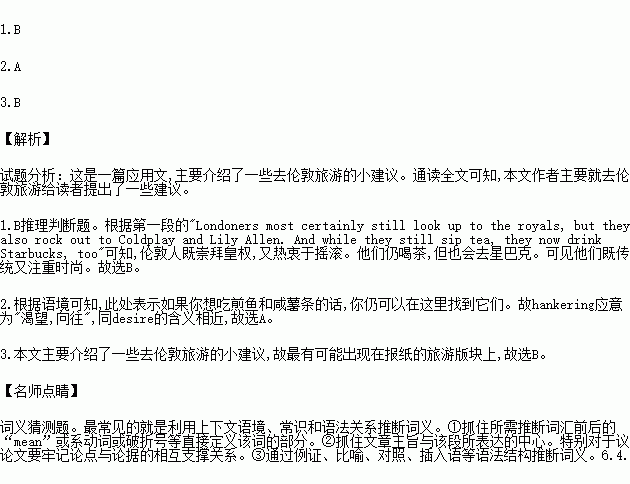
1.What can we learn from the first paragraph?
A. Life in London is exciting but tiring.
B. Londoners are traditional and fashion conscious.
C. Many well-known writers like to live in London.
D. Coffee is more popular with Londoners than tea.
2. The underlined word “hankering” in the last paragraph can be replaced by “________”.
A. desire B. respect C. preparation D. talent
3.In which column of a newspaper can we find the passage?
A. Culture. B. Travel. C. Education. D. Entertainment.

 桃李文化快乐暑假武汉出版社系列答案
 优秀生快乐假期每一天全新寒假作业本系列答案
 暑假接力赛新疆青少年出版社系列答案