题目内容
【题目】Amy Maplethorpe, a first-year speech-language teacher at Raymond Ellis Primary School, used tennis balls, a hot glue gun, Mod Podge and a bit of paint to create two chairs that help students with sensory (感官的) problems.
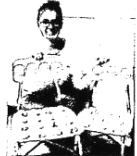
According to the school’s Facebook page, which became very popular, the chairs provide a “different texture (质地) to improve sensory regulation (调控).”
Maplethorpe told ABC News that the chairs will service about 15 to 20 students. Children with sensory problems often have a hard time “dealing with sensory information”. Things, such as coats, blankets and Maplethorpe’s chairs, often comfort a student.
Maplethorpe was excited to create the chair after seeing something similar on a website, and she made some changes to the idea.
“I wanted to continue to help students with sensory problems at Ellis and provide a different kind of seat for the students,” she continued. “I was excited that this chair could help my students.’’
The two chairs are now in the school’s sensory room, which was created recently, according to headmaster, Beth Kiewicz.
“When a child’s sensory needs are met, we then can move on to their needs in study,” Kiewicz, who has led the school for six years, told ABC News.
Maplethorpe said the chairs have already made a difference for some of her students.
“Students have become more patient, and have followed directions, while waiting for activities,” she said.
【1】What gave Maplethorpe the idea to create the tennis ball chair?
A. Service in the sensory room.
B. Chairs in the teachers’ office.
C. Something similar on a website.
D. Encouragement from the headmaster.
【2】How can the tennis ball chair help children with sensory problems?
A. It helps students with sensory regulation.
B. It causes students to be more restless.
C. It improves students’ memory.
D. It makes students sleep well.
【3】According to the article, the tennis ball chair ________.
A. is not easy to make
B. has been proved helpful
C. can service more than 20 students
D. is the best way to treat sensory problems
【答案】
【1】C
【2】A
【3】B
【解析】文章介绍了Maplethorpe为帮助学生们提高感觉调控制造了两把专门的椅子。
【1】C
细节推理题。根据第四段Maplethorpe was excited to create the chair after seeing something similar on a website, and she made some changes to the idea.可知,Maplethorpe是从网上看到了类似的东西,然后制造了这种网球椅。故选C。
【2】A
细节推理题。根据第二段the chairs provide a “different texture (质地) to improve sensory regulation (调控).可知,这种椅子可以帮助学生们提高感觉调控,故选A。
【3】B
细节推理题。根据第五段“I wanted to continue to help students with sensory problems at Ellis and provide a different kind of seat for the students,” “I was excited that this chair could help my students.’’可知,这种椅子确实对学生们有帮助,故选B。
细节理解题属直接解答性问题,是阅读理解题中最简单的一种,多数属中低难度的题。但高考所占的比例大,应特别引起注意。事实和细节题的命题特点是:对文章或某一段落中的一些特定细节或文章重要事实的理解,一般包括直接理解题和语义转化题。直接理解题能在原文直接找到答案,而语义转化题则需要将题目信息与原文信息加工或整理后才能得出结论。
做细节理解题具体方法与步骤如下:
1.略读材料,大概了解原文,掌握中心或主旨;文章介绍了Maplethorpe为帮助学生们提高感觉调控制造了两把专门的椅子。
2.按文章的体裁,作者写作的组织模式及有关的信息词。如for example, first, second…等预测应该到何处寻找自己所需要的事实;
3.将精力放在寻找你所需要的细节上。快速通篇跳读,全文扫视,找到细节出处,待找到含细节句子时,放慢速度,仔细核对比较内容,直至找到答案。如小题1根据第四段Maplethorpe was excited to create the chair after seeing something similar on a website, and she made some changes to the idea.可知Maplethorpe是从网上看到了类似的东西,然后制造了这种网球椅。小题2根据第二段the chairs provide a “different texture (质地) to improve sensory regulation (调控).可知,这种椅子可以帮助学生们提高感觉调控。小题3根据第五段“I wanted to continue to help students with sensory problems at Ellis and provide a different kind of seat for the students,” “I was excited that this chair could help my students.’’可知,这种椅子确实对学生们有帮助。