题目内容

(天津市河东区201 4年高三二模考试)1 1. - Why didn't you come to Mike's birthday party yesterday?

- Well. I _______. but I forgot it.

A. should B. must C. should have D. must have


C

【解析】本句是一个虚拟语气。根据but灰蒙蒙的过去式,说明本句表示的是与过去事实相反的虚拟语气,前面应该使用“情态动词+have done”的形式。排除AB项。Should have done本应该做某事,实际上却未做;must have done一定做了某事;句义:—昨天你为什么没有来参加Mike的生日聚会啊?—我本应该去的饿,但是我忘记了。本题在have的后面承前省略了come。故C正确。


练习册系列答案
相关题目
Scientists have long puzzled over how iguanas, a group of lizards(蜥蜴) mostly found in the Americas, came to live in the isolated Pacific islands of Fiji and Tonga. Some scientists used to suppose that they must have traveled there on a raft, a journey of around 5,000 miles from South America to the islands. There are documented cases of iguanas reaching remote Caribbean islands and the Galapagos Islands on floating logs. But new research in January by Brice Noonan and Jack Sites suggested that iguanas may have simply walked to Fiji and Tonga when the islands were still a part of an ancient southern supercontinent.

The ancient supercontinent was made up of present-day Africa, Australia, Antarctica and parts of Asia. If that’s the case, the island species would need to be very old. Using “molecular (分子) clock” analysis of living iguanas’ DNA, Noonan and Sites found that, sure enough, the lineage of iguanas has been around for more than 60 million years—easily old enough to have been in the area when the islands were still connected by land bridges to Asia or Australia.

Fossils (化石) uncovered in Mongolia suggest that iguanid ancestors did once live in Asia. Though there’s currently no fossil evidence of iguanas in Australia, that doesn’t necessarily mean they were never there. “The fossil record of this continent is surprisingly poor and cannot be taken as evidence of true absence,” the authors write.

So if the iguanas simply walked to Fiji and Tonga from Asia or possibly Australia, why are they not also found on the rest of the Pacific islands? Noonan and Sites say fossil evidence suggests that iguana species did once inhabit other islands, but went extinct right around the time when humans settled in those islands. But Fiji and Tonga have a much shorter history of human presence, which may have helped the iguanas living there to escape extinction.

The researchers say that their study can’t completely rule out the rafting theory, but it does make the land bridge theory “far more reasonable than previously thought.”

1. What did some scientists previously believe about the iguanas?

   A. They were once discovered in America.     

B. They traveled by raft to Fiji and Tonga.

   C.  They could survive in poor living conditions.

D. They moved to Fiji and Tonga from Australia.

2.According to Noonan and Sites, 60 million years ago ____.  

A. the land of the world was a supercontinent  

B. Fiji and Tonga were connected to Asia or Australia

C. Africa, Australia and America were a continent

   D. iguanas walked to Fiji and Tonga from Africa

3.The underline word “lineage” in Paragraph 2 probably refers to ____.

   A. conditions in which creatures can survive

B. the change in ancient plants and animals.

C. the line of generations of an ancestor

D. the habitat of a type of an ancient animal

4. What is the main topic of this passage?  

A. The life span of animals living on the ancient supercontinent.

B. The two islands being home to several iguana species in the Pacific region.

C. The fossil evidence suggesting iguanas’ ancestors’ swimming to Fiji and Tonga

D. By raft or by land — how did iguanas reach the tiny Pacific islands?


What would you do if you were a fifth grader facing a huge homework load every night, and you found out that there was a machine that would do all the work for you? That's the situation presented to Sam, Kelsey, Judy and Brenton in Dan Gutman's entertaining new book for young readers, The Home Machine.

The four children, all fifth graders in Miss Rasmussen's Grand Canyon School, are as different as any other 11-year-old child could be, but they have one thing in common — all are somewhat separated from their classmates. Sam is a newcomer and has had his share of school trouble before; Kelsey quietly carries her pain at losing her father; Judy's sense of justice always annoys others; Brenton is the smartest child in the school, so smart that even his parents and teachers have trouble keeping up with him. When Brenton and his three classmates are put into the same study group by their teacher, the others discover that Brenton has made a time-saving gadget(装置) to do homework for him. While the boy is perfectly able to do his homework himself, Sam, Kelsey and Judy can use the help.

Having perfect grades is something new for these three, and as they meet every day to "do homework", they find that they're learning a lot about each other. Such a good thing can't last though, and when a secret man starts trying to get in touch with them, they begin to get nervous. Soon there's an even more frightening problem ― why can't the Homework Machine be turned off?

Told in different voices as all the children make statements to the Grand Canyon Police, the story develops in an interesting fashion. Gutman is a gifted writer who has written dozens of children's books, each with a funny and impressing table that should be equally liked by boys and girls.

1. What is one common thing that all the four children have to deal with at school?

A. Getting along with their classmates.

B. Doing their homework by themselves.

C. Overcoming difficulties on their own.

D. Catching up with others to get good grades.

2. Which of the following words best describe Brenton?

A. Strange and nervous.B. Quiet and smart.

C. Brave and special.D. Clever and helpful.

3. Why did the children get frightened?

A. They lost touch with each other.

B. They were questioned by a strange man.

C. They had no idea how to stop the machine.

D. They were tracked down by the police.

4. This passage most probably comes from .

A. a student's diaryB. a book reviewC. a school reportD. a science story


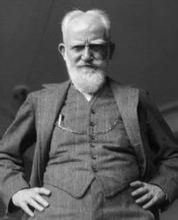
IT is safe to say that George Bernard Shaw (1856-1950), the Irish-born writer, is more famous for being George Bernard Shaw than he is for his writings today. Few of Shaw’s more than 60 plays, novels and essays are performed or read anymore. And yet Shaw genuinely helped make our modern world. Although you’d be lucky to get a chance to see one of his dramas today, in his time he turned the theater into a vehicle for the discussion of social issues, not only in Britain but on the stage of the world. In a way Shaw was someone who created the modern culture of Britain.

Where the theater had been dominated by entertainment, Shaw used it to teach people the importance of paying attention to the issues of their day. The plight (苦难) of the poor and the working class, the situation of women and the institutions of society, such as the education system ---- Shaw was among the most well-known figures making these topics central to public debate. His first play, Widowers’ Houses (1892), deals with the question of slum (贫民窟) housing. His Mrs Warren’s Profession (1893) brought a controversial topic to the stage.

Shaw was an important mover and shaker in new political movements too. He was an early member of the Fabian Society, which argued for the socialist cause in the UK. Shaw was also the founder (in 1895) of one of the now most famous colleges in the world, the London School of Economics.

If few of his works have really stood the test of time, many of his quotations have become part of the furniture of the English language. “Youth is wasted on the young,” he wrote. He also knew how to sum up a political philosophy(哲学) in a few memorable words. For instance: “A government that robs Peter to pay Paul can always depend on the support of Paul.”

1. Shaw’s influence on the modern world comes mainly from ______.

A. the changes he brought to the British culture

B. his philosophies on the role of government

C. his awareness of social problems of his day

D. the support for the London School of Economics

2. Widowers’ Houses is a play that mainly focuses on ______.

A. the failure of the UK education system

B. the housing problems of poor people

C. robbery incidents in slum areas

D. socialist movements in the UK

3. By describing Shaw’s quotations as “part of the furniture of the English language”, the author means that Shaw’s words ______.

A. have become the best part of English

B. have greatly developed the English language

C. have made the English language philosophical

D. have become an inseparable part of the English language

4. Which of the following about George Bernard Shaw’s works is TRUE?

A. They should be adapted for modern readers.

B. They are mostly about the lives of working class.

C. They deal with important social issues of their day.

D. Most of them are still performed on the stage of the world today.


违法和不良信息举报电话:027-86699610 举报邮箱:58377363@163.com

精英家教网