题目内容
【题目】Wilderness
“In wilderness(荒野) is the preservation of the world.” This is a famous saying from a writer regarded as one of the fathers of environmentalism. The frequency with which it is borrowed mirrors a heated debate on environmental protection: whether to place wilderness at the heart of what is to be preserved.
As John Sauven of Greenpeace UK points out, there is a strong appeal in images of the wild, the untouched; more than anything else, they speak of the nature that many people value most dearly. The urge to leave the subject of such images untouched is strong, and the danger exploitation(开发) brings to such landscapes(景观) is real. Some of these wildernesses also perform functions that humans need—the rainforests, for example, store carbon in vast quantities. To Mr.Sauven, these ”ecosystem services” far outweigh the gains from exploitation.
Lee Lane, a visiting fellow at the Hudson Institute, takes the opposing view. He acknowledges that wildernesses do provide useful services, such as water conservation. But that is not, he argues, a reason to avoid all human presence, or indeed commercial and industrial exploitation. There are ever more people on the Earth, and they reasonably and rightfully want to have better lives, rather than merely struggle for survival. While the ways of using resources have improved, there is still a growing need for raw materials, and some wildernesses contain them in abundance. If they can be tapped without reducing the services those wildernesses provide, the argument goes, there is no further reason not to do so. Being untouched is not, in itself, a characteristic worth valuing above all others.
I look forwards to seeing these views taken further, and to their being challenged by the other participants. One challenge that suggests itself to me is that both cases need to take on the question of spiritual value a little more directly. And there is a practical question as to whether wildernesses can be exploited without harm.
This is a topic that calls for not only free expression of feelings, but also the guidance of reason. What position wilderness should enjoy in the preservation of the world obviously deserves much more serious thinking.
【1】John Sauven holds that_____.
A. many people value nature too much
B. exploitation of wildernesses is harmful
C. wildernesses provide humans with necessities
D. the urge to develop the ecosystem services is strong
【2】What is the main idea of Para. 3?
A. The exploitation is necessary for the poor people.
B. Wildernesses cannot guarantee better use of raw materials.
C. Useful services of wildernesses are not the reason for no exploitation.
D. All the characteristics concerning the exploitation should be treated equally.
【3】What is the author’s attitude towards this debate?
A. Objective. B. Disapproving. C. Sceptical. D. Optimistic.
【4】Which of the following shows the structure of the passage?
CP: Central Point P: Point Sp: Sub-point(次要点) : Conclusion
A. 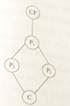 B.
B.  C.
C. 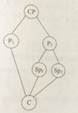 D.
D. 
【答案】
【1】B
【2】C
【3】A
【4】D
【解析】试题本文客观阐述了不同的人对于怎么利用荒原持有的不同的观点。
【1】推理判断题。根据第二段these "ecosystem services" far outweigh the gains from exploitation.。得知John Sauven认为“生态系统服务”远比开发的利益重要得多,由此可推断他的观点是开发荒野有害。故选B 。
【2】主旨大意题。根据本段第二句和第三句是对另外一种观点的概括,意思是荒野的有益服务不能作为不开发的理由,故选C。
【3】作者态度题。据最后两段就可以看出,作者并没有直接表明自己的观点。只是比较客观的进行阐述。选A。
【4】文章结构题。文章第一段提出中心论点;第二、三两段分别阐述了两种不同的观点;第四段是作者自己的观点;最后一点是文章的结论。推出选D。

