

完形填空 先通读下面的短文,掌握其大意,然后从下面四个答案中选择可以填入相应空白处的最佳答案。
Do you have many friends in this busy and noisy world? I think you can give me your answer without thinking for a minute. Friendship is so   1  that no one can live if he has no friends. One is happy to have a good friend to talk, laugh, and do some other things with. Everyone will feel  2  if he has no friends. Maybe you will say that sometimes friends quarrel (争吵)with each other, but it doesn't matter. That doesn't mean they no longer  3  each other. They will make up and become  4  again. If our friends go to another place, we will feel very sad. We  5  them very much, but we can    6   them or write to them. Maybe we will never see them  7  . And we can make new friends. It is surprising to find out   8  we like new friends when we get to know them. There is more good news for people who have friends. They live longer than people who have no friends or have few friends. Why? Perhaps because they are  9  . Being happy helps you keep healthy. If you know someone cares about you, you   10  take better care of yourself. Do you think so?

  1. 1.

    1. A.
      true
    2. B.
      important
    3. C.
      pleasant
    4. D.
      wonderful
  2. 2.

    1. A.
      lonely
    2. B.
      alone
    3. C.
      happy
    4. D.
      shy
  3. 3.

    1. A.
      talk
    2. B.
      hate
    3. C.
      like
    4. D.
      dislike
  4. 4.

    1. A.
      friendly
    2. B.
      good
    3. C.
      pleased
    4. D.
      friends
  5. 5.

    1. A.
      believe
    2. B.
      miss
    3. C.
      admire
    4. D.
      remember
  6. 6.

    1. A.
      call
    2. B.
      ask
    3. C.
      tell
    4. D.
      talk with
  7. 7.

    1. A.
      later
    2. B.
      again
    3. C.
      finally
    4. D.
      even
  8. 8.

    1. A.
      how often
    2. B.
      how long
    3. C.
      how many
    4. D.
      how much
  9. 9.

    1. A.
      happier
    2. B.
      stronger
    3. C.
      kinder
    4. D.
      quieter
  10. 10.

    1. A.
      must
    2. B.
      need
    3. C.
      may
    4. D.
      can

Here is a page from a magazine called Future. Read the following information about things that may happen in ten years.

Cars will run on solar power (太阳能) and will be much cleaner. They will be much safer. For example, if you are too close to another car or if you are driving dangerously, your car will slow down or stop by itself.
New cities will have to be built in the sea. Some cities on water will have two levels (层). People will live on the upper level; the lower level will be used for traffic, shops and factories.
Biotechnology (生物技术) will make food better and healthier. Plants without insects or illnesses (病虫害) will be developed. The taste of fruit and vegetables will be better and food will be kept longer.
Many new ways to cure (治愈) illnesses will be found. People will use products of genetic engineering (基因产品) to cure more illnesses. However, some new illnesses will appear

  1. 1.

    What will happen in the future according to the passage?

    1. A.
      The air won’t be much cleaner
    2. B.
      Cars will run by itself without a driver
    3. C.
      It’ll be much more dangerous to drive a car
    4. D.
      There’ll be fewer accidents and less pollution (污染)
  2. 2.

    Where will new cities have to be built in the future?

    1. A.
      In the sea
    2. B.
      In the sky
    3. C.
      Underground
    4. D.
      On the land
  3. 3.

    What will be made better and healthier by biotechnology?

    1. A.
      Medicine
    2. B.
      Toys
    3. C.
      Food
    4. D.
      Clothes
  4. 4.

    Genetic engineering will help doctors to cure more________

    1. A.
      cold
    2. B.
      illnesses
    3. C.
      cancer
    4. D.
      headache
  5. 5.

    Which is the best title (标题) of the passage?

    1. A.
      Cars in the future
    2. B.
      Get ready for the future
    3. C.
      How to keep food longer?
    4. D.
      Where will people live in the future?


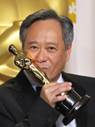
Ang Lee won the Best Director Oscar for his adventure film Life of Pi at the 85th Academy Awards in Hollywood, California February 24, 2013.
  Life of Pi shows a young Indian named Pi, who finds the world he knows swept away when his family sells their zoo and sets sail for Canada with a few animals. Only Pi escapes from the storm and floats in a lifeboat with a giant Bengal tiger.
  “I really want to thank you for believing this story and sharing this unbelievablejourney with me,” Lee said in his speech. The film also won three other Oscars, for best original music, best cinematography(电影艺术) and best visual(视觉) effects. It won more awards than Lincoln and Argo which were also among the hottest nominees.
  Coming from China's Taiwan, the 58-year-old Lee won an Oscar for Best Foreign Language Film in 2001 for Crouching Tiger, Hidden Dragon and another for Best Director in 2006 for Brokeback Mountain. He is the only person of Asian to win the directing award and one of the rare people who won that award more than once.
In an after-ceremony interview, Lee said he believed Asian films would come to the main stage of the world sooner or later. "I was born in Asia and grew up with Chinese education. It is natural for me to put Asian thinking into Western things." The film, which cost 120 million U.S. dollars, has earned nearly 600 million dollars worldwide. Lee said most of the earnings came from outside China. Lee said he felt warm that he won the award on the day of the Lantern Festival, a Chinese traditional festival on which families get together to solve puzzles on lanterns and eat Tang Yuan. He wished everyone a happy new year of the snake and everybody gets lucky

  1. 1.

    What kind of film does Life of Pi belong to?

    1. A.
      Comedies
    2. B.
      Tragedies
    3. C.
      Detective films
    4. D.
      Adventure films
  2. 2.

    So far, how many Oscar directing awards has Ang Lee won?

    1. A.
      One
    2. B.
      Two
    3. C.
      Three
    4. D.
      Four
  3. 3.

    How do Chinese people celebrate the Lantern Festival?

    1. A.
      Families get together and have rice dumplings
    2. B.
      Children make lanterns out of big orange pumpkins
    3. C.
      People solve puzzles on lanterns and enjoy Tang Yuan
    4. D.
      Children go to the display of lanterns and receive red packets
  4. 4.

    What can we know from the passage?

    1. A.
      The 85th Academy Awards was held in Hollywood, California this year
    2. B.
      Pi was a young American who had an adventure trip with a tiger in India
    3. C.
      Lincoln and Argo won more awards than Life of Pi
    4. D.
      Asian films have come to the main stage of the world
  5. 5.

    Which of the following about Life of Pi is true?

    1. A.
      It was a great success as it won four Oscars
    2. B.
      It earned nearly 600 million dollars in China
    3. C.
      It describes Pi’s escape from a terrible earthquake
    4. D.
      It is the only successful film Ang Lee has ever made

Chuck Wall teaches management and human relations at Bakersfield College. He walked into class one day and told his students that their homework was to perform one act of random(任意的) kindness. His students did not understand the homework and didn’t know what to do, but the professor would not answer their questions. He encouraged his students to work it out for themselves.
One week later, the students entered the classroom excited to share their stories. One student told of giving away blankets to the homeless. Another reported on helping a dog to find its owner, and another student had been trying to find a long, lost friend. Students were energized (给予活力) by the homework assignment and wanted other people to be kind too. With the support of local businesses, the students made stickers to put on cars that invited people to do something kind for others. They sold the stickers and decided to donate the money to a center for the blind---not surprising as Professor Wall is blind.
Since then, similar kindness activities have been started in schools around the world. Many schools organize a Random Acts of Kindness Week, around November 13th, to celebrate World Kindness Day. Some schools use each day of Random Acts of Kindness Week to perform a different kind act, such as making a new friend, helping someone, doing community service, or raising money for a charity. Students learn to consider other people and thank about how small actions can make the world a better place

  1. 1.

    The professor’s homework was to ask his students _________

    1. A.
      to write about kindness
    2. B.
      to be kind to strangers
    3. C.
      to spend time helping other
    4. D.
      to go out to raise money
  2. 2.

    We learn from the passage that ________

    1. A.
      Chuck’s students are not clever enough
    2. B.
      the students didn’t do Chuck’s homework
    3. C.
      Chuck Wall is an unusual teacher
    4. D.
      no students enjoyed Chuck’s homework
  3. 3.

    It is certain that _________

    1. A.
      the students got good grades in Chuck’s class
    2. B.
      kindness activities are not widely accepted
    3. C.
      Chuck Wall was not good at designing homework
    4. D.
      the students only helped people they knew
  4. 4.

    In kindness activities students learn _________

    1. A.
      to deal with difficult things
    2. B.
      to do great things every day
    3. C.
      to know about the world
    4. D.
      to consider other people
  5. 5.

    Which is the best title of the passage?

    1. A.
      Learning Kind Things
    2. B.
      Teaching Kindness
    3. C.
      World Kindness Day
    4. D.
      Bakersfield College

According to a new Ministry of Education (教育部) survey, student safety has become a big problem. Nearly 50 percent of students say they are worried about robbery on the way to and from school. Now in many big cities in China, some school has taught an unusual lesson: self– protection. Students like this lesson as there are no exams or boring classes. And they can learn how to save lives and know how to stop danger before it really happens.
Chen Haoyu, a teacher at Beijing No.25 Middle School and a self–protection expert, gives young students advice on how to deal with danger.
If you are robbed
Keep calm. If you cannot cry for help or run away, give the robber your money. Try to remember what the robber looks like and tell the police.
If you are in a traffic accident
If you are hurt by a car, take down the car number; if it is a bicycle, try to contact your parents before you let the rider go. This is because you don’t know how seriously you are hurt.
If it is raining hard and there is lightning
Don’t stay in high places and keep away from trees.
When there is a fire
Get away as fast as you can. Put wet things on your body and try and find an exit. Do not take the lift!
If someone is drowning(溺水)
If you can’t swim, don’t get into the water. Cry out for help.
Remember that danger is never as far away as you think. Take care of yourself at all times!

  1. 1.

    The underlined word “contact” means _______

    1. A.
      end up
    2. B.
      wait for
    3. C.
      search for
    4. D.
      get in touch with
  2. 2.

    If your house is on fire, you must _____

    1. A.
      put dry things on your body
    2. B.
      run quickly and take the lift
    3. C.
      take everything you have and then run away
    4. D.
      run away and find an exit as quickly as you can
  3. 3.

    What’s the best title for this passage?

    1. A.
      Self- protection
    2. B.
      How to take care of yourself
    3. C.
      The popular lesson
    4. D.
      An interesting lesson
 0  7279  7287  7293  7297  7303  7305  7309  7315  7317  7323  7329  7333  7335  7339  7345  7347  7353  7357  7359  7363  7365  7369  7371  7373  7374  7375  7377  7378  7379  7381  7383  7387  7389  7393  7395  7399  7405  7407  7413  7417  7419  7423  7429  7435  7437  7443  7447  7449  7455  7459  7465  7473  159627 

违法和不良信息举报电话:027-86699610 举报邮箱:58377363@163.com

精英家教网