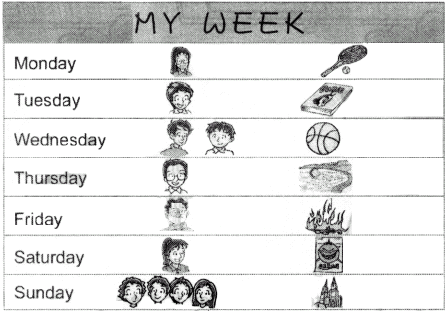
David meets Tommy outside school on Open Day. Complete their conversation. Use the present continuous form of the words in brackets.
|
David: |
Hello, Tommy. (1) ________ (you/report) to duty in ten minutes? |
|
Tommy: |
Yes, I am. (2) ________ (I/meet) James outside the classroom. |
|
David: |
(3) ________ (I/wait) for my parents. (4)________ (they/arrive) in five minutes. |
|
Tommy: |
(5) ________ (your uncle/come) too? |
|
David: |
No, he isn't, but (6) ________ (Aunt Pauline/join) us later. |
|
Tommy: |
(7) ________ (my parents/have) lunch with me. |
|
David: |
(8) ________ (my parents/not stay) for lunch. They have to go back to work but (9) ________ (Aunt Pauline/take) me out for lunch.
|
|
Tommy: |
Have to go now. See you later. |
Donald is very excited about the insect watch in Beijing Wildlife Park. He is talking about it with his uncle on the phone. Complete their conversation using the present continuous tense of the verbs in brackets.
|
Donald: |
I (1) ________ (go) to Beijing Wildlife Park, Uncle. |
|
Uncle: |
Oh! (2) ________ you ________ (go) there this weekend? |
|
Donald: |
Yes. My classmates and I (3) ________ (go) there on Saturday. |
|
Uncle: |
(4) ________ Sandy ________ (go) with you? |
|
Donald: |
No. She (5) ________ (not join) us. Our school organized it. My Geography teacher (6) ________ (take) us there. |
|
Uncle: |
What time (7) ________ you ________ (meet)? |
|
Donald: |
We (8) ________ (meet) at the bus stop outside the school at about 8.30 a.m. |
|
Uncle: |
(9) ________ you ________ (bring) anything to eat? |
|
Donald: |
Yes. I (10) ________ (have) sandwiches for lunch at about 1 p.m. |
|
Uncle: |
(11) ________ you ________ (watch) animals in Beijing Wildlife Park? |
|
Donald: |
No. We (12) ________ (have) an insect watch there. |
|
Uncle: |
What time (13) ________ you ________ (leave) Beijing Wildlife Park that day? |
|
Donald: |
We (14) ________ (take) the school bus back to school at 3 p.m. |
|
Uncle: |
Wish you a nice trip, Donald. |
|
Donald: |
Thank you, Uncle. |
Shirley feels excited about going to the zoo. She finds some animal facts in a book. She is asking Amy to explain the facts t her. Complete their conversation.
|
Shirley: |
What do giant pandas eat if they are hungry? |
|
|
Amy: |
If giant pandas (1) ________ (be) hungry, they (2)________ (eat) bamboo shoots. |
|
|
Shirley: |
What do lions do if they are hungry? |
|
|
Amy: |
Lions (3) ________ (hunt) other animals if they(4) ________(be) hungry. |
|
|
Shirley: |
What about polar bears? |
|
|
Amy: |
Polar bears (5) ________ (get) fish from the water if they (6)________ (be) hungry. |
|
|
Shirley: |
How do monkeys move around? |
|
|
Amy: |
If monkeys (7) ________ (want) to move around, they usually (8) ________ (go) from one tree to another. |
|
|
Shirley: |
What do birds do if they are scared? |
|
|
Amy: |
If birds (9) ________ (be) scared, they (10) ________ (fly) away. |
|
|
Shirley: |
What about tortoises? |
|
|
Amy: |
If enemies (11) ________ (be) near, tortoises (12)_______ (pull) their heads and legs inside their shells. |
|
|
Shirley: |
How do camels survive without water? |
|
|
Amy: |
Well, camels (13) ________ (store) water in their bodies if they (14) ________ (have) to walk in the desert. |
Complete the replies in column B. Use ‘ought to’ and ‘ought not to’ with the correct verbs.
|
arrive |
eat |
go |
play |
spend |
stay |
|
A |
B |
||||
|
(1) I do not feel well. |
You __________ to bed early. |
|
(2) She is too thin. |
She ___________ more. |
|
(3) It is past midnight. |
You __________ up so late. |
|
(4) It is raining. |
They _________ football outside. |
|
(5) I am going to a party. |
You __________ too early. |
|
(6) I did poorly in the tests. |
You ____________ more time studying. |