完形填空

Once, in a small village, lived a family with eight children. Two of the children loved   1  very much, but the family was so poor that it was impossible to send   2   of them to study at the art college at the same time. After many discussions, the two boys finally   3   a plan. They would toss(抛) a coin. The loser would go  4 into the mines (煤矿) and, with his earnings(赚得的钱),   5  his brother studying at the college. Then, when the brother who won the toss finished his studies, after four years, he would support the other brother studying at the   6  

James won the toss and Jack went down into the mines. James worked with all his heart and his paintings were much   7  than those of most of his teachers, and by the time he   8  , he was beginning to make a lot of money for his paintings.

  9  James returned, the family held a big dinner for his great success. Soon after the meal began, James  10 up from his seat to drink a toast (举杯祝酒) to his dear   11    He said, "Jack, now you can go to the art college and your   12   will come true. I will take care of you. "

But Jack said   13  , "Brother, the four years in the mines has done too much to my hands, so it' s too   14   Now I can' t even hold a glass. "

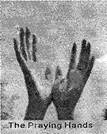
To show his great love and respect, James drew his brother' s hands with   15  towards the sky.

He called his drawing "The Praying Hands", which became very famous years later.

1.                A.painting        B.books          C.school    D.money


2.                A.any            B.all             C.both D.neither


3.                A.looked out      B.worked out      C.took out  D.got out


4.                A.off            B.away           C.up   D.down


5.                A.support        B.agree          C.follow    D.let


6.                A.home          B.mine           C.college   D.school


7.                A.better          B.worse          C.cheaper  D.older


8.                A.arrived         B.graduated       C.walked   D.waited


9.                A.Before         B.When          C.Though   D.While


10.               A.picked         B.turned         C.looked    D.stood


11.               A.brother        B.sister          C.father D.mother


12.               A.way           B.idea           C.dream D.practice


13.               A.happily         B.surprisedly      C.angrily    D.softly


14.               A.early          B.late            C.good D.helpful


15.               A.legs           B.feet           C.arms  D.fingers


As we know, there are differences between western culture and Chinese culture. We can see differences when we pay attention to the way words are used. Let’s look at the words about animals and plants. Most expressions in Chinese about the dog, for example, “a homeless dog”, “a mad dog”, “a running dog” and “a dog catching a mouse” have negative(消极的) meanings. But in western countries, dogs are thought to be honest and good friends of humans. In English, people use the dog to describe positive(积极的) actions. For example, “you are a lucky dog” means you are a lucky person. And “every dog has its day” means each person has good luck sometimes. To describe a person’s serious illness, they say “sick as a dog”. The word “dog-tired” means very tired. However, Chinese love cats very much. But in western culture, “cat” is often used to describe a woman who is cruel(残酷的)。

The rose is regarded as a symbol (象征) of love in both China and some western countries. People think the rose means love, peace, courage and friendship. And the rose is the national flower of England, America and many other countries.

The words about plants and animals are used in positive or negative ways in different cultures. We can learn about many differences in cultures by comparing how some words are used.

1.“Every dog has its day.” Means “__________”

A.Everybody in the world is lucky.

B.Each person lives his own way of life.

C.If one works hard, he’s sure to succeed.

D.Everybody has a time in life to be lucky.

2.Western people usually use “cat” to refer to “___________”.

A.a tired person

B.a brave man

C.a homeless person

D.an unkind woman

3.Which of the following is true according to the passage?

A.Words show differences in culture.

B.Chinese people prefer dogs to cats.

C.Western people think cats to be good friends.

D.Rose is the national flower of all western countries.

4.What’s the best title for the passage?

A.Negative or Positive

B.Different Countries Have Different Culture

C.Rose Means the Same in Chinese and English

D.What Dog and Cat Mean in English and Chinese


Do you know that colorful fruits and vegetables are good for your health? Their natural colors help protect your body from disease. Think about the colors of the food: the red of tomatoes, the orange of carrots, the green of kiwi fruit(猕猴桃), and the purple of grapes.

You can enjoy eating fruits and vegetables of all colors: green, yellow, orange, red, blue, purple and white. Each color has something unique(独一无二的) and important for good health. They work together to protect your body.

Scientists have surprisingly discovered the benefits of colorful fruits and vegetables. The list below shows the benefits of some colors in fruits and vegetables.

Red gives you a healthy heart. It can reduce the risk of heart disease. Red helps prevent cancer. It helps improve your memory, too.

Yellow and orange give you a healthy immune system(免疫系统). They are also good for your eyes. They help prevent blindness in the old.

White can keep cholesterol(胆固醇) at a lower level.

Green helps prevent cancer. It is good for your eyes. It also gives you strong bones and teeth.

Blue and purple help protect your memory as you grow old. They also help fight cancer and heart disease.

So when you buy or eat fruits and vegetables, remember: the more colors, the better!

1.______different colors of fruits and vegetables are mentioned in the passage.

A.Four             B.Five              C.Six               D.Seven

2.The underlined word “benefits” in the passage means “_______”.

A.益处             B.危害             C.营养             D.后果

3.Daniel has poor eyesight. _____ fruits and vegetables are good for him.

A.Red, yellow and orange

B.White, green and blue

C.Yellow, green and orange

D.Blue, red and white

4.Which of the following is NOT true according to the passage?

A.Keeping cholesterol at a lower level is good for your health.

B.The more colorful fruit and vegetables you eat, the better it will be for your health.

C.Red fruits and vegetables will cause heart diseases.

D.Blue, purple and red fruits and vegetables are good for your memory.


 0  32025  32033  32039  32043  32049  32051  32055  32061  32063  32069  32075  32079  32081  32085  32091  32093  32099  32103  32105  32109  32111  32115  32117  32119  32120  32121  32123  32124  32125  32127  32129  32133  32135  32139  32141  32145  32151  32153  32159  32163  32165  32169  32175  32181  32183  32189  32193  32195  32201  32205  32211  32219  159627 
违法和不良信息举报电话:027-86699610 举报邮箱:58377363@163.com

精英家教网