阅读下面短文,掌握其大意,然后从各题所给的四个选项中选出一个最佳答案。

When I was nine years old, I used to go to the post office with my mother, sending greeting cards to my aunt in Singapore. To me, these trips were really   16   memories. And receiving mail through a mailbox outside our gate was just as exciting. My small hands could   17   get the mail without using a key! I always couldn’t wait to see how much I was   18   . Oh, a letter! From Singapore! I would run back home and show it to my   19   . When there was a letter for me, I wouldn’t run—I would open it right there.

After my family moved back to Singapore, I    20   going to the post office. Years later, my company sent me to Shanghai, and the post office found me again. Two years ago I celebrated my  21   with five friends on top of the mountain in Longsheng, China. At sunrise we   22   up to a beautiful view from the mountain top. Later in the afternoon, as we were going   23   the mountain and returning from the sunrise viewing place, a    24    shop caught our attention. It only sold noodles, coffee and had a China    25   sign.

We asked the owner if she could really send mail. She happily said yes. It seemed hard to believe,   26   we were at the highest top of the mountain. I picked one postcard out and asked my friends to write   27    a birthday note. We bought a stamp, wrote some notes and gave the shop owner the postcard.

Three weeks later, I arrived home and   28   my mailbox: Hello, postcard! I broke into a big smile.

That birthday postcard attracted me again to the post office and all its delights. I had   29  the post office all these years. Today I   30   send postcards to friends. And every time I am at the post office buying stamps, I cannot help but smile—how one postcard will make its way across the world and brighten up someone’s day.

1.A. bad             B. poor              C. good               D. short

2.A. easily           B. simply             C. hardly             D. specially

3.A. weighing        B. getting             C. selecting           D. accepting

4.A. friend           B. aunt               C. mother             D. owner

5.A. enjoyed         B. stopped            C. hated               D. considered

6.A. wedding         B. return             C. success             D. birthday

7.A. broke           B. woke              C. grew               D. stood

8.A. around          B. over               C. up                 D. down

9.A. cold            B. dirty               C. small              D. modern

10.A. Traffic          B. Life               C. Police              D. Post

11.A. because         B. though             C. while              D. when

12.A. him            B. me                C. her                D. them

13.A. bought          B. repaired            C. painted            D. opened

14.A. missed          B. influenced          C. studied             D. visited

15.A. just             B. seldom             C. still                D. never
 

Every year many young people leave school for a few weeks or months and enjoy an unusual type of educational program. They learn new skills by living in a different country and doing unusual jobs. There are several organizations. They help students to find the experience they are looking for. The table below shows a few possibilities for students.


One interesting possibility is helping elephants in Thailand. Most people think o elephants as animals in zoos. In fact, many elephants in Thailand are no longer kept in cages. Now, hundreds of them are homeless. They don’t have owners to care for them. Although they may look well, they are often in poor health and don’t have enough to eat.

One centre in Thailand cares for these elephants. It gives them a safe and natural living space. When they  are at the centre, they stay in a building but are free to walk around. Students come from all over the world to help here. The student helpers work with the elephant keepers. These keepers train the students in caring for the elephants. In the morning, they go to the forest together and lead the elephants to the centre. They clean them and give them food. In the afternoon, they take the animals back into the forest for the night. Helping at the center is interesting and the young people learn a lot.

1.Which country can you choose if you want to prepare yourself for a medical career?

A. India           B. Ghana             C. Thailand           D. New Zealand

2.Which job might be suitable for the students who love children and arts?

A. Teaching young children                B. Health care work

C. Saving elephants                      D. Teaching Chinese

3.What does the underlined word “they” in the last paragraph probably refer to?

A. The keepers     B. The doctors

C. The students        D. The elephants

4.What does the writer think of the unusual educational program?

A. It is amazing    B. It is boring

C. It is helpful         D. It is expensive


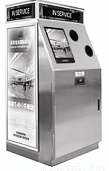
The Beijing Underground’s Line Ten will soon have 40 “reverse vending machines(有偿自动回收机)”,which will pay people for their empty plastic bottles.

“We have placed two such machines at Beijing Capital International Airport and four at the city’s underground stations. They have been well received so far,” said Feng Juan, an engineer from the company which makes the machines. “People are encouraged and paid for turning waste into treasure. More than 30,000 empty bottles have been collected since December,” she said.

If something else, such as waste paper, is thrown into the machine, the machine will spit(吐) it out.

“Supported by the government, the reverse vending machines will be introduced to colleges and universities soon,” Feng said.

The company is also considering covering more recycling materials, including used books and teaching materials.

“Long-term plans call for about 2,000 reverse vending machines to be place throughout the city in the next few years, including 80 at colleges and universities, shopping malls, communities and office buildings,” Feng said.

Chang Tao, director of the company, said that if the new project works well in the city, the company will consider offering the waste-to-treasure service to other developed cities in the eastern part of China.

1.At present reverse vending machines are used at __________.

A. the airport and underground stations

B. colleges and universities

C. communities and office buildings

D. shopping malls and companies

2.Which sign probably represents the meaning of the underlined word “recycling”?


3.Which of the following is an opinion rather than a fact?

A.More than 30,000 empty bottles have been collected.

B.Feng Juan and Chang Tao work in the same company.

C.The machines might help people develop a recycling habit.

D.People are paid for putting empty plastic bottles into the machines.

4.Which of the following might be the best title for the passage?

A. Machines help turn waste into treasure

B. A new machine has become popular

C. A creative project works well in China

D. People are encouraged to collect bottles


 0  31247  31255  31261  31265  31271  31273  31277  31283  31285  31291  31297  31301  31303  31307  31313  31315  31321  31325  31327  31331  31333  31337  31339  31341  31342  31343  31345  31346  31347  31349  31351  31355  31357  31361  31363  31367  31373  31375  31381  31385  31387  31391  31397  31403  31405  31411  31415  31417  31423  31427  31433  31441  159627 

违法和不良信息举报电话:027-86699610 举报邮箱:58377363@163.com

精英家教网